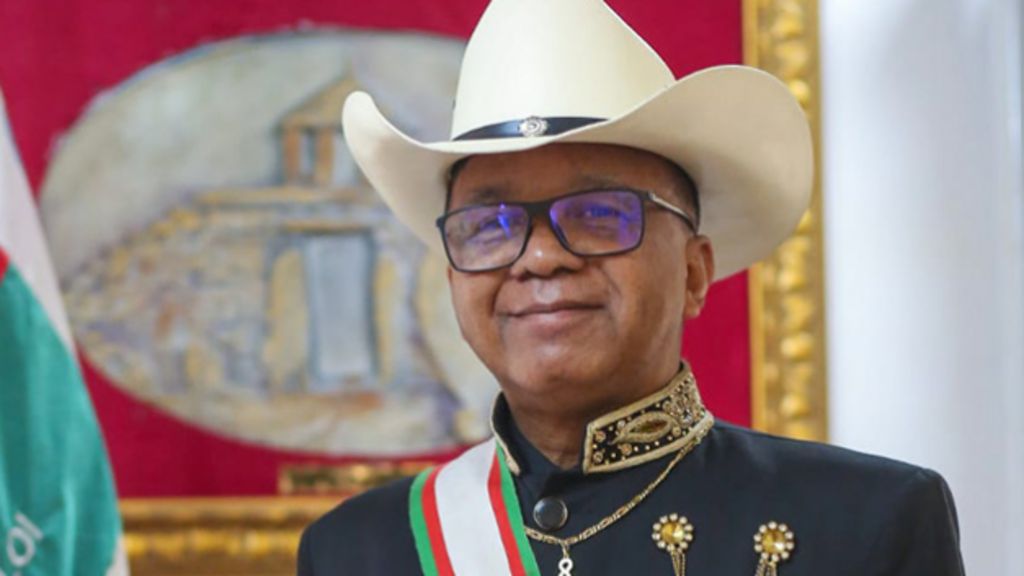
A little over a year after widespread youth-led protests upended Madagascar’s political order, a high-profile legal verdict has closed one chapter of the island nation’s post-crisis transition. On Tuesday, a court in the capital Antananarivo handed down a 10-year hard labor sentence to retired general Richard Ravalomanana, the former Senate leader and close confidant of ousted former president Andry Rajoelina, finding him guilty of complicity in murder linked to the violent government crackdown on the 2025 demonstrations.
The unrest, widely dubbed the Gen Z protests, first erupted in September 2025. What began as public outrage over chronic, long-running shortages of electricity and clean drinking water quickly swelled into a mass movement demanding the resignation of Rajoelina’s administration. As crowds gathered across the country to demand political change, security forces responded with force. United Nations figures cited by local Malagasy media put the final death toll from the crackdown at a minimum of 22 people, with more than 100 others sustaining injuries.
Prosecutors allege that Ravalomanana, who held significant sway over Madagascar’s gendarmerie at the height of the protests, issued direct orders to security personnel to use lethal violence against demonstrators. “He directed violent actions to suppress the demonstrations,” state prosecutors alleged in official filings from December 2025.
Ravalomanana has repeatedly and forcefully denied all accusations against him, and his legal team has announced plans to appeal the verdict to a higher court. During the trial, a former national police chief who took the stand as a witness for the defense corroborated Ravalomanana’s claim that he played no role in coordinating the crackdown, testifying that the retired general was not part of the operational command chain for security forces deployed during the unrest. His lead defense lawyer further challenged the prosecution’s case, questioning whether any credible direct evidence linking Ravalomanana to the violence exists. “Is there confirmed written or verbal evidence… to accuse him?” the lawyer asked the court, noting that prosecutors had failed to produce proof that security officers received orders from his client.
The court ultimately dismissed a separate charge of issuing death threats against a political opponent, ruling that the allegation was too old to meet prosecution statutes of limitations. Beyond the murder conspiracy conviction, Ravalomanana also remains the subject of an ongoing separate corruption investigation, one of multiple senior officials from Rajoelina’s ousted administration to face legal proceedings since the political transition.
Ravalomanana was first removed from his post as Senate president in October 2025, just weeks after the protests first began and as the political crisis surrounding Rajoelina’s government deepened. After failing to respond to a summons from the gendarmerie, he was arrested at his private residence in December 2025, and has been held in pre-trial detention for the past seven months at the high-security Imerintsiatosika prison located on the outskirts of Antananarivo.
For the protesters who led the movement that ousted Rajoelina’s government, Ravalomanana had already become a prominent symbol of authoritarian overreach. A recognizable public figure known for his signature cowboy hat and open display of his military decorations, he remained one of the most powerful figures in Rajoelina’s government through the final months of its rule. Following the collapse of Rajoelina’s administration, a new government led by Col Michael Randrianirina was installed to lead the country into its post-transition period.