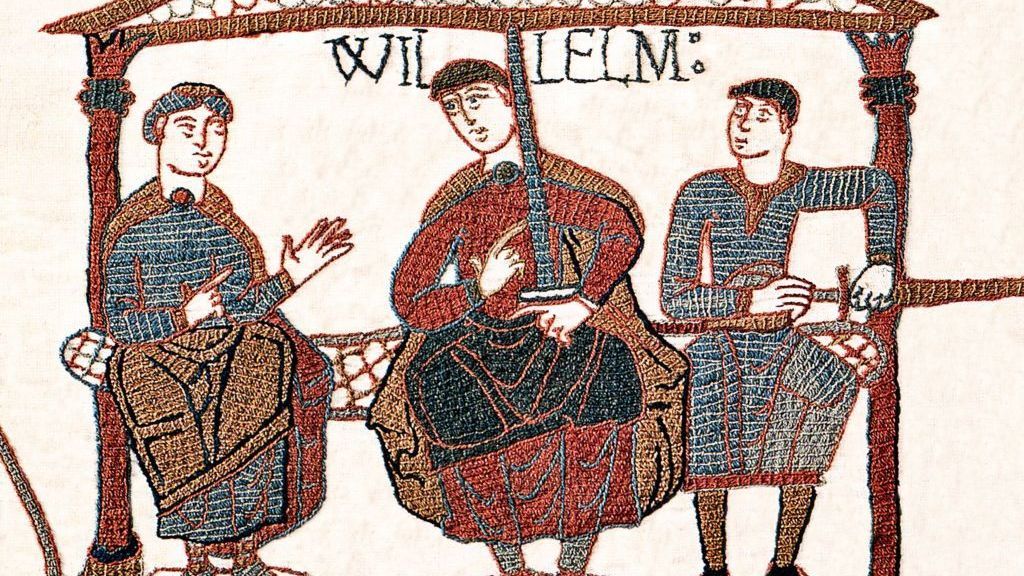
One of the world’s most celebrated medieval artifacts is set to open its doors to the general public at the British Museum next week, marking an unprecedented act of cultural diplomacy between the United Kingdom and France. Ahead of the 10 September public launch, three senior leaders—King Charles III of the UK, French President Emmanuel Macron, and newly appointed UK Prime Minister Andy Burnham—will gather on Wednesday for an exclusive preview of the 70-meter embroidered masterpiece. They will be joined by Queen Camilla, Burnham’s wife Marie-France Van-Heel, and Brigitte Macron, alongside school students from both nations, who will take part in the historic occasion. Joint speeches from the British monarch and French president are scheduled to honor the landmark loan.
Created in the 1070s, just a decade after the 1066 Norman Conquest, the Bayeux Tapestry chronicles the lead-up to and decisive Battle of Hastings, where Norman leader William defeated Anglo-Saxon King Harold to seize the English throne. Believed to have been stitched by English artisans for Norman rulers, the linen tapestry features 58 distinct scenes, 627 human figures, hundreds of animals, and a running Latin narrative, making it one of the most important surviving primary sources for medieval European history. Notably, the tapestry’s final sections have been lost to time, a detail President Macron highlighted during his 2025 state visit to the UK—when the long-term loan was first announced—as a metaphor for Franco-British relations, arguing that “in the great mural of Franco-British history, the end is yet to be written – it is up to us to do it”.
For nearly a thousand years, the tapestry has been housed in the French town of Bayeux, surviving near-destruction during the French Revolution in the 18th century when it was nearly cut up to line military supply carts. The decision to loan the national treasure to the British Museum through July 2027 sparked early concerns about risks to the 900-year-old fragile textile. French authorities have since dismissed those worries, confirming that the British Museum has implemented ideal conservation conditions, including displaying the tapestry flat rather than vertically—an arrangement that reduces stress on the ancient woven fibers and is widely viewed as preferable for long-term preservation.
The preview event carries broader political significance beyond cultural exchange: it marks the first official joint public appearance by King Charles and Prime Minister Burnham since Burnham took office in July 2026. It also sees Macron become the first foreign head of state to meet the new British prime minister, providing an opportunity for the two leaders to strengthen bilateral cooperation on pressing global issues, including support for Ukraine, the ongoing Middle East conflict, and post-Brexit UK-EU relations. Burnham has framed the tapestry’s UK display as a chance to celebrate the deep shared heritage binding the two nations, calling the return of the work to its country of origin “a landmark moment in the history of our two nations”.
In reciprocal gesture of goodwill as part of the cultural exchange agreement, the British Museum is lending one of its most iconic holdings to France: the extraordinary Anglo-Saxon treasures uncovered from the Sutton Hoo burial site. UK Culture Secretary Lisa Nandy emphasized the unique symbolic weight of the tapestry loan, noting that the iconic artifact perfectly encapsulates the intertwined shared history of Britain and France, and that the display will leave a lasting impression on an entire generation of British schoolchildren.
Public interest in the once-in-a-generation exhibition has already reached extraordinary levels: all tickets for visits through the end of 2026 have completely sold out. Tickets for the January to March 2027 viewing window will be released to the public by the British Museum on 21 October.