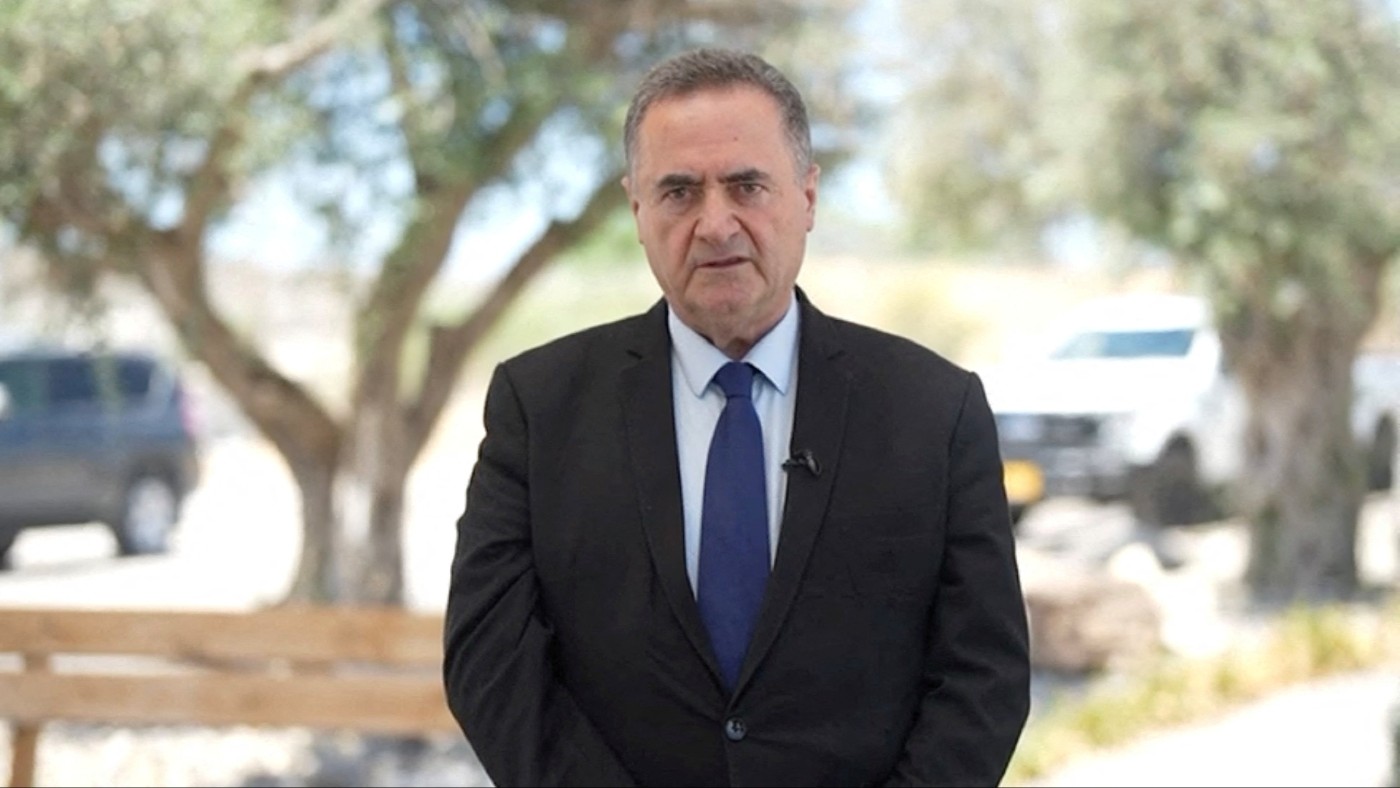
In a public conference appearance this week hosted by Israeli media outlet Ynet and the Israel Democracy Institute, Israeli Defence Minister Israel Katz made an explicit public case for relocating the entire Palestinian population out of the Gaza Strip, framing mass emigration as the only viable long-term resolution to the ongoing conflict in the coastal enclave.
Katz’s remarks marked one of the most high-profile endorsements of a long-simmering Israeli policy that has drawn fierce international condemnation over fears it amounts to forced displacement of Gaza’s residents. “There is no real solution for Gaza in the end without migration,” Katz told journalist Moran Azoulay during the on-the-record discussion. He went on to lay out a timeline for advancing the plan, saying momentum for relocation would pick up after Hamas fails to meet its commitments under existing agreements, clearing the way for Israel to escalate military and territorial action to facilitate the population movement.
To back up his claim that relocation enjoys broad support among Gaza’s population, Katz asserted that consistent public opinion surveys show roughly 80 percent of Gazans want to leave the enclave. That figure aligns with a May survey conducted by the Coordinator of Government Activities in the Territories (COGAT), a unit that falls directly under Katz’s own defence ministry. The COGAT survey found that nearly 80 percent of respondents expressed interest in learning more about processes to resettle in third countries via the Rafah and Kerem Shalom border crossings.
Katz acknowledged that the plan has so far been held up by two key barriers: Hamas blocks Gaza residents from leaving for resettlement, and no foreign nations have stepped forward to accept the displaced population. “We are fully prepared to move them out if it becomes possible — by sea, by air, by every way possible,” the minister said, adding that Egypt has already ruled out allowing relocation through its territory. He also noted that potential host countries are waiting for formal backing from the United States before agreeing to take in Gazans, explaining that former President Donald Trump froze the initiative rather than cancelling it entirely, amid heavy pressure from Arab nations opposing the plan.
The controversy over Israel’s relocation plan has already forced the government to rebrand the initiative in an effort to blunt international criticism. At the end of June, Israeli officials confirmed that the plan would drop its original label of “voluntary migration” in favor of the rebranded “Freedom of Movement Plan.” Israel’s Channel 13 reported that Israeli security agencies including the Mossad were ordered to stop using the original terminology, which had sparked global backlash over allegations it masked a policy of forced ethnic cleansing. Reporting from Israeli newspaper Haaretz around the same time revealed that Shmuel Ben Ezra, head of Israel’s National Security Council, called an urgent meeting to discuss efforts to advance resettlement, with Mossad officials openly admitting they had yet to identify a single country willing to accept large numbers of displaced Gazans.
Beyond his comments on Gaza relocation, Katz also addressed rising regional tensions during the conference, confirming that Israel is actively preparing for a potential large-scale attack from Iran during the upcoming Jewish holiday of Rosh Hashanah, which falls between September 11 and 13 this year. The defence minister stressed that Israeli security forces are fully prepared to respond with overwhelming force if Iran or its proxy groups launch an attack on Israeli territory during the holiday period.