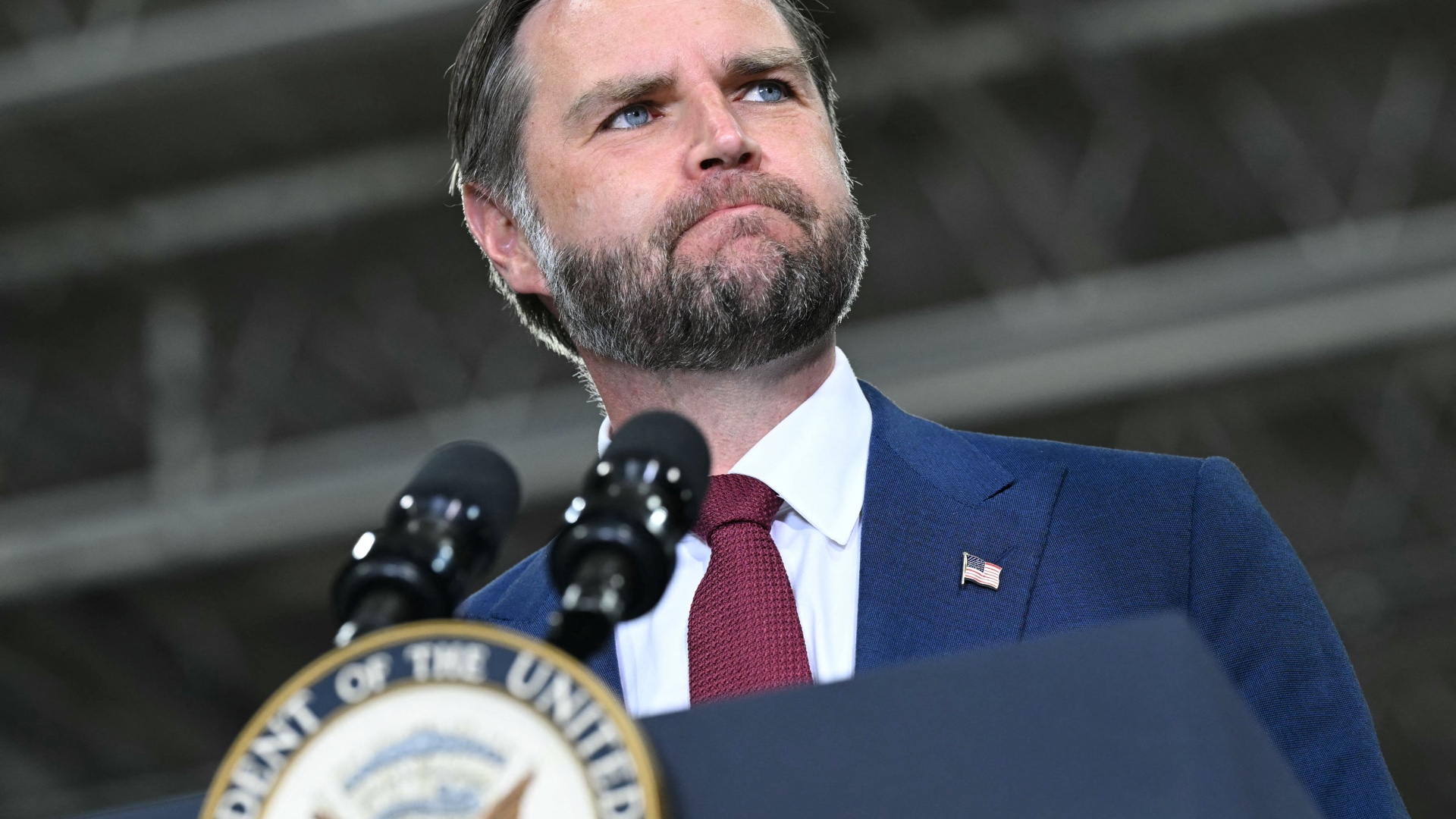
At a closed-door gathering of the Republican Jewish Coalition (RJC) in Las Vegas on Monday, U.S. Vice President JD Vance moved to ease growing concerns among the group’s members that the second Trump administration has deprioritized support for Israel, a reassurance that came amid a widening ideological shift within the Republican Party over Washington’s long-standing alliance with the Middle Eastern nation.
According to audio of the speech obtained by Politico, Vance’s remarks earned raucous applause from the crowd of RJC attendees, a cohort that entered the event deeply skeptical of the vice president. That skepticism stems from Vance’s past willingness to openly question the influence of the pro-Israel lobbying community in U.S. domestic politics, as well as his close ties to former Fox News host Tucker Carlson, who has emerged as one of the most high-profile critics of Israeli policy within the Republican Party.
The RJC, a group that has long maintained an unwaveringly pro-Israel stance, is currently facing an uphill battle to retain influence within the GOP as criticism of Israel surges, particularly among the party’s younger base. Beyond widespread condemnation of Israel’s military campaign in Gaza — which has been labeled a genocide by the United Nations and dozens of leading Holocaust scholars — many young conservative voters are increasingly questioning why the U.S. allocates billions of dollars in annual foreign aid to a nuclear-armed Middle Eastern state.
In his remarks, Vance acknowledged the growing generational divide in the party’s perspective on the U.S.-Israel relationship. “There is a growing suspicion among, I would call it, under-40s, of the US-Israel relationship,” Vance said in the audio. “I think my view is, what we have to do is articulate why this is in the best interest of the United States of America, and actually get out there and talk about the ways in which it is in the best interest of the United States of America.”
Vance also addressed backlash that followed his controversial appearance on the Joe Rogan podcast last month, where he made comments suggesting actors within the Israeli government were manipulating American public opinion to prolong a simmering conflict with Iran indefinitely. Vance defended his decision to speak on the popular platform, arguing that engaging with influential cross-ideological voices is a core part of building support for administration policy. “I think the best approach is to actually go in there and talk to him and make the argument as best as you can,” he said.
During the convention address, the vice president also strongly condemned antisemitism and the ancient anti-Jewish conspiracy theory of “blood libel” — a term Israeli officials regularly deploy to dismiss serious criticism of Israeli policy, including allegations of genocide in Gaza. Vance added that promoting such bigotry violates core Christian values.
Despite the skepticism heading into the event, RJC CEO Matt Brooks told Politico that the group’s community has a well-honed ability to detect political pandering, and he said attendees left Vance’s speech convinced the vice president’s message was genuine. “The Republican Jewish community has a great ‘bullshit detector,’ to understand when they’re being pandered to… And I don’t believe that anybody will come away from this convention thinking that they were pandered to,” Brooks said.
Vance’s willingness to engage with long-taboo questions about the U.S.-Israel alliance that previous Republican vice presidents and their administrations refused to entertain has sparked widespread speculation about a broader ideological shift within the GOP. Middle East Eye editor-in-chief David Hearst has even openly questioned whether Donald Trump will go down in history as the last overtly pro-Zionist U.S. president, with Vance currently widely viewed as the frontrunner to succeed Trump as the party’s leader in the next election cycle.
This is not the first time Vance has made public comments that have put him at odds with the pro-Israel establishment. Back in June, as he pushed back against Israeli criticism of a new memorandum of understanding (MoU) with Iran, Vance warned that Trump remained the only major world leader sympathetic to Israel, urging Israeli officials to avoid attacking their only powerful global ally.
Vance, who led the U.S. delegation in negotiations with Iranian officials in both Islamabad and Lucerne, framed the MoU as a new chapter in U.S. relations with the Iranian people. Speaking at a White House press briefing about the reported $300 billion reconstruction fund included in the agreement, Vance doubled down on his warning to Israeli leaders. “My message to them would be twofold. Number one: Donald J Trump is the only head of state in the entire world who is sympathetic to the nation of Israel at this moment in time,” Vance told reporters. “If I was in the cabinet of the Israeli government, I might not be attacking the only powerful ally that I have anywhere left in the entire world.”
The U.S.-Iran MoU sparked immediate outrage across Israel, where it was widely viewed as a major diplomatic victory for Tehran. The agreement has since largely collapsed, and on Tuesday, just one day after Vance’s RJC address, the U.S. military launched airstrikes on multiple Iranian sites amid an ongoing standoff over control of the strategic Strait of Hormuz.