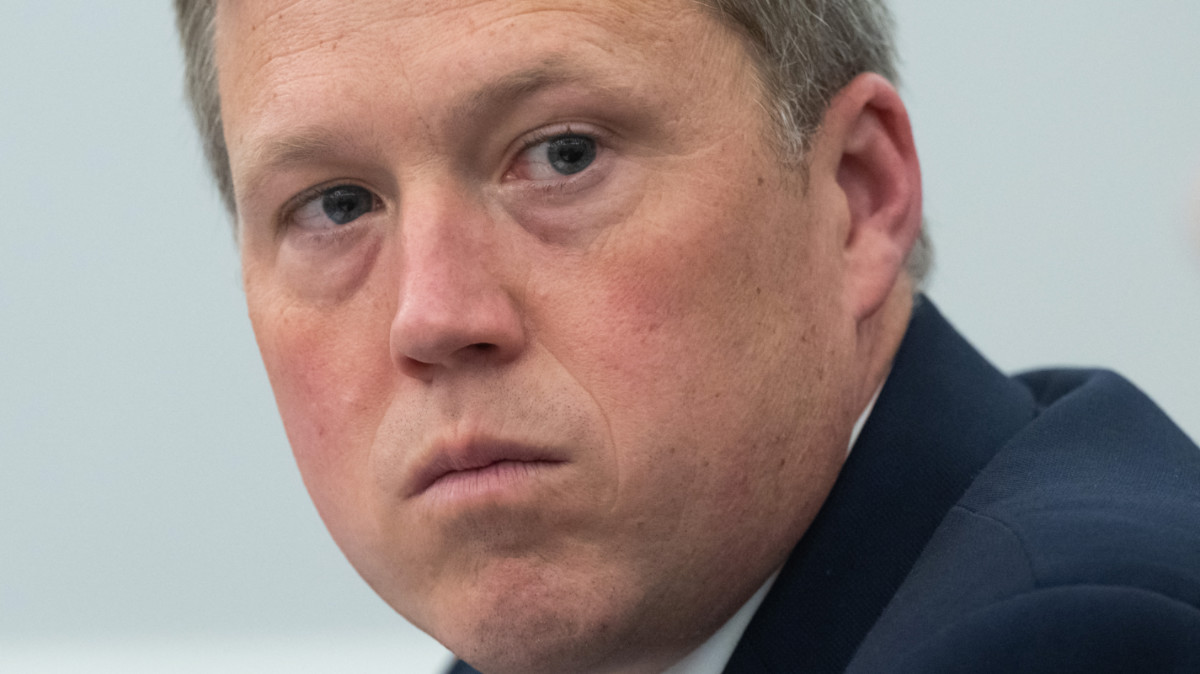
The White House made a formal confirmation Monday that the United States Army’s highest-ranking civilian official, Dan Driscoll, has formally stepped down, a departure that comes amid widely reported friction between Driscoll and Secretary of the Army Pete Hegseth over the Trump administration’s handling of the ongoing conflict with Iran.
In an official statement released to the public, White House Deputy Press Secretary Anna Kelly praised Driscoll’s tenure, framing his work as central to advancing President Donald Trump’s policy agenda of rebuilding American military strength. “Through his collaboration with the Commander-in-Chief and Secretary Hegseth, the U.S. Army today stands as more capable and powerful than at any point in recent history,” Kelly added in her remarks.
But Driscoll’s exit unfolds against a backdrop of growing unease within the Pentagon’s senior ranks over the trajectory and costs of the seven-month-long Iran campaign. The Washington Post reported Monday that the service chiefs of the Army, Navy, and Air Force, alongside four-star combatant commanders leading U.S. military operations across Europe, Asia, and Latin America, have privately cautioned Hegseth that extending large-scale combat operations in Iran will severely erode the United States’ ability to deter and respond to other emerging global security threats.
Military stockpiles of critical weaponry have already been strained to breaking point by the conflict, multiple independent outlets have confirmed. Earlier this month, the Associated Press reported that the Iran war has pushed stockpiles of advanced missile interceptors—particularly Patriot systems, which have been heavily drawn down to defend Ukraine against Russian ballistic missile attacks—into a “beyond critical” shortage. Reuters further corroborated these warnings, reporting that the U.S. has nearly exhausted its reserves of sophisticated long-range surface-to-surface missiles, including ATACMS and the newer Precision Strike Missiles (PrSM).
A veteran of the Iraq War, Driscoll first entered politics with an unsuccessful 2020 run for Congress before joining as an advisor to Trump’s 2024 presidential re-election campaign. He had been widely known as a close political ally of former Army Chief of Staff General Randy George, who was dismissed by Hegseth in a personnel shakeup earlier this year. Though public reports confirm repeated clashes with Hegseth, Driscoll long maintained a protected position in the administration thanks to his longstanding personal ties to Vice President JD Vance; the two attended law school together as classmates.
Vance, a leading figure in the Republican Party’s isolationist wing, has taken a high-profile stance opposing a prolonged U.S. military commitment in Iran. He led U.S. negotiations with Iranian officials in Pakistan-hosted talks held in Islamabad earlier this spring, and in July drew widespread attention for publicly accusing Israel of manipulating American public opinion to prolong the conflict.
In sharp contrast, Hegseth has emerged as one of the most outspoken proponents of continuing the Iran campaign, regularly holding combative press briefings where he has pushed back against critical media coverage of the conflict’s handling.
Intra-administration tensions over Iran policy extend well beyond Driscoll and Hegseth, too. Vance is widely viewed as a potential contender for the 2028 Republican presidential nomination, alongside Secretary of State Marco Rubio, who shares Vance’s skepticism of deepening U.S. engagement in the Middle East. Middle East Eye reported in March that Rubio and Hegseth have been locked in open conflict over the question of deploying additional U.S. ground troops to Iran at Israel’s request: Hegseth has repeatedly backed the proposal, while Rubio has warned it would trap the U.S. in another costly, open-ended Middle Eastern war.
The most immediate consequence of Driscoll’s resignation, analysts note, is that the U.S. Army now enters its seventh month of the Iran conflict without either permanent civilian leadership or a confirmed uniformed chief of staff, creating a leadership vacuum at the top of the service at a moment of unprecedented operational strain.