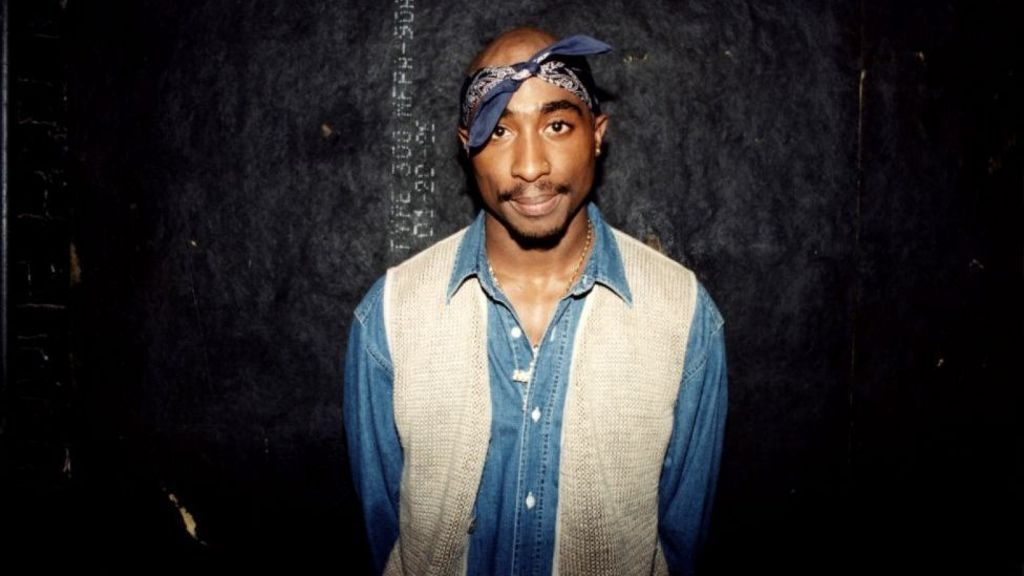
After three decades of unresolved speculation surrounding one of hip-hop’s most shocking tragedies, a Las Vegas court has finally handed down a guilty verdict in the murder trial of iconic rapper Tupac Shakur, closing a chapter that has haunted global music culture for generations. The defendant, Duane “Keffe D” Davis, was convicted of orchestrating the 1996 drive-by shooting that killed the West Coast rap legend, a outcome that drew raw emotional reactions from Shakur’s family inside the courtroom and reignited calls to solve the parallel unsolved killing of East Coast rap star The Notorious B.I.G.
For legal experts, the conviction marks a historic end to one of America’s highest-profile cold cases. “We’re talking about the greatest rapper of all time, an icon, and not a single arrest or prosecution for 30 years,” former prosecutor Neama Rahmani told the BBC, describing the case as an uphill battle that few believed prosecutors could win. “This is huge. It was a tough case. It’s a cold case. It gives closure to 30 years of mystery, the end of an era.”
Inside the courtroom, the moment the guilty verdict was read brought immediate tears and embraces from Shakur’s loved ones, with one family member even hugging the lead prosecutor on the case. For his part, Davis has already announced he plans to appeal the ruling, while legal observers and hip-hop fans alike have turned their attention to the long-dead case of Christopher Wallace, better known by his stage names Biggie Smalls and The Notorious B.I.G., Shakur’s iconic East Coast rival who was killed in a nearly identical drive-by shooting in Los Angeles just six months after Shakur’s death.
What makes the Davis conviction particularly notable is that the entire case rested almost entirely on Davis’ own repeated public admissions of his role in the killing. Over decades, Davis openly discussed his involvement in multiple media documentaries, a published memoir, podcast interviews, and even a secret police interrogation. He claimed that on the night of September 7, 1996, he placed a firearm in the backseat of a vehicle, and his nephew Orlando Anderson fired the fatal shots at Shakur as their car pulled alongside Shakur’s near the Las Vegas Strip. Anderson, who always denied killing Shakur, was shot and killed in a separate gang confrontation in 1998.
Notably, prosecutors presented no physical evidence to corroborate Davis’ admissions: there were no eyewitnesses who could place Davis in the vehicle during the shooting, no murder weapon was ever recovered, and no video or photographic evidence placed Davis at the scene that night. Davis’ defense team argued aggressively that his repeated confessions were nothing more than fabricated tall tales designed to sell books and boost his public profile, telling the jury that there was no concrete proof of his guilt. Trial attorney Shaun Kent summed up the prosecution’s position ahead of the verdict, noting that “the strongest witness against him – is him.” The case only moved forward because Davis repeatedly chose to discuss his role publicly, with Kent explaining “the case really evolved with each interview and moment that Davis decided to open his mouth and talk about the case more.”
Rahmani argued that Davis’ repeated willingness to confess on the record makes him one of the most unassuming criminals in recent history. “He would have never have faced charges if he had stayed silent,” Rahmani said. “He really couldn’t stop himself. Even when he was arrested and in custody, he was giving interviews.”
The trial also pulled the jury back into the context of 1990s hip-hop culture, when a brutal high-profile feud between East Coast and West Coast rap scenes dominated the genre, and deep-seated gang influence and a street code of silence kept witnesses from cooperating with police. Even after being fatally wounded, Shakur refused to name his attackers to responding officers, telling an ambulance crew that he would handle the situation on his own. That same code of silence allowed Biggie’s killing to remain unsolved for 29 years.
Davis has long been tied to Biggie’s killing as well: he was acquainted with the rapper and was present at the same Los Angeles party the night Biggie was killed, and the investigator who interviewed Davis after Biggie’s death even testified during the Tupac trial. The Los Angeles Police Department has confirmed that Biggie’s murder remains an active, open investigation, and legal experts are hopeful that the Tupac conviction will encourage investigators to re-examine the 29-year-old cold case.
“It’s really a stain on the LAPD. The fact that this could happen and not a single arrest was made and no one was prosecuted,” Rahmani said of Biggie’s unsolved death, which occurred on a public street in the middle of America’s second most populous city. “Prosecutors don’t like to lose and tend to be a little gun shy, but maybe this [Tupac’s conviction] will embolden folks in Los Angeles to maybe take another look at it, a cold case that’s coming up on 30 years.”
In a statement to the BBC, LAPD Lieutenant Elpidio Orozco confirmed the department remains committed to solving the case, saying “The murder of Christopher Wallace remains an open, unsolved case within LAPD’s Robbery-Homicide Division,” and urging any member of the public with new information to contact authorities.
For fans and family of Tupac Shakur, however, the verdict brings a long-awaited end to three decades of uncertainty, closing one of the most infamous chapters in modern music history.