On Monday, the most prominent grassroots advocacy organization representing Iranian American communities, the National Iranian American Council (NIAC), issued a formal appeal to top officials in the Trump administration demanding an urgent reversal of new sanctions that have effectively sent a message the United States is in conflict with the Iranian public, while calling for permanent exemptions for all humanitarian, educational and cultural initiatives.
NIAC’s open letter was addressed to Treasury Secretary Scott Bessent and Secretary of State Marco Rubio, and it warned that the imminent withdrawal of long-standing general licenses will deepen growing harm already being felt across sectors that have long connected U.S. and Iranian communities. These licenses previously cleared the way for U.S. universities, educational testing providers and other non-governmental entities to offer life-changing academic opportunities to Iranian citizens.
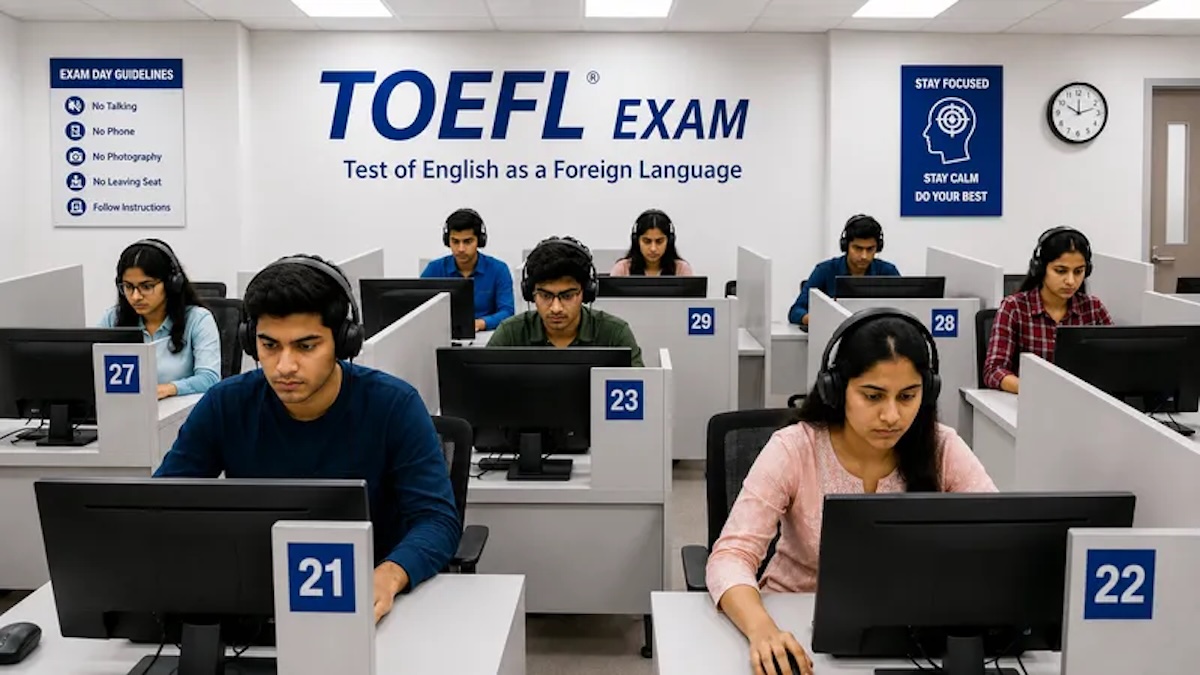
The appeal comes in the wake of multiple confirmed reports that major testing providers have already restricted access for Iranian students following the new sanctions rollout. The Education Testing Service (ETS), which administers two of the most widely required standardized tests for international study — the Test of English as a Foreign Language (TOEFL) and the Graduate Record Examination (GRE) — has halted all testing operations within Iran. The Duolingo English Test, a popular alternative proficiency assessment run by global language learning platform Duolingo, has also been taken offline for users in Iran and any test-takers holding Iranian identification.
Labeled “Operation Economic Outcast,” the Trump administration’s new sanctions are formally framed as a response to the Iranian government’s decision to restrict access to the Strait of Hormuz, a retaliatory move amid the ongoing U.S.-Israeli war against Iran. But NIAC President Jamal Abdi argued in the letter that these new restrictions will have no meaningful impact on the Iranian ruling establishment, despite their stated policy goal.
“Instead, it is already being felt by American entities and Iranian students,” Abdi wrote. “Iranian students have been barred from taking key exams required for academic studies by US organizations.”
Abdi called on the administration to immediately reinstate two critical regulatory frameworks: 31 CFR § 560.544, which grants authorization for U.S. individuals and organizations to conduct certain educational activities in third countries, and Iran General License G, the legal provision that explicitly permits educational exchange programs between the two nations.
“The Trump administration would be wise to bolster the limited educational, humanitarian, and cultural channels that exist between ordinary Iranians and the United States, rather than send a message that the US is at war with the Iranian people,” Abdi stated.
For decades, Iran has ranked among the countries with the highest global demand for TOEFL testing, as thousands of Iranian students pursue undergraduate and graduate study at international institutions each year. Abdi noted that cutting off access to these core testing infrastructure will create insurmountable barriers for Iranian citizens seeking global educational opportunities.
NIAC outlined the overlapping barriers Iranian students already face when pursuing study in the United States: a long-standing travel ban that blocks most Iranians from securing U.S. visas, paired with the new sanctions that eliminate access to required English proficiency exams, academic services and university enrollment.
“There is no world in which the US preventing young Iranians from taking English proficiency tests leads to the opening of the Strait of Hormuz and yet that appears to be the rationale for this cruel new policy,” Abdi said in an accompanying public statement. He reiterated that preserving and expanding people-to-people connections between U.S. and Iranian communities is a far more productive policy path than cutting these ties.
Beyond educational access, Abdi also pressed administration leaders to reverse the suspension of licenses that permit Iranian Americans to send remittances to immediate family members residing in Iran, as well as licenses that allow athletic competitions between U.S. and Iranian teams. He warned that the suspension of sports exchange licenses creates unnecessary complications for the 2028 Summer Olympic Games scheduled to be hosted in Los Angeles, damages the U.S.’s global reputation as a welcoming host nation, and delivers no tangible policy benefits to advance U.S. strategic goals.
Abdi explained that the exemptions now being rolled back by the White House were first introduced more than a decade ago specifically to mitigate harmful unintended consequences of earlier U.S. sanctions regimes, which had accidentally cut off ordinary Iranians from access to academic opportunities and people-to-people exchanges.
“Now, it appears that these have become very much intended consequences aimed at the Iranian people, which is a self-defeating message for the US to send to Iranians and the world,” Abdi continued. “There is absolutely no justification for this.”