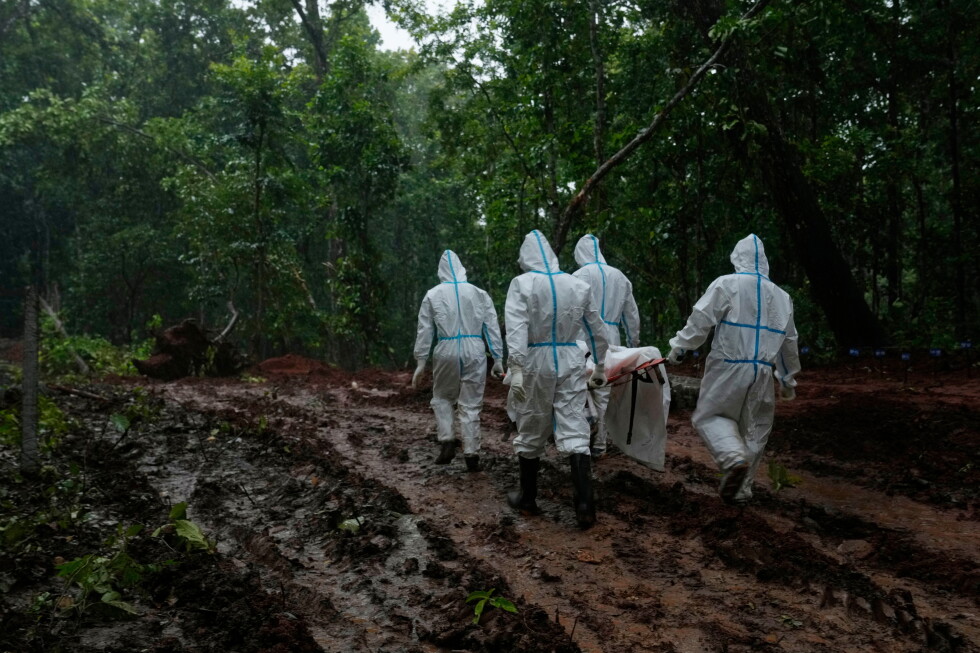
KATHMANDU, Nepal — Catastrophic flash flooding and subsequent mudslides along the Nepal-China border have left a devastating trail of destruction, with the confirmed death toll surpassing 950 and thousands more still unaccounted for. As of Monday, Nepalese rescue teams have launched an urgent race against the clock to reach hundreds of construction workers who remain trapped in flooded and mud-buried tunnels at a Himalayan hydropower project.
Disaster response experts emphasize that the first 72 hours after a disaster event are the most critical for saving lives, as survival prospects plummet rapidly without access to basic necessities like clean drinking water. Jennifer Horney, a disaster epidemiologist at the University of Delaware, explained that the outcome for trapped workers will largely depend on whether the hydropower site had pre-established emergency protocols for natural disasters or infrastructure outages.
“If emergency plans were in place, workers would likely have been trained to locate emergency exits, but the extreme force of this flood has packed solid mud across the site, which could block even marked escape routes and make executing pre-planned rescue strategies incredibly difficult,” Horney noted.
A core unanswered question remains: did the tunnels stock emergency supply caches that the trapped workers can access right now. Without clean, safe drinking water, even people with limited physical activity cannot survive longer than roughly three days, Horney added.
Alongside clean water, access to breathable oxygen is another foundational factor for survival. Six days after the flood hit, concerns about suffocation are growing by the hour, though early reports suggest some workers have secured limited oxygen supplies. Jakob Steiner, a Dhaka-based geoscientist from the University of Graz in Austria, pointed out that the tunnels themselves are large enough to accommodate large construction vehicles, which leaves open some air pocket space for trapped people.
“From what we have learned, rescuers have managed to route small amounts of oxygen to some groups of trapped workers, and active extraction efforts are ongoing,” Steiner said. “But this is still a race against time. Beyond oxygen, the trapped workers urgently need food and potable water to hold on.”
Disaster preparedness experts add that there are multiple other factors that will shape survival outcomes beyond access to basic supplies. Thomas Chandler, director of Columbia University’s National Center for Disaster Preparedness, noted that the presence of serious injuries among trapped workers and the ability to deliver emergency supplies through temporary access routes are also critical variables. Chandler pointed to a 2023 Himalayan tunnel collapse triggered by a landslide, where 41 Indian workers were successfully rescued after 17 days trapped underground—an outcome made possible by pumping in consistent supplies of food, water and oxygen through narrow pipes during the rescue effort.
The internal climate of the tunnels also impacts how long workers can survive. If the tunnels are hot and humid, dehydration will set in far more quickly, even for people who are conserving energy. For those who are eventually pulled out alive, disaster experts note that comprehensive physical and mental supportive care will be essential, as the stress of prolonged isolation and harsh conditions takes a major toll on survivors.
This report was produced in collaboration with Associated Press journalists Shristi Kafle in Kathmandu and Huizhong Wu in Bangkok. The AP Health and Science Department receives funding support from the Howard Hughes Medical Institute’s Science and Educational Media Group and the Robert Wood Johnson Foundation, and retains full editorial independence over all content.