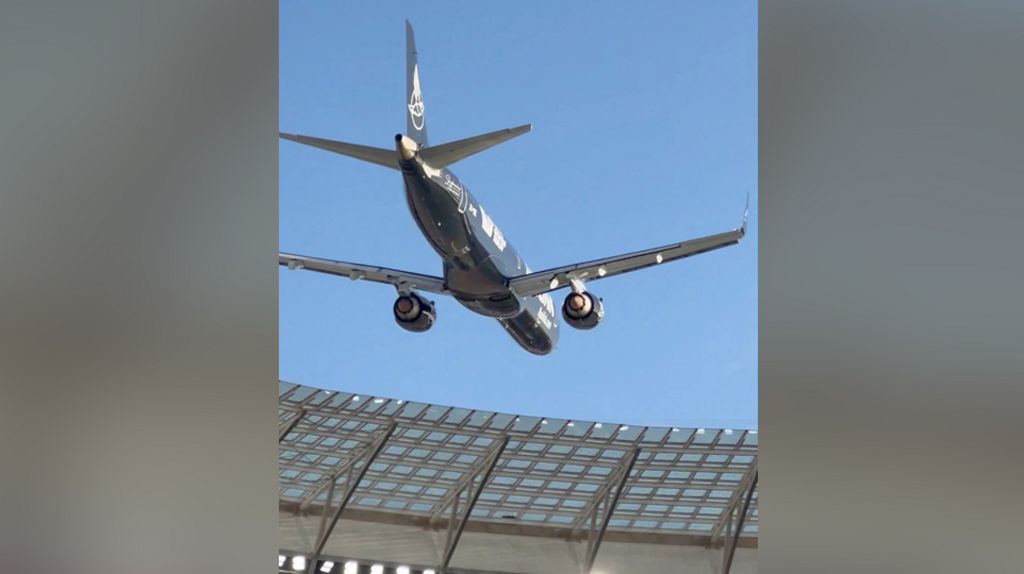
A high-stakes pre-match aerial stunt by South African regional carrier Airlink has sparked fierce public debate, after two of its jets executed an extremely low close formation flyover Cape Town’s packed DHL Stadium just ahead of a hotly anticipated rugby test between South Africa and New Zealand, two of the sport’s most bitter rivals.
Flight tracking data from industry platform Flightradar24 shows the lead aircraft passed within 15 meters, or less than 50 feet, of the stadium’s upper structure, a maneuver that has drawn accusations of reckless endangerment from critics while winning praise for its technical precision from aviation and sports fans alike.
In the wake of growing criticism, Airlink has pushed back to defend the event, emphasizing that the stunt was months in the making and received full regulatory approval from South Africa’s civil aviation authorities. In an official statement published on a South African government news portal, the airline detailed the extensive precautions taken to mitigate risk: both aircraft were crewed exclusively by top veteran pilots, with each flight deck staffed by three senior captains serving as commander, co-pilot, and dedicated safety and technical observer respectively.
The airline added that all flight parameters, including altitude and speed, were pre-approved in protocols and rehearsed extensively ahead of the public event, with strict safety limits enforced throughout the flypast. Airlink doubled down on its confidence in the maneuver in a social media post accompanied by viral footage of the stunt, tagging the post with three words: “Planning. Precision. Performance.”
The polarizing reaction to the flypast has split public opinion. Critics have questioned the wisdom of conducting such a high-risk maneuver over a stadium filled with thousands of spectators, warning that even a small technical error or pilot mistake could have led to catastrophic consequences. Conversely, many South Africans have embraced the stunt as a display of national skill and pride, echoing the long-standing tradition of low-altitude flypasts ahead of major South African rugby matches.
That tradition dates back to one of the most iconic moments in South African sports history: the 1995 Rugby World Cup final, also hosted against New Zealand in Johannesburg. That event, immortalized in the Clint Eastwood-directed Hollywood feature *Invictus*, carried profound national symbolism, marking a unifying moment for South Africa just years after the end of apartheid, when then-president Nelson Mandela – the country’s first Black head of state – wore the Springboks jersey, a symbol once closely tied to the apartheid regime, to celebrate the team’s victory.
As debate over the 2026 stunt continues, the flypast has cemented its place as a beloved, if controversial, pre-ritual for the country’s biggest rugby matches, balancing national pride against ongoing questions about public safety.