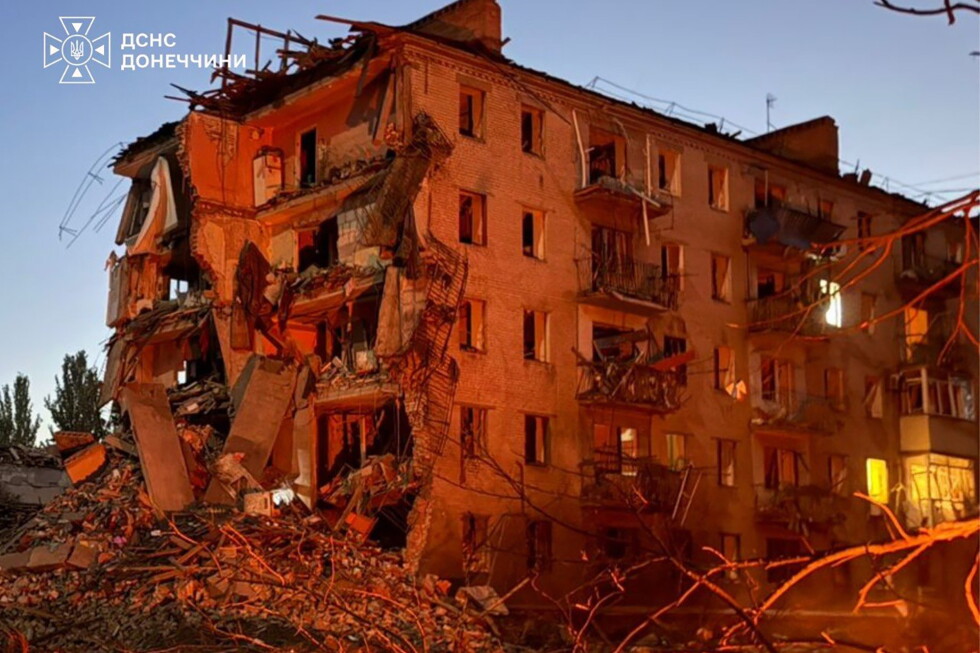
Five straight days of unrelenting Russian aerial bombardment have pounded Kyiv and surrounding communities in central Ukraine, leaving civilian supply chains shattered and the population grappling with the growing threat of jet-powered drone strikes as the war enters its fifth year. The intensification of Moscow’s air campaign, which has ramped up significantly in recent months, has upended daily life across the Kyiv region, with near-constant air raid alerts disrupting work, school, and basic routines.
Over the weekend alone, between Thursday and Sunday, Russian forces launched nearly 1,500 drones across Ukrainian territory, approximately 800 of which are the fast, hard-to-intercept jet-powered variants that Ukrainian defense officials say have created a pressing new challenge. A devastating Saturday strike killed at least 38 civilians, marking the deadliest single Russian attack on Ukraine so far this year, following two major July assaults that claimed nearly 50 civilian lives.
Local military officials confirmed that Monday’s strikes hit multiple warehouse facilities in the Kyiv suburbs of Brovary and Boryspil, wounding four people. Repeated targeting of food storage and distribution hubs has stripped shelves bare at supermarkets across the capital region, stoking widespread public anxiety over potential food shortages. To calm growing panic, Serhii Beskrestnov, an adviser to Ukrainian President Volodymyr Zelenskyy, released a public statement Monday reassuring residents that Ukraine will avoid mass hunger. Beskrestnov urged the public to disregard spread rumors and disinformation, noting that domestic producers and retailers are actively restructuring supply routes to compensate for destroyed infrastructure, and European allies have pledged to step in to cover any gaps in food supplies if needed.
As the academic year was set to begin Tuesday across Ukraine, many parents remained uncertain whether to send children back to in-person classes. While all Ukrainian schools are required to maintain functional air raid shelters and offer remote learning options, the persistent threat of attacks has left many families hesitant to resume normal on-campus activities.
In a social media address Sunday evening, Zelenskyy outlined Russia’s evolving strategy, saying Moscow’s core goal is to erode the resolve of the Ukrainian people over time. “Right now, Russia’s tactic is to wear down Ukraine and Ukrainians — first and foremost, our people,” he said. The Ukrainian leader also acknowledged that the growing volume of fast jet-powered drones deployed by Russia has stretched existing Ukrainian air defenses thin. Currently, Ukrainian combat aircraft are the primary line of defense against these drones, but Kyiv is racing to develop more effective counter-technology.
Zelenskyy announced that four domestic Ukrainian companies have developed prototype interceptor drones designed to counter Russian jet-powered drones, with one company delivering particularly promising results. He did not share additional technical details on the systems under development.
Beyond targeting food infrastructure, Russia has doubled down on a campaign to disable Ukraine’s energy infrastructure ahead of the approaching winter. On Sunday, the Russian Defense Ministry explicitly warned that it would carry out “massive strikes” against Ukrainian energy facilities, a tactic Moscow used in previous winters to leave civilians without heat or running water. Overnight Monday, a large Russian drone attack hit the northern Chernihiv region, which shares a border with Russia, damaging an energy facility, according to Viacheslav Chaus, head of the region’s military administration. Chaus did not release further details on the extent of the damage.
Ukraine has in turn stepped up cross-border attacks on Russian infrastructure to try to shift the burden of war to ordinary Russian civilians. In recent weeks, Ukrainian strikes have targeted major Russian online retail platforms and oil processing facilities, creating limited shortages for everyday Russians that have not resulted in the same level of civilian casualties seen in Ukraine.
On Monday, Russian officials reported that their air defense forces shot down 239 Ukrainian drones over 14 Russian regions, the occupied Crimean Peninsula, and Black Sea waters overnight. Separately, acting regional governor Alexander Shuvayev confirmed that a Ukrainian missile strike on the border city of Belgorod Sunday evening killed three civilians.
This reporting was contributed by the Associated Press, with Hatton filing from Lisbon, Portugal, and Elise Morton adding reporting from London. Full coverage of the Russia-Ukraine war is available on the AP News hub.