Deep-rooted distrust of Washington has split Iran’s political establishment over recent diplomatic outreach from regional mediators, fresh U.S. sanctions, and internal dissent, with hardline factions rejecting any negotiated path while moderates highlight the crippling cost of ongoing tensions to Iran’s economy.
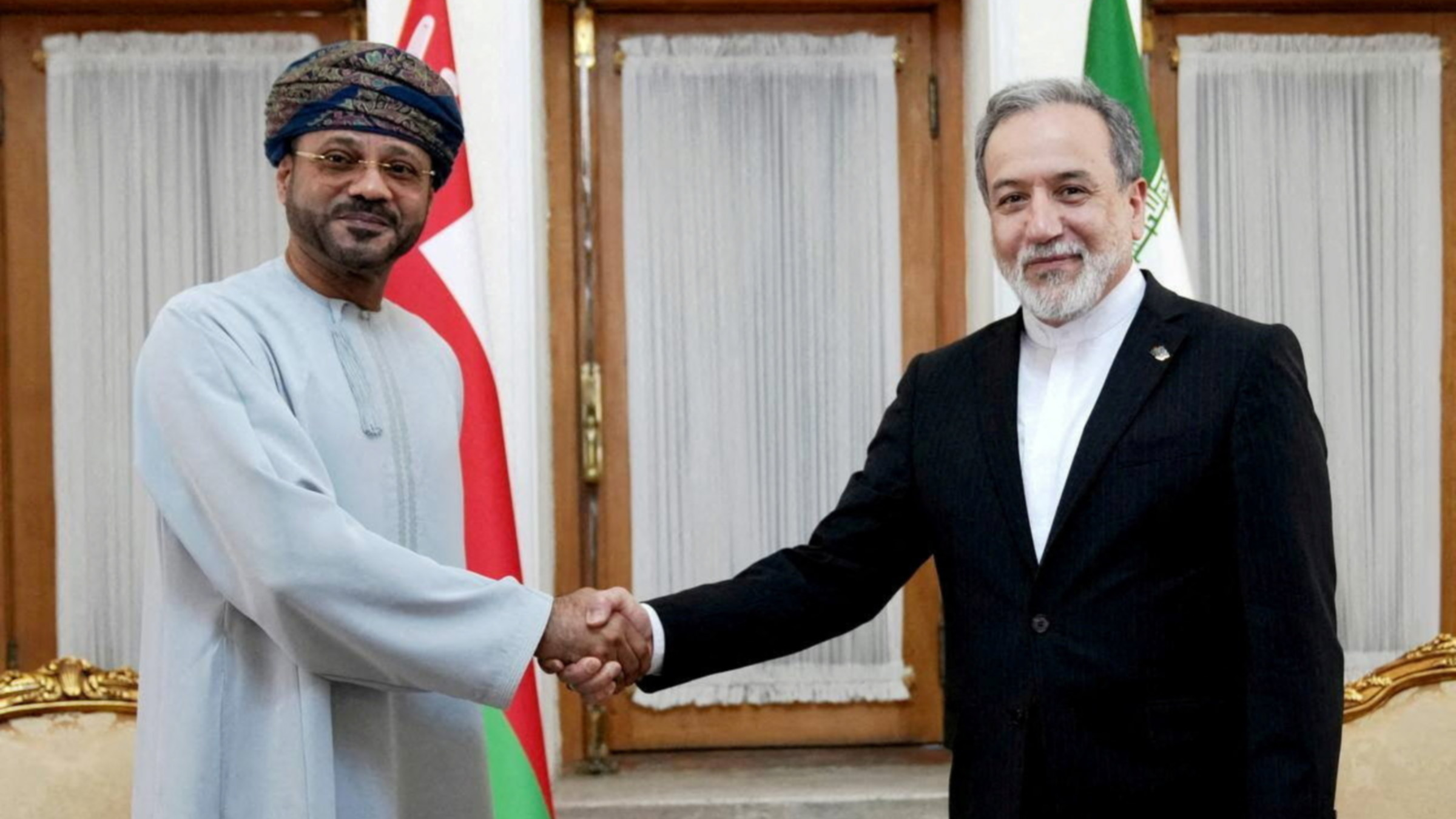
Islamabad and Muscat have recently stepped forward to serve as intermediaries between Tehran and Washington, aiming to de-escalate years of hostile confrontation between the two nations. But Iran’s influential conservative principlist bloc has greeted these mediation efforts with open skepticism, arguing that any regional diplomatic initiative is merely a front for Washington to deceive Iranian leadership and shift Tehran’s strategic calculations.
Kayhan, a leading hardline newspaper closely aligned with the principlist camp, framed the recent visits of Pakistani and Omani officials to Tehran as a “new phase in the White House’s deception operation.” This suspicion is not unfounded: on two separate occasions, both the United States and Israel have launched military strikes against Iranian targets while formal negotiations with Tehran were ongoing. These repeated experiences have eroded trust across much of Iran’s political spectrum, leaving deep skepticism toward any new proposal for talks or a ceasefire with the U.S.
In its coverage, Kayhan argued that after failing to weaken Iran through military confrontation and escalating economic pressure, Washington has turned to regional mediators to extract itself from its current diplomatic impasse. The outlet doubled down on its hardline stance, emphasizing that Tehran must maintain military pressure and respond to the U.S. with unwavering toughness. It added that following every U.S. withdrawal from international agreements (a pattern seen in past deals), Tehran will set broader demands and stricter conditions for any future negotiations, including the full lifting of the U.S. economic blockade, the release of all Iranian frozen assets abroad, the complete removal of all sanctions, and the full practical withdrawal of U.S. military forces from the region.
The debate over U.S. policy gained new urgency this week, one day after Washington announced a new round of sanctions targeting Iran. Most Iranian newspapers led their Tuesday front pages with coverage of the measures, but coverage split sharply along political lines.
Reformist-aligned outlets focused on Iran’s struggling economic conditions and the urgent need to resolve the crises dragging down livelihoods. Pro-reform newspaper Etemad published a detailed analysis of the headwinds facing President Masoud Pezeshkian’s new government, identifying persistent budget deficits, a widespread lack of domestic and foreign investment, the U.S. naval blockade in the Persian Gulf, and decades of sweeping U.S. sanctions as the primary barriers to improving living standards for Iranian citizens.
By contrast, conservative and hardline outlets framed the new sanctions as toothless, arguing that Iran has long adapted to bypass restrictions and that the measures will ultimately backfire on Washington. Kayhan dismissed the new sanctions as a political bluff, claiming the U.S. lacks the practical leverage to enforce the measures meaningfully. Javan Daily, a publication funded by the Islamic Revolutionary Guard Corps (IRGC), echoed this assessment, running its coverage under the provocative headline “Trump Plants ‘D-Day’, Reaps ‘Waterloo’.”
In its report, Javan argued that the new sanctions are a boomerang that will ultimately harm the U.S. itself, impacting everything from domestic U.S. inflation and interest rates to federal government financing costs and the Treasury bond market. The outlet noted that squeezing Iran economically does not only harm Tehran: in a protracted economic standoff, the pressure also tightens around Washington’s own economic interests.
Beyond tensions with the U.S., the ongoing stalemate has reignited internal debate over how Iran should approach its relations with Gulf Arab states. Former Iranian ambassador Mohammad Masjed-Jamei has publicly called for a far firmer policy toward the Gulf monarchies, criticizing what he frames as excessive courtesy in Tehran’s current approach to the region.
Masjed-Jamei described Saudi Arabia, Iran’s main regional rival among Gulf states, not as an “older brother” but as the “dominant power” in the Gulf whose foreign policy actively fuels regional tension. He also argued that the United Arab Emirates exercises outsized regional influence that far outstrips the country’s actual strategic capacity. The former ambassador argued that Iran’s core mistake in dealing with Gulf states is its overly polite approach, which relies heavily on rhetoric of brotherhood and friendship instead of firm negotiation. “You should not try too hard to get a smile from the other side,” he said, adding that Iran should follow the example of Turkey, which maintains working relations with Gulf states while holding firm to its own strategic interests. Masjed-Jamei argued that Tehran should engage with regional Arab states in a way that matches Iran own regional weight, size, historical standing and strategic position.
Domestically, as Iran prepares for the start of a new academic year, disciplinary action continues against students at Sharif University of Technology, one of the country’s most prestigious higher education institutions. Local Iranian media reports that six students have already been expelled from the university in connection with anti-establishment protests that swept the campus in January.
Mahmoud Bahmanabadi, Sharif University’s deputy for student affairs, confirmed that 236 students were referred to the university’s disciplinary committee in connection with the January unrest. After reviewing evidence, the university opened formal disciplinary cases against 115 of the referred students, and roughly 40 students accused of more severe violations have been summoned for disciplinary hearings.
Bahmanabadi stated that “so far, six people who attempted to burn the sacred flag of the Islamic Republic or raised the flag of the monarchists at the university have received expulsion orders.” Other disciplinary penalties handed down include formal written reprimands and suspensions of one to two academic semesters.