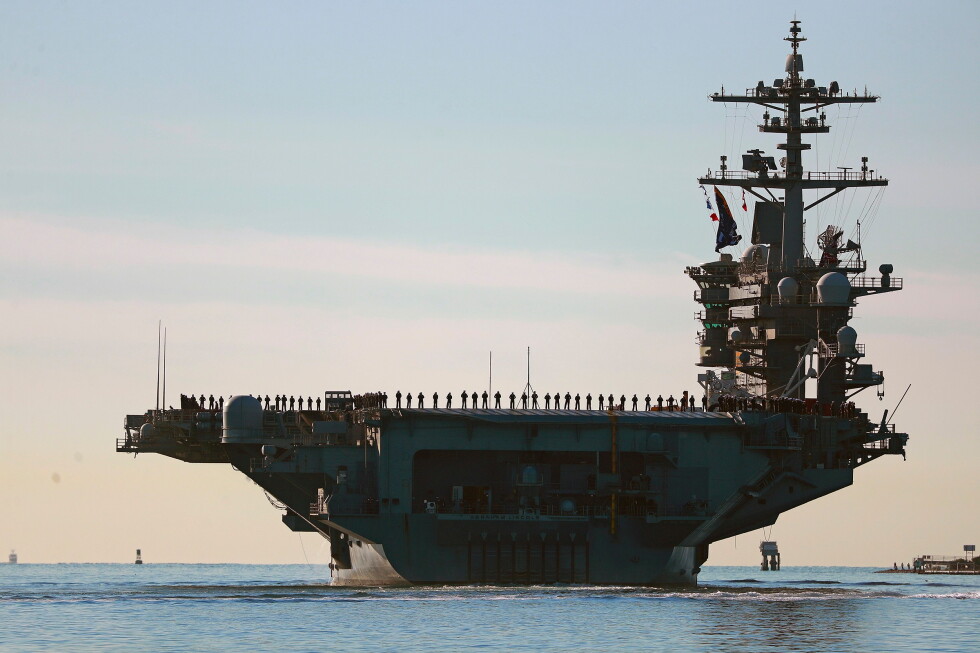
BANGKOK – After a grueling, months-long deployment supporting U.S. military operations in the Middle East, the U.S. Navy aircraft carrier USS Abraham Lincoln will dock for a scheduled rest and recovery stop in Thailand, Thai defense officials confirmed Wednesday.
The nuclear-powered carrier has made military headlines for setting an unofficial record for uninterrupted time at sea, spending more than 250 consecutive days deployed without a port call. This extended tour, carried out as part of U.S. posturing against Iran, has sparked growing public and internal concerns over the well-being of the 5,000-plus crew on board. Multiple unconfirmed reports have documented worsening mental health outcomes among sailors, as well as persistent shortages of critical daily supplies including fresh food and basic hygiene products.
A Thai government official, who requested anonymity due to not being cleared for public media statements, confirmed the carrier will make a brief stop to allow crew rest and resupply before the ship returns to U.S. home ports. A separate official statement released Tuesday by the Royal Thai Navy clarified that three vessels from the Abraham Lincoln carrier strike group are scheduled for a short recuperation stop in eastern Thailand, and no joint military exercises will be conducted during the visit.
Citing operational security protocols, the Royal Thai Navy did not release the names of the vessels, the specific port of call, or an exact arrival date. The U.S. Embassy in Bangkok has not yet responded to requests for comment on the planned stop, and U.S. Navy leadership also declined to provide additional details on the deployment or upcoming visit.
Extended carrier deployments have long been documented to take a significant toll on both personnel and hardware. Long separations from family and home erode service members’ mental stability over time, while constant operations without scheduled maintenance put excess strain on the ship’s hull, systems, and combat equipment.
While open hostilities between the U.S. and Iran have de-escalated in recent weeks, the U.S. Navy continues to enforce a reimposed naval blockade on Iranian ports along the Strait of Hormuz, a critical global chokepoint for oil trade. The Trump administration has so far offered no clear timeline or strategy for drawing down its military presence in the region and concluding the extended deployment of the strike group.