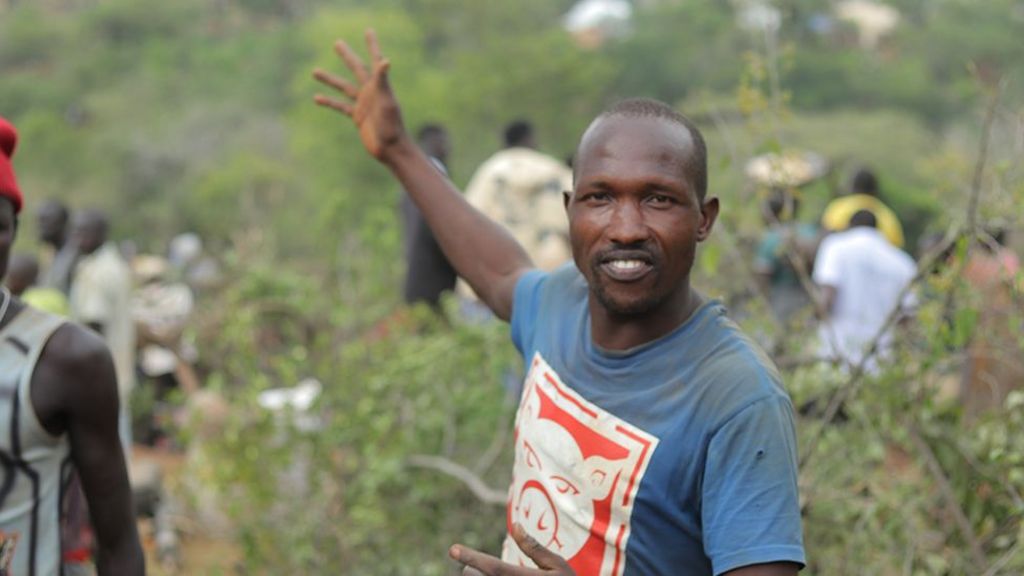
In the remote, mountainous badlands of Kenya’s western West Pokot County, a routine search for a missing goat has upended life forever for a tiny rural community, drawing tens of thousands of hopeful prospectors from across Kenya and neighboring Uganda in a frenzied modern gold rush.
Thirty-three-year-old Manasse Lomachar, a local goat herder, stumbled onto the find that ignited the rush entirely by chance several weeks ago. While wandering the riverbanks looking for his stray animal, he came across a small group of women panning for trace gold deposits in the seasonal riverbed. When he joined their efforts, he unearthed a 3-gram gold nugget that he sold for 36,000 Kenyan shillings, equal to roughly $280. Word of his find spread like wildfire, setting off a wave of migration that transformed the once-quiet bush grazing grounds into a sprawling, makeshift mining camp pocked with deep excavation pits and mounds of discarded earth.
Local authorities confirm that at the peak of the rush, roughly 10,000 prospectors converged on Cheporor, the small village near the discovery site. While small-scale alluvial gold panning has long been a quiet side income for local women, who typically earn between $8 and $23 a week from small finds, the discovery of larger deposits in early August 2026 is what drew crowds of inexperienced hopefuls. Many of these new arrivals rely on erratic, low-income small-scale farming to get by, and even a tiny gold find could reshape their family’s long-term stability. Rumors of large early finds spread rapidly, exaggerated as they passed from person to person, bringing in people with little to no mining experience who hoped to replicate the early successes.
For many who joined the rush, the draw is straightforward: escaping generational poverty and covering basic life costs that remain out of reach on a farmer’s income. Patrick Lokolia, a farmer and herder from the nearby village of Napawoi, came to the site hoping to earn extra money to cover mounting school fees for his children. Eighteen-year-old Abigael Chelengat, who had never mined before traveling to Cheporor from a nearby district, says she is searching for gold to pay her own school fees and keep her younger siblings enrolled in classes. Even those who have yet to find any gold remain undeterred. Mugisha Godfrey, an artisanal miner who traveled from eastern Uganda for $27 to reach the site, says he cannot return home empty-handed, despite sleeping under open trees and working around the clock in harsh conditions. As of mid-August, around 2,500 prospectors remain on site after the initial wave of new arrivals faded when many gave up the search without finding significant deposits.
The sudden influx of people has created both unexpected economic opportunities and severe growing pains for the underdeveloped region. More than 200 new small businesses have sprung up around the mining site to serve the new population: vendors like Irene Ameja, who traveled from neighboring Baringo County, sell food, bottled water, and other daily essentials to workers. Ameja says she hopes to earn enough to expand her small business long-term, but she also highlights the steep challenges of operating in the remote area: there is no access to clean drinking water or bathing facilities, and women face increased safety risks after dark, as the vast majority of people camped on site are men.
Local officials acknowledge the unregulated rush has placed immense strain on an area with almost no existing infrastructure: there is no piped water, limited sanitation services, and no formal housing. Public health teams have been deployed to the site to monitor conditions and prevent outbreaks of preventable disease. Security patrols have also been increased amid widespread concerns about sexual violence and the vulnerability of women and girls working and camping in the open. Authorities are also preparing for the September start of the school year, implementing measures to remove underage miners from the site and encourage children to return to classes.
As prospectors continue their search, many are digging ever-deeper pits to reach potential deposits, and multiple truckloads of excavated material have already been sent to the nearby town of Ortum for commercial processing. Officials are still waiting on test results to confirm the size and commercial viability of the overall gold deposit, leaving the long-term future of mining in Cheporor uncertain.
For Lomachar, the man whose accidental find started the rush, the solution is not to shut down mining operations but to formalize and support the local industry. He points to the thatched-roof huts that make up most of the nearby village as proof of the area’s deep poverty, and says organized, supported mining could lift the entire community out of deprivation. He is calling on the Kenyan government to provide local miners with equipment like metal detectors to more safely and effectively map and extract deposits, turning the accidental discovery into long-term, sustainable development for the region.