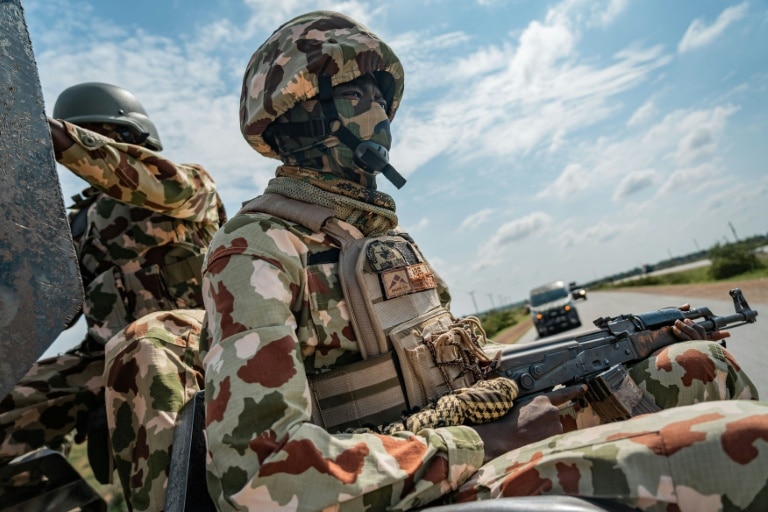
A deadly attack by a jihadist faction during Friday prayers in Nigeria’s central Niger State has left scores of civilians dead or kidnapped, according to survivor and lawmaker accounts shared with Agence France-Presse on Saturday. The violence unfolded when a clash broke out between two rival militant groups, creating a chaotic window that allowed dozens of captives and survivors to escape.
Nigeria has grappled with a 17-year jihadist insurgency that began with Boko Haram’s 2009 uprising, one of the longest-running and deadliest extremist conflicts in Africa. While the insurgency was originally concentrated in the country’s northeast, where the 2014 mass kidnapping of 276 Chibok schoolgirls drew global outrage, the conflict has splintered and spread in recent years. The attack on Friday took place near Nigeria’s western border with Benin, a region that has seen a sharp spike in militant activity from local armed groups and extremist fighters moving north from the Sahel.
Jibril Ahmad, a survivor of the attack on Dikera village in Borgu Local Government Area, described the sudden assault that came immediately after the community concluded its weekly Friday prayer. “Soon after finishing the normal Friday prayer, the armed group of Lakuwara, in their hundreds, wielding guns, knives and machetes, began to attack us,” Ahmad recalled. He added that the attackers justified the killings by claiming village residents were not following what the group considers “true teachings of Islam.” The neighboring village of Binzi was also targeted in the coordinated assault, both Ahmad and Nigerian federal representative Jafaru Mohammed confirmed to AFP.
Lakurawa, the group that launched the initial attack, is a little-understood extremist faction that regional security researchers have linked to the Islamic State Sahel Province (ISSP), a major jihadist organization that controls large swathes of territory in neighboring Burkina Faso, Mali, and Niger. The violence took an unexpected turn when a second local jihadist group, called Mahmuda, intervened and opened fire on Lakurawa fighters, the witnesses said.
Many civilians were able to flee to safety as the two rival factions fought each other. “Many of us have escaped, while they were busy trying to confront the Mahmuda fighters,” Ahmad explained. Mohammed confirmed that the clash grew out of ideological divisions between the two groups: “some members of the Mahmuda group were against the doctrine of the Lakurawa and when they heard of what the Lakurawa were doing they fought them.” Despite the intervention, Mohammed said the civilian toll remained severe: “But as of now many of our people have been slaughtered and many have been kidnapped and taken into the bushes.”
As of Saturday morning, local authorities had not released a confirmed casualty count. Niger State police confirmed they had received reports of kidnappings in the area, but said they had not been formally notified of any fatalities.
The attack highlights the evolving and increasingly fragmented security crisis facing Nigeria, Africa’s most populous country. Twelve months before the assault, in August 2023, the Nigerian government announced it had “dismantled” the Mahmuda faction and another extremist group Ansaru, arresting their top leaders. While overall jihadist violence has declined from its peak a decade ago, during the height of Boko Haram’s insurgency, Nigerian security forces remain overstretched by multiple overlapping conflicts across the country.
Extremist groups have expanded their foothold in northwest and central Nigeria in recent years, operating alongside large criminal networks of non-ideological bandit gangs that raid villages, steal livestock, and abduct residents for ransom. These bandits routinely impose illegal “taxes” on local farmers and miners to fund their operations, and the combination of criminal and ideological violence has destabilized vast rural areas. Late in 2024, the United States military launched airstrikes against jihadist targets in northwest Nigeria in an effort to curb the spread of extremism, but the campaign has not stopped factional violence.
In the northeast, Boko Haram and the Islamic State West Africa Province remain capable of large-scale attacks despite years of military pressure. Beyond the jihadist insurgency, Nigeria also faces persistent intercommunal clashes between farmers and herders over land and water resources in central regions, and a low-intensity separatist insurgency in the country’s southeast that has killed hundreds of people since 2020.
Kidnapping for ransom has grown into a multimillion-dollar criminal industry across Nigeria, carried out by both small local gangs and transnational jihadist groups alike. Despite Nigerian laws that ban the payment of ransoms to kidnappers, both victim families and government officials have been repeatedly accused of making payments to secure the release of captives, a practice that has sustained the growth of the kidnapping economy.