Growing tensions over Israeli settlement expansion in the occupied West Bank have triggered renewed pressure on the British government from senior UK lawmakers, who are demanding concrete action to oppose developments that threaten the viability of a two-state solution to the Israeli-Palestinian conflict.
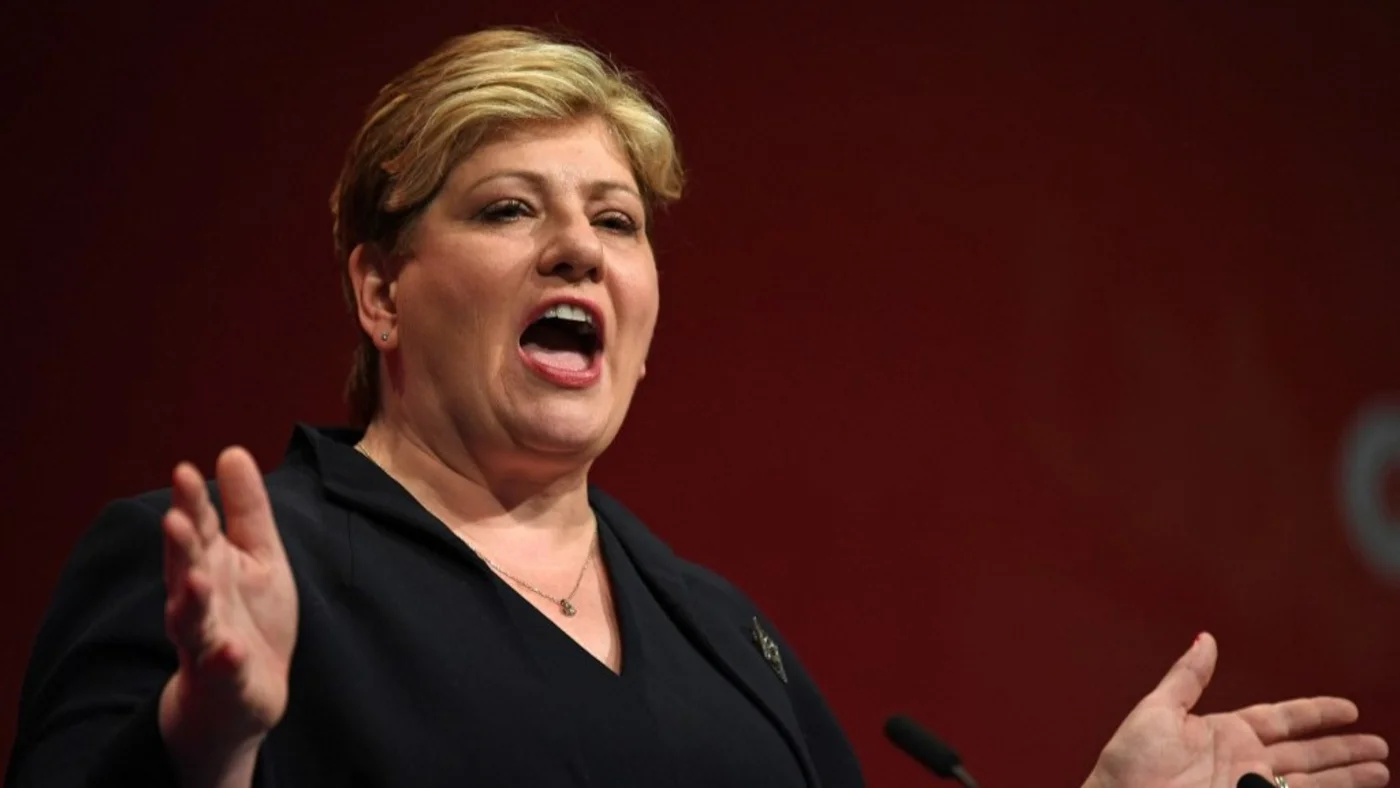
Emily Thornberry, chair of the UK Parliament’s Foreign Affairs Committee, has reiterated her longstanding call for a full ban on imports of goods produced in Israeli settlements built on occupied Palestinian land. Speaking in an interview with Sky News, Thornberry pointed out that it has been one full year since her committee first formally recommended ending the legal sale of settlement-produced goods in the UK, yet the British government has failed to implement any policy change to meet this demand.
Thornberry has long backed a two-state solution, which would see an independent Palestinian state exist alongside Israel in mutually recognized borders. She noted that the international community has reached near-unanimous agreement that the entire West Bank is designated as the territory for a future Palestinian state under this framework. However, she argued, Israel’s current far-right leadership is actively working to eliminate any path to Palestinian statehood by rapidly expanding settlements across the West Bank. The most recent high-stakes plan, known as the E1 project, would effectively bisect the entire West Bank, cutting off geographic connectivity that is essential for a functional independent Palestinian state. Beyond settlement construction, Thornberry added that levels of violence carried out by Israeli settlers against Palestinian communities have reached the highest point ever recorded.
Thornberry’s comments came just as the UK government formally announced this week that it would introduce punitive measures against Israel over the advancement of the E1 settlement scheme, which is located east of Jerusalem. Foreign Secretary Ed Miliband issued a clear warning that the new construction project, for which development tenders were opened this week, represents an existential threat to the two-state solution framework that has guided international policy on the conflict for decades.
Miliband confirmed that he had directly communicated to Israeli Foreign Minister Gideon Sa’ar that the Israeli government must immediately halt all E1 planning, withdraw the recently issued construction tender, and end all expansion of illegal settlements across the West Bank. In a formal statement, Miliband emphasized that the ongoing wave of settler violence against Palestinian communities has had a catastrophic humanitarian impact, adding that settlement expansion and deliberate efforts to create irreversible geographic divisions on the ground undermine regional peace, security, and the entire prospect of a sovereign, viable Palestinian state.
On Tuesday, Israeli authorities formally issued a tender for the construction of 1,234 new residential units in the southern section of the E1 project, marking a major turning point for one of the most controversial settlement schemes in decades. After years of sitting in planning and approval phases, the project is now moving into active land marketing and on-the-ground implementation. The tender covers seven interconnected settlement complexes spanning roughly 12,000 dunams (approximately 3,000 acres) of land between Jerusalem and the large existing settlement of Ma’ale Adumim. The full development plan includes integrated residential zones, industrial areas, tourism sites, and new connecting roads and infrastructure that will permanently link the new settlements to existing Israeli settlement blocs.
Miliband stressed that the United Kingdom will not remain passive while the two-state solution is effectively destroyed. He confirmed that the UK government will lay out a full package of punitive measures in the coming weeks, including targeted sanctions against individuals and entities directly involved in advancing illegal settlement expansion. Minister of State for the Middle East Stephen Doughty joined Miliband in condemning the E1 tender, describing the move as a deliberate, destructive action explicitly designed to kill any hope of a two-state resolution to the conflict.
Weeks ahead of this official announcement, the independent news outlet Middle East Eye exclusively reported that the UK government was preparing to roll out new policies targeting Israeli settlement activity in September, including the long-debated ban on settlement-produced goods and potential sanctions against individuals, organizations, and even sitting Israeli ministers tied to the Israeli settler movement. The outlet also reported that UK officials are considering additional restrictions on arms sales to Israel, a longstanding point of contention between activist groups and successive UK governments.
Currently, the UK does not maintain a full ban on trade with Israeli settlements, though the government formally advises British businesses against engaging in any economic or financial activity within settlement areas. Under existing UK trade agreements with Israel and the Palestinian Authority, goods produced in settlements already do not qualify for preferential tariff treatment, but they remain legal to import and sell across the UK.