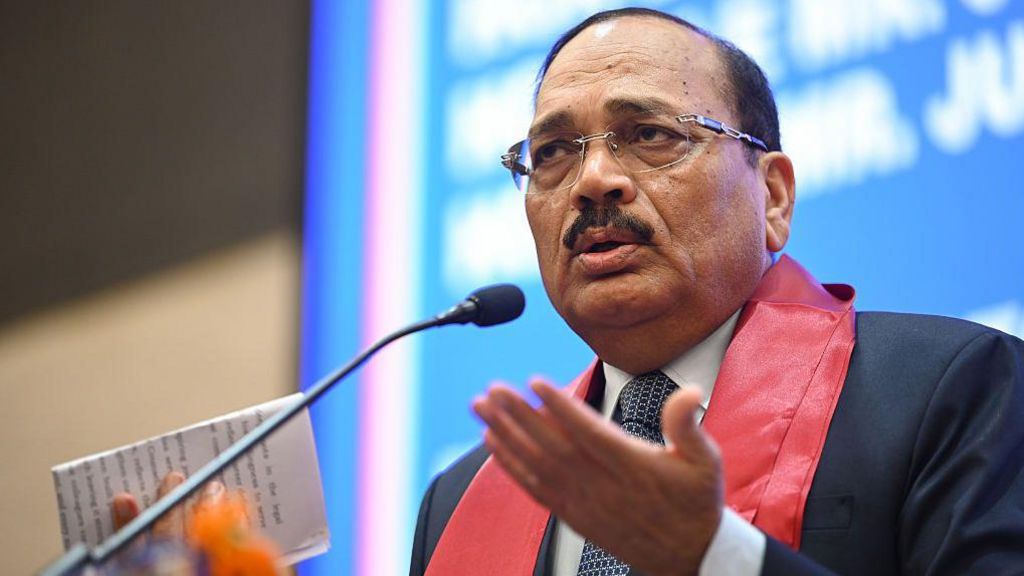
A simmering controversy surrounding India’s Chief Justice Surya Kant has boiled over into open protest, with students from two of the nation’s most elite legal institutions rejecting his planned appearance as convocation chief guest, following months of growing anger over his reported remarks about unemployed youth and a perceived dismissal of police brutality against student protesters.
The current standoff traces its roots back to May, when Indian legal outlet LiveLaw published remarks attributed to Kant that labeled certain unemployed young people as “cockroaches” and “parasites” who infiltrate media, social platforms, and activist circles to attack established institutions. Though Kant later clarified the comments were taken out of context, arguing he had only targeted individuals holding fake academic degrees, the damage to his standing among India’s youth was already done. The incendiary remark directly inspired the creation of the Cockroach Janta Party (CJP), a viral satirical online movement that has grown to millions of young supporters and organized weeks of mass protests in central Delhi demanding education reform and accountability for leaked government exam papers.
Tensions escalated dramatically on July 20, when a CJP-led parliamentary march was met with a harsh crackdown by Delhi police and paramilitary forces. Footage shared widely online showed security officials beating unarmed student protesters with batons and wooden sticks, and dispersing crowds with tear gas. In a historic first for crowd control in India’s capital, at least four protesters sustained pellet gun injuries, shocking the nation and drawing global media attention. The protests ultimately achieved a key victory when Education Minister Dharmendra Pradhan resigned on July 25, as the CJP had demanded he take moral responsibility for repeated exam paper leaks. However, fallout from the crackdown continues to roil the country’s legal and political spheres.
On July 22, a lawyer brought forward a petition requesting an urgent hearing into allegations of police excesses during the crackdown, sharing video evidence of brutality. Indian media reports claim Kant responded by saying “don’t waste our time” and rejecting the request to review the footage, stating “we don’t have time”. The comment drew immediate backlash from opposition parties, senior legal figures, and youth activists. The following day, outgoing final-year students at Hyderabad’s Nalsar University of Law, one of India’s top-ranked legal institutions, sent an official email to college administration urging them to revoke Kant’s invitation to serve as chief guest at their upcoming convocation. Traditionally, having the nation’s top jurist preside over a law school convocation is considered a high honor for aspiring lawyers, but students argued that accepting degrees from a figure dismissive of police brutality against protesters contradicts the values of justice they were taught during their studies. The demand quickly gained traction, earning support from roughly 450 of the university’s 1,400 total students, including many underclassmen.
Kant has repeatedly pushed back against media reports, clarifying he never rejected hearing the petition and only requested it be filed through proper legal channels. The Supreme Court has since begun hearing the case, which also includes concerns that police may misuse facial recognition technology to target and harass protest participants. But student anger persisted, and the controversy expanded last week after Manan Kumar Mishra, chairman of the Bar Council of India and a sitting Member of Parliament from the ruling Bharatiya Janata Party, issued a drastic threat: he announced that no graduating Nalsar student would be permitted to enroll with the Bar Council to practice law until further notice, and demanded the university turn over a list of students leading the campaign against Kant.
The threat triggered an immediate and widespread backlash, including an unprecedented rebuke from Chief Justice Kant himself, who stated that students hold a constitutional right to protest, and that the Bar Council had no authority to interfere in what he described as “a dialogue between law students and me”. Facing mounting pressure, Mishra backtracked within hours, announcing on social media platform X that the Bar Council would close all proceedings against the 2026 Nalsar graduating class, after concluding they had not participated in any disruptive activity. He later issued a public apology to students, writing, “If anything connected with the present controversy, any of my words, or letter, has hurt the feelings of our law students, I sincerely regret and apologise for the same.”
Mishra’s apology failed to calm tensions, however. Over the weekend, students and alumni from a second leading Indian law school, Bengaluru’s National Law School of India University (NLSIU), released an open letter condemning Mishra’s comments, announcing they would not accept him as a convocation guest, and expressing full solidarity with Nalsar’s demand to uninvite Chief Justice Kant. They added that they also opposed Kant’s planned appearance at their own convocation for the same reasons.
On Sunday, Kant issued a new clarification, telling The Times of India that he had never formally accepted the Nalsar convocation invitation, so “the question of me attending does not arise”. Even with this latest development, analysts widely agree the controversy is far from over. Student resentment over the chief justice’s reported comments has been building for months, and the ongoing protests at India’s most prestigious legal institutions highlight the deep divide between India’s youth and its established judicial and political leadership. The fallout from the CJP protests continues to reverberate across the country’s highest legal bodies and premier academic institutions, signaling that calls for reform and accountability from India’s younger generation are unlikely to fade.