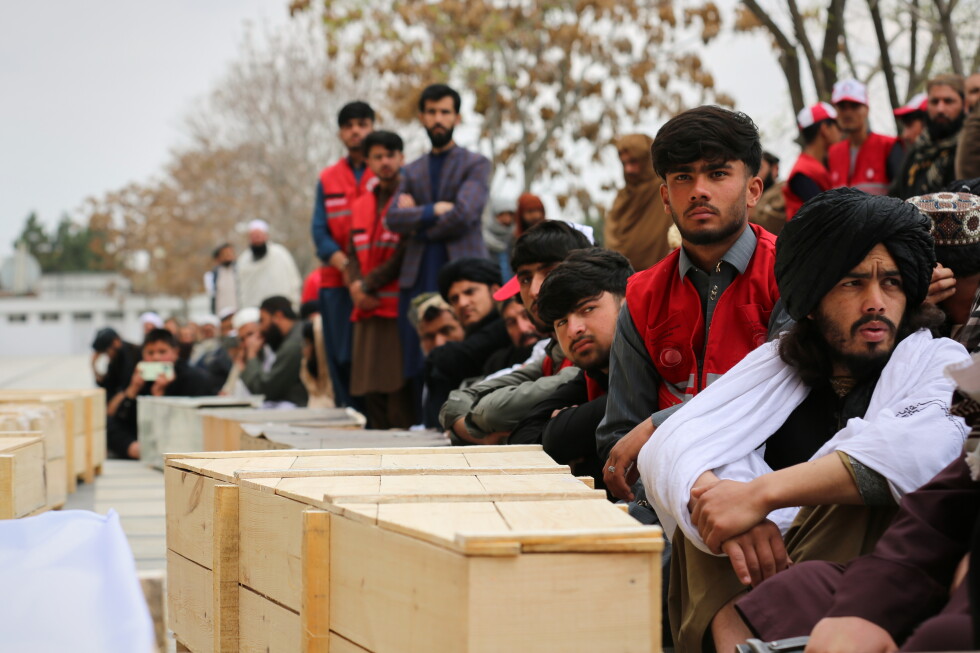
Months of persistent cross-border hostilities between Pakistan and Afghanistan have left nearly 500 Afghan civilians dead and more than 1,200 injured between October last year and the end of June this year, the United Nations Assistance Mission in Afghanistan (UNAMA) confirmed in a major new human rights report released Tuesday.
The devastating casualty count, compiled through UNAMA’s on-the-ground documentation, lays bare the human cost of a conflict that has persisted despite repeated international calls for de-escalation. One of the most striking examples of civilian harm documented in the report occurred in Afghanistan’s eastern Paktia Province on June 28, when two successive airstrikes hit a residential building. After the first strike killed several people, local residents rushed to the site to pull trapped survivors from the rubble. A second strike hit the area as the rescue effort was underway, killing 22 civilians – five of them children – and wounding 185 more, with most casualties coming from the second, unprovoked attack. “International humanitarian law provides special protections for medical personnel and humanitarian workers, including first responders. Attacks against them while performing their duties are strictly prohibited,” said Fiona Frazer, UNAMA’s human rights director.
The deadliest single incident of the cross-border fighting came in March, when a Pakistani airstrike targeted a drug treatment center in the Afghan capital Kabul, killing hundreds of civilians. Last week, global human rights group Amnesty International called for the bombing to be investigated as a potential war crime, a call Pakistan has since rejected. Islamabad has consistently denied targeting civilian infrastructure, asserting in its official response to UNAMA’s report that all of its military operations are directed exclusively at militant hideouts and infrastructure linked to groups that carry out attacks inside Pakistan. Pakistan’s foreign ministry also reiterated its longstanding claim that the Taliban-led Afghan government continues to allow militant groups to operate freely from Afghan territory, an accusation Kabul has repeatedly denied.
Cross-border tensions between the two neighbors flared dramatically in February, after Afghan forces launched a cross-border retaliatory raid against Pakistan, which had carried out earlier airstrikes inside Afghanistan. Following the exchange, Islamabad publicly declared it was in an “open war” with Afghanistan. Pakistan’s core grievance centers on the presence of the Tehrik-e-Taliban Pakistan (TTP), also known as the Pakistani Taliban, a militant group that has carried out thousands of deadly attacks across Pakistan over the past decade. The TTP maintains close ideological and operational ties to the Afghan Taliban, which seized control of Afghanistan in 2021 amid the chaotic withdrawal of U.S.-led coalition forces. UNAMA’s mandate only allows it to monitor casualties and human rights abuses inside Afghanistan, so the report does not include any tally of civilian casualties from the fighting on Pakistani territory.
Beyond the cross-border conflict, the UN report also shines a light on the deepening human rights crisis inside Afghanistan, particularly for women and girls under Taliban rule. The Taliban government has imposed sweeping, draconian restrictions on women’s public life: a ban on secondary and higher education for girls, prohibitions on women working in most sectors, a mandatory full hijab rule that requires women to cover their entire bodies, including their faces, and a requirement that all women be accompanied by a male chaperone when in public. These rules are enforced by the Ministry for the Propagation of Virtue and the Prevention of Vice, and enforcement is often arbitrary, with varying interpretations of what counts as compliance leading to sudden detentions and punishment.
In June, a crackdown on alleged dress code violations in the western Afghan city of Herat led to the arrest of at least 30 women. When rare public protests broke out against the detentions, security forces opened fire on the crowd, killing at least one protester and wounding multiple others. UN investigators also found that vice and virtue officials have been visiting health clinics and retail shops across the country, ordering staff to turn away any woman who arrives without a male chaperone. The report also notes that new marriage regulations in Afghanistan implicitly sanction child marriage, by arranging for marriage contracts to be legally recognized for underage minors.