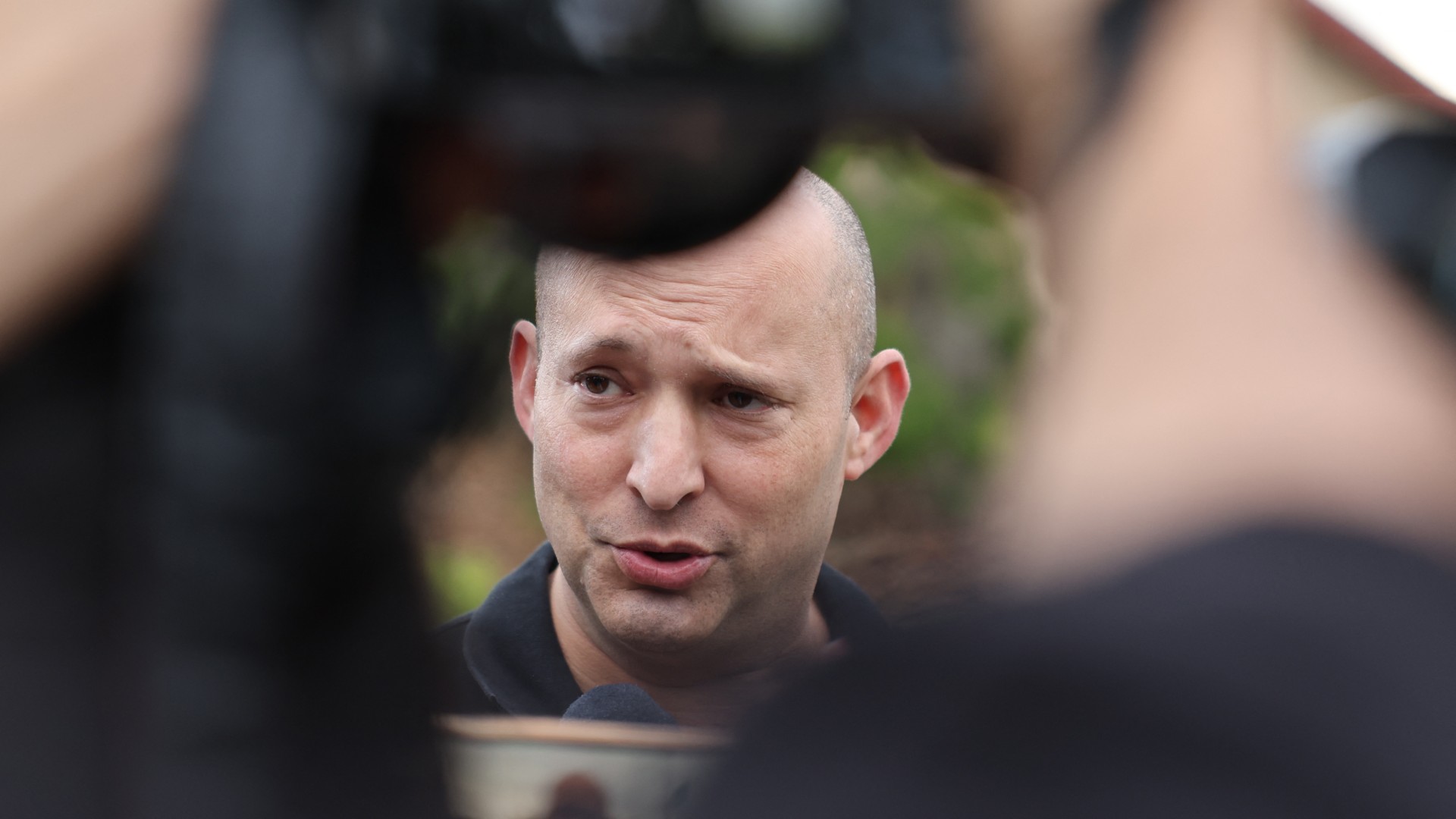
As Israel prepares for one of the most consequential general elections in its modern history on October 27, opposition figure and former Prime Minister Naftali Bennett has drawn a sharp line in his policy platform, stating he will block the creation of an independent Palestinian state even if it derails potential normalization agreements with Saudi Arabia. In an exclusive interview with Israeli Channel 12, Bennett doubled down on his long-held hardline stance, saying plainly, “I am not giving up territory, period.”
The upcoming election is widely framed as a referendum that could end the decade-long tenure of incumbent Prime Minister Benjamin Netanyahu and his right-wing Likud Party, as shifting polling numbers show opposition factions gaining momentum ahead of the vote. A recent survey published by Israeli daily Maariv puts Netanyahu’s Likud in second place with a projected 20 seats in parliament, trailing former Israeli army chief Gadi Eisenkot’s Yashar Party, which hit a record high of 23 projected seats. Bennett’s own Together party sits third in current polling with 17 projected seats, positioning him as a key power broker in any post-election coalition negotiations.
Bennett used the interview to position himself as the only leader capable of sweeping institutional reform in Israel, declaring, “I am the most suitable person to lead the historical correction that needs to be made here in the State of Israel.” Beyond his foreign policy stances, Bennett outlined his top domestic priority: advancing sweeping reforms to integrate ultra-Orthodox Haredi communities into the national workforce and end their long-standing exemption from compulsory military service. The exemption has been one of the most contentious domestic political issues in Israel for decades, as successive governments have failed to reach a consensus on reform amid growing Haredi population growth. Netanyahu has consistently protected the exemption to preserve his political alliance with Haredi political parties, a position both Bennett and Eisenkot have publicly criticized.
During the interview, Channel 12’s presenter repeatedly pressed Bennett on his refusal to answer questions about the Palestinian statehood issue and whether his 2021–2022 coalition government with centrist former Prime Minister Yair Lapid was a failure, accusing Bennett of dodging key questions. Bennett deflected the criticism, reiterating that his sole focus is overhauling Israeli leadership and advancing long-stalled domestic reforms that have not been addressed since the country’s founding.
Bennett’s opposition to a two-state solution is consistent with his long political record: he has spent decades advocating for policies that block Palestinian statehood. In 2018, while serving in a previous government, he went as far as to say that if he held the defense minister post, he would implement a “shoot-to-kill” policy for all Palestinians attempting to cross the Gaza-Israel border. When pressed on whether that policy would extend to children, Bennett infamously replied, “They are not children. They are terrorists.”
Unlike Bennett, who has held multiple senior cabinet positions including prime minister, defense minister, economy minister and education minister, Eisenkot hails from an exclusively military background, serving as the Israel Defense Forces Chief of Staff from 2015 to 2019. Born to Moroccan immigrants, Eisenkot is best known as the architect of the controversial “Dahieh doctrine,” an Israeli military strategy that calls for the use of disproportionate force against civilian infrastructure in areas where armed groups are believed to operate. Eisenkot has gained widespread public sympathy across Israel after his son and two nephews were killed serving in the Israeli military during offensives in Gaza.
On foreign policy, Eisenkot has broken with Bennett, publicly pushing for closer diplomatic and security ties with Saudi Arabia, which has not yet joined the U.S.-backed Abraham Accords normalization agreements between Israel and Arab states. A two-state solution to the Israeli-Palestinian conflict remains a core requirement for any Saudi normalization with Israel, making Bennett’s hardline stance a potential major barrier to a future coalition that advances normalization talks. Eisenkot has said Israel is willing to share intelligence with Riyadh to counter what both parties frame as Iranian regional aggression.
Eisenkot currently faces a critical political dilemma as he works to build a coalition majority. While he needs the parliamentary support of Israeli Arab parties to secure a governing majority, inviting those parties into a coalition would almost certainly alienate his centrist and right-wing base of voters. The shifting dynamics of the election leave Israel at a crossroads, with the outcome set to reshape both the country’s domestic policy and its regional diplomatic prospects for years to come.