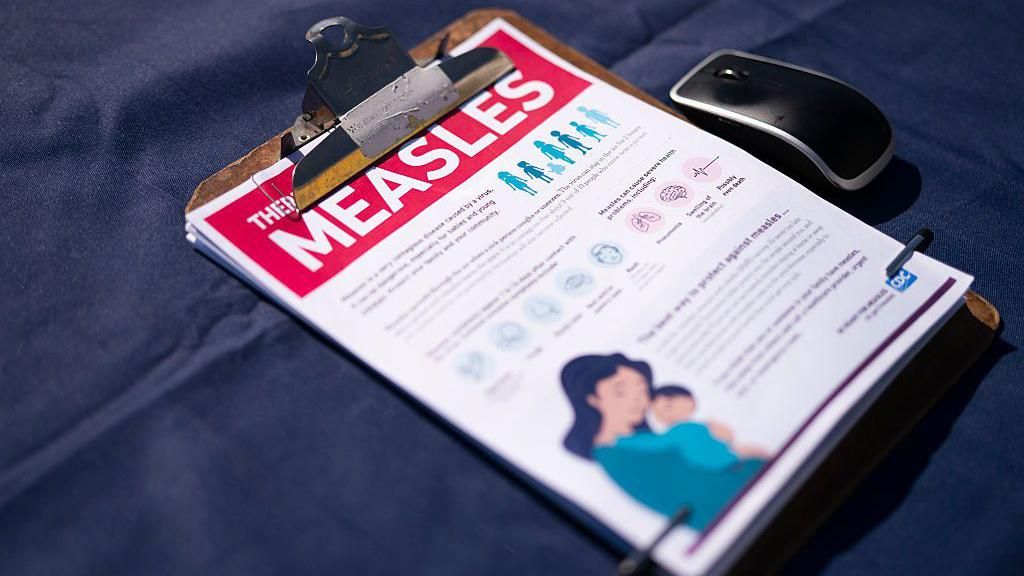
Seven months into 2026, the United States has already broken a decades-old record for measles infections, with new data from the Centers for Disease Control and Prevention (CDC) confirming 2,318 confirmed cases nationwide. This figure surpasses 2025’s total of 2,289 cases – a year that saw three preventable deaths from the highly contagious virus, all among unvaccinated people. Public health officials warn the sharp upward trend is driven by growing vaccine hesitancy that has dragged childhood immunization rates well below the threshold needed to stop community spread.
By November 2026, an international expert panel will deliver a ruling that could strip the U.S. of its measles elimination status, a designation the country has held for nearly two decades. Elimination status is only retained when a country sees no sustained transmission of a single measles strain for 12 consecutive months; Canada already lost this status in 2025. Stunningly, the cumulative number of U.S. measles cases recorded over the past 18 months already exceeds the total number of cases documented across the previous 25 years combined, a stark reversal of decades of progress in eradicating the disease.
Before the widespread adoption of the measles vaccine in the mid-20th century, measles infected millions of American children annually. Today, the virus remains one of the most contagious airborne pathogens, marked by its signature blotchy red rash. It can cause fatal outcomes, even in otherwise healthy people, and leaves many survivors with long-term complications, ranging from life-threatening brain inflammation (encephalitis) to immune amnesia – a dangerous condition that erases the immune system’s existing memory of past pathogens, leaving the body vulnerable to new infections for months or years.
Outbreaks are currently active across much of the country, with 45 of 50 states confirming at least one case in 2026. Over the past 30 days, Virginia and Pennsylvania have moved to contain new community clusters, while Utah continues to manage an outbreak that originated in late 2025. Last year, major outbreaks hit close-knit communities with low vaccination rates: a spread among the Texas Mennonite community killed two unvaccinated children and one unvaccinated adult in neighboring New Mexico, and a 2025 outbreak among Russian and Ukrainian immigrant communities in Spartanburg County, South Carolina, saw some local schools reporting MMR vaccination rates as low as just 20% – a far cry from the 95% coverage required to achieve herd immunity that protects vulnerable people who cannot receive the vaccine.
The ongoing crisis has sparked intense political and public health controversy, with prominent criticism directed at U.S. Health Secretary Robert F. Kennedy Jr., a well-known vaccine skeptic who has reshaped national vaccine policy since taking office. While the MMR vaccine, which is recommended as two doses for children between ages 1 and 6, has been repeatedly proven to be 97% effective and extremely safe, Kennedy has circulated inconsistent messaging around the shot. Though he has publicly acknowledged the MMR vaccine is the “most effective way to prevent the spread of measles,” he has also promoted unproven alternative treatments for the infection and pushed for sweeping cuts to the national childhood immunization schedule.
Earlier in 2026, Kennedy proposed rolling back the number of recommended childhood vaccines from 17 to 11, a change that was ultimately blocked by a federal judge over regulatory and public health concerns. When addressing lawmakers this year, Kennedy downplayed the U.S. outbreak, arguing the entire globe is facing a surge in measles cases, and defended the current administration’s response. Still, public health experts warn Kennedy’s policy changes and mixed messaging have undermined local and national efforts to contain outbreaks, exacerbating preexisting trends of growing vaccine hesitancy across much of the country.
With elimination status hanging in the balance and cases continuing to climb, public health officials are urging communities with low vaccination rates to scale up MMR immunization efforts to prevent further spread and avoid a scenario where measles becomes an endemic, permanently established disease in the U.S. once again.