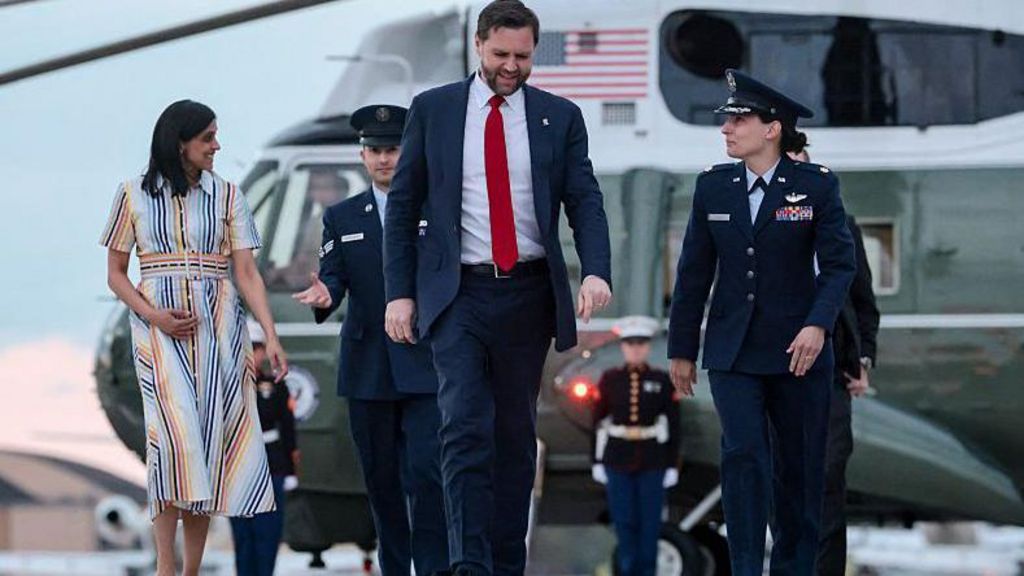
A United States Secret Service agent tasked with protecting Vice President JD Vance has been placed on administrative suspension and is the subject of an active probe following allegations of unauthorized disclosure of classified protective details, the agency confirmed in a public statement Thursday.
While the exact nature of the leaked information remains undisclosed to the public, the Secret Service confirmed the case has prompted a potential criminal investigation centered on claims that the agent breached operational protocols and compromised sensitive information security frameworks. “Any conduct that potentially threatens the safety of a protectee will not be tolerated,” agency spokesperson Anthony Guglielmi emphasized in the statement.
The suspension comes at a moment of escalating risk for the agency, whose top leadership has repeatedly sounded alarms over a dramatic, unprecedented surge in recorded threats against individuals under Secret Service protection—including President Donald Trump, the most high-profile protectee of the U.S. government. The White House has declined to offer any on-the-record comment regarding the ongoing investigation, consistent with standard protocol for active law enforcement probes.
Vice President Vance and his immediate family are mandated to receive 24/7 continuous Secret Service protection as part of standard coverage for the nation’s second-highest executive office. The disclosure of the leak probe came just one day after Secret Service Director Sean Curran delivered a stark warning about the agency’s operating environment, telling reporters that current conditions represent the most dangerous he has encountered during his 24-year career in law enforcement.
Speaking to media ahead of the rescheduled Friday White House Correspondents’ Dinner, a high-profile annual event attended by dozens of top U.S. officials, Curran described the current national threat level as “off the charts.” “The environment has become very volatile, and that’s just across the board,” Curran said. “The threat picture and environment is as large as I’ve ever seen it.”
Data from the agency underscores the scale of the surge: since the start of the current calendar year, Secret Service investigators have opened nearly 10,000 separate threat investigations targeting protected officials, a jump that outpaces recent years by a significant margin. Agency officials attribute the sharp increase to a convergence of multiple evolving risk factors, including a surge in hostile rhetoric and threats shared online, the growing threat of lone-wolf actors motivated by ideological extremism, interference efforts from foreign adversaries, and a rising number of threats from individuals experiencing acute mental health crises.
Notably, the agency also highlighted a major shift in how threats are communicated: online platforms have now fully displaced traditional channels such as handwritten letters as the primary source for reported threats against public officials, creating new challenges for monitoring and mitigation for the Secret Service’s overstretched investigative teams.