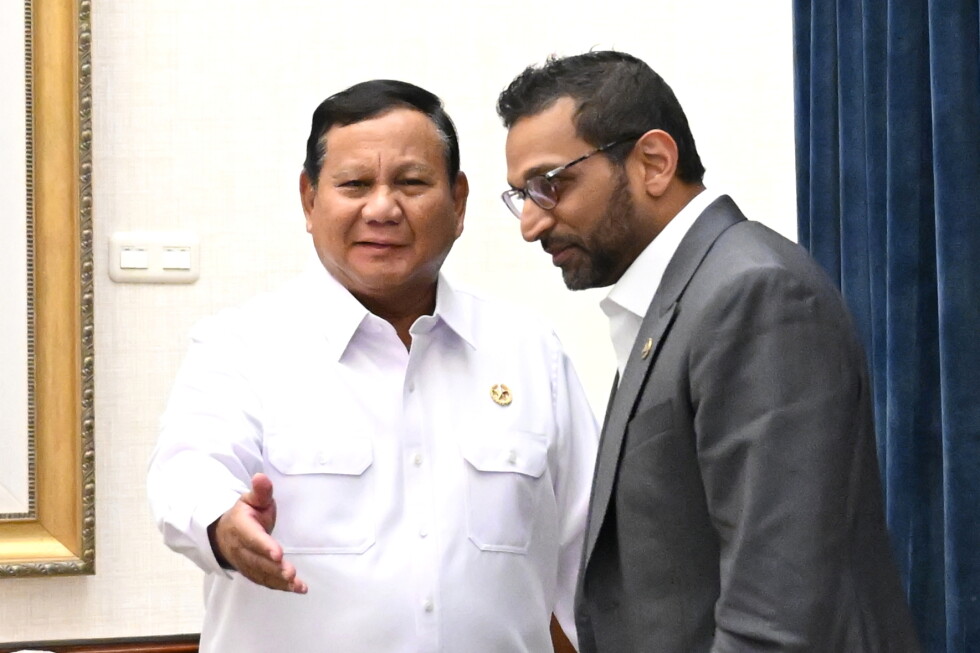
JAKARTA – In a landmark moment for cross-border cultural heritage protection, Indonesian President Prabowo Subianto has formally received a collection of sacred cultural artifacts from the country’s eastern Papua region that were illegally trafficked to the United States, senior Indonesian government officials confirmed Thursday.
The handover ceremony took place Wednesday evening at President Prabowo’s Jakarta residence, during a scheduled meeting between the Indonesian leader and FBI Director Kash Patel. Patel’s Jakarta visit came on the heels of high-level talks in Phnom Penh with Cambodian Prime Minister Hun Manet, where the pair discussed coordinated multinational action to dismantle transnational online scam rings that steal billions of dollars from victims globally each year.
Indonesia’s Minister of Culture Fadli Zon emphasized that the repatriation marks a significant deepening of collaborative ties between Jakarta and Washington in the global fight against illicit cultural property trafficking, focused on returning stolen heritage items to their countries of origin.
The artifacts, which originate from the lands of Papua’s Dani and Asmat tribes and Indigenous communities around Lake Sentani, were returned after joint investigative work between Indonesia’s Culture Ministry and the FBI confirmed the items had been smuggled out of Indonesian territory decades ago. “These are not just objects — this repatriation is a critical step toward restoring our full cultural sovereignty,” Zon explained in remarks after the handover, adding that all the artifacts will go on permanent public display at Indonesia’s National Museum in Jakarta.
Images released by the Indonesian Presidential Secretariat show a collection of finely polished stone axe heads and a series of carved ceremonial objects deeply tied to traditional Papuan cultural practices. Unlike ordinary stone tools, these axes held deep social meaning for highland Dani communities: historically, they functioned as symbols of wealth and social standing, were exchanged as part of marriage negotiations and formal ceremonial agreements, and were passed down through generations as cherished ancestral heirlooms, the Culture Ministry noted.
In an official statement, the U.S. Embassy in Jakarta clarified that this repatriation is the latest in a growing string of successful U.S. efforts to recover and return Southeast Asian cultural property trafficked by global illegal antiquities networks. Earlier this July, U.S. Attorney for the Southern District of New York Jay Clayton announced the repatriation of two 8th-century bronze Buddhist sculptures of the deity Avalokiteshvara, also stolen from Indonesian archaeological sites.
Those two sculptures were looted decades ago by organized criminal artifact poachers before being sold to an American collector via the late disgraced antiquities dealer Douglas Latchford, a Bangkok-based trafficker who was indicted by U.S. authorities in 2019 for running a massive transnational smuggling ring that moved looted artifacts out of Cambodia and other Southeast Asian nations. The legal case against Latchford was dismissed following his death, and the sculptures were among 34 Southeast Asian antiquities voluntarily given up by the American collector in 2021 after investigators confirmed their looted origin.
Zon recalled that the FBI has a long track record of supporting Indonesia’s efforts to recover stolen cultural items, including a range of bronze statues and artifacts taken from protected archaeological and historical sites across the country. The culture minister added that he expects this productive partnership on cultural repatriation and restitution to continue expanding in coming years.
For its part, Indonesia has ramped up its global outreach in recent years to track down and recover thousands of cultural treasures scattered across foreign collections, taken during centuries of colonial rule, systematic looting and modern illicit trafficking. A key focus of these efforts has been recovering items held in collections in the Netherlands, which occupied Indonesia as a colonial power for more than 300 years.