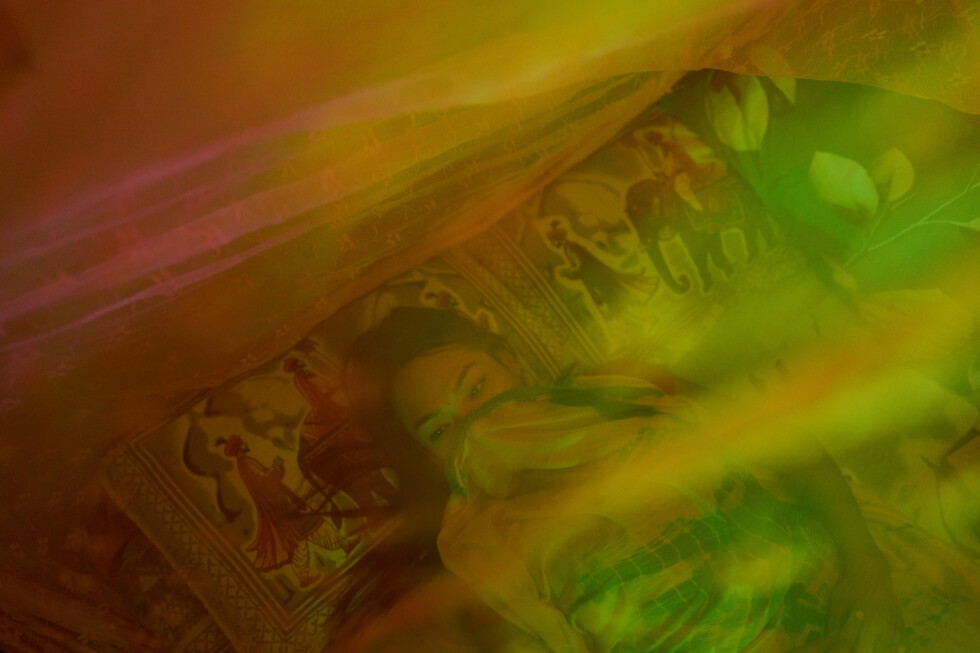
In the shadow of a dimly lit central Nepalese highway, where passing trucks cast faint streaks of light across the roadside jungle and discarded condom wrappers litter the dirt, 28-year-old Rubi Lama paces the shoulder waiting for clients. Just a few years ago, she stood on this same stretch of road not as a sex worker, but as a trained HIV outreach worker dedicated to protecting the vulnerable transgender communities who gathered here after dark. Today, she is one of them — a casualty of sweeping cuts to United States foreign aid that have upended hundreds of thousands of livelihoods across the globe, with catastrophic consequences for public health.
Lama’s story is not unique. When the Trump administration froze and ultimately dissolved the U.S. Agency for International Development (USAID) in 2025 after labeling the agency a waste of taxpayer dollars (despite foreign aid accounting for just 1% of the total U.S. federal budget), the ripple effects shattered already fragile public health infrastructure in low-income nations like Nepal. Overall, the dismantling of USAID eliminated more than 281,000 jobs worldwide, according to tracking by global health consultant Sadie Healy. Only 23,000 of those positions were held by U.S. citizens; the vast majority were local workers in impoverished, economically depressed regions where alternative employment is nearly impossible to find. In Nepal alone, an estimated 35,000 former aid workers lost their livelihoods overnight.
For Lama and hundreds of other transgender former aid workers in Nepal, the collapse of USAID funding left no escape. In Nepal’s deeply conservative society, legal formal employment for openly transgender people is already extremely rare. For decades, USAID funding supported local NGOs like the Blue Diamond Society, an umbrella organization for LGBTQ+ health services that employed hundreds of gender and sexual minorities as outreach workers, counselors, clinic staff, and data collectors. The organization ran 20 clinics across the country, providing free HIV testing, condoms, lubricant, PrEP (HIV prevention medication for at-risk individuals), and antiretroviral treatment for people living with HIV. Eighty-five percent of the Blue Diamond Society’s total budget came from USAID — when the funding dried up, all core services collapsed immediately. Of the group’s 350 total staff, 262 lost their jobs, and more than 1,200 clients lost access to life-saving PrEP.
Manisha Dhakal, executive director of the Blue Diamond Society, estimates that between 35% and 45% of the organization’s laid-off transgender staff have turned to sex work to put food on the table. “One decision from one powerful country — all these services are cut,” Dhakal said, standing in the group’s now-quiet Kathmandu headquarters, where framed USAID certificates line the bookshelf, commemorating decades of work saving lives. “The Trump administration’s executive order will cause people to die.”
Lama’s journey to this point was marked by struggle long before the aid cuts. Raised in poverty by a conservative family that rejected her transgender identity, she worked selling eggs as a child to pay for school, survived sexual assault by a teacher, and dropped out of university after relentless harassment from peers and instructors. In 2016, she found her purpose when she was hired by Friends Hetauda, a central Nepalese NGO funded by USAID that provided HIV services to marginalized communities. For nine years, she walked this same highway to test sex workers for HIV, distribute prevention supplies, and offer counseling. Her father kicked her out of the family home for her work and gender identity, but the job paid roughly $200 a month — enough to rent a small apartment and build a life doing work she believed saved lives. That all ended in February 2025, when staff were called into the office and told all funding was gone; 14 of the organization’s 17 employees, including Lama, were laid off immediately.
Lama searched for months for other work. She was rejected for a local government job after she arrived for her in-person interview and her transgender identity was discovered. A hotel offered her a cleaning job, but the manager demanded she have sex with him and his friends in exchange for the position, which she refused. As savings ran out, she could no longer afford rent, food, or medication. Her landlord threatened eviction. For Lama, the choice was brutal: turn to sex work, or starve. “I know that every stranger who pays for my body could end my life,” she said. “But I also know their money is the only thing preventing my death right now.”
Today, the former offices of Friends Hetauda stand abandoned: unused laptops still bear USAID stickers, and empty condom distribution bins collect dust on barren desks. Out on the highway, the risks for the former aid workers turned sex workers are staggering. Nearly all have faced brutal violence: gang rape, assault at knifepoint and gunpoint, police brutality, and non-consensual unprotected sex. All 15 former aid workers interviewed by The Associated Press acknowledged the risk of HIV transmission, but say they have no other option to survive.
Barsha Magar, who spent 16 years as a peer educator and outreach worker with Friends Hetauda, was raped at gunpoint by two soldiers just two months after entering sex work. “For two weeks I was too traumatized to go back,” she said, wiping away tears as she recalled the attack. Bharati Thapa, a former field supervisor for the organization, was gang-raped by a group of drunk Indian tourists on her very first night working the highway. “My life is at risk now,” Thapa said. “I fear that I may contract HIV and sexually transmitted infections. I fear being beaten up and harassed by customers. I fear the police taking me away at night. How can I not be afraid? There is risk from all sides.”
Even when workers draw on their decades of public health training to convince clients to use condoms or avoid violence, they cannot protect themselves from every threat. Sujata Chaudhary, an 11-year veteran of HIV outreach work, still contracted syphilis after being forced into unprotected sex by clients, and survived a mass gang assault that left her traumatized. Lama herself escaped a knife attack only by using her HIV outreach training to talk down her attacker before fleeing.
The public health consequences of the aid cuts stretch far beyond the workers themselves. With free condom and lubricant distribution halted, and PrEP no longer available to most at-risk people, many transgender sex workers are forced to have unprotected sex. Many people living with HIV have stopped accessing antiretroviral treatment, too fearful of discrimination to seek care at public hospitals, increasing their risk of transmission and death. Data from the United Nations HIV agency shows that since the USAID cuts, HIV testing has dropped 22% in high-prevalence countries, and condom funding has been cut by more than 90% in some regions.
Dr. Sarbesh Sharma, director of Nepal’s National Centre for AIDS and STD Control, warned that the crisis is not just a Nepalese problem — it is a global one. Nepal shares an open border with India, and has massive flows of migrant workers and international students moving across its borders every year. “Viruses like HIV do not respect borders,” Sharma said. “Borders are for humans. So those make it not only a Nepal concern, it can become a global concern.”
In a statement to AP, the U.S. State Department defended the Trump administration’s changes, saying the administration had refocused assistance programs on efficiency, effectiveness, and partnership, and noted that the U.S. spends more on health and humanitarian assistance than any other nation. “The rest of the world needs to contribute more and share the burden,” the department said.
For the workers on Nepal’s highways, that offers little comfort. On a recent Friday night — the busiest night of the week — Lama earned $10.50 from five clients, a relatively good night’s income. She needs $80 to cover rent and food for the month, so she will return the next night, and the night after that, with no end in sight. She longs to return to her old job, helping the vulnerable, but there is no funding to bring the program back. There is no other work available to her as an openly transgender woman in Nepal.
“I wish it was fair,” Lama said, as she prepared to leave the highway after a police sweep scattered the sex workers. “I wish I could live with my identity. I wish I could walk in the way that makes me happy. I know what is right and wrong. I am aware of the road I am taking.” Without new funding to revive the programs that once supported these workers and the communities they served, there is no way off this road. Night after night, Lama and her former colleagues return to the dark highway, standing alongside the people they once worked to save, in a desperate bid to save themselves.