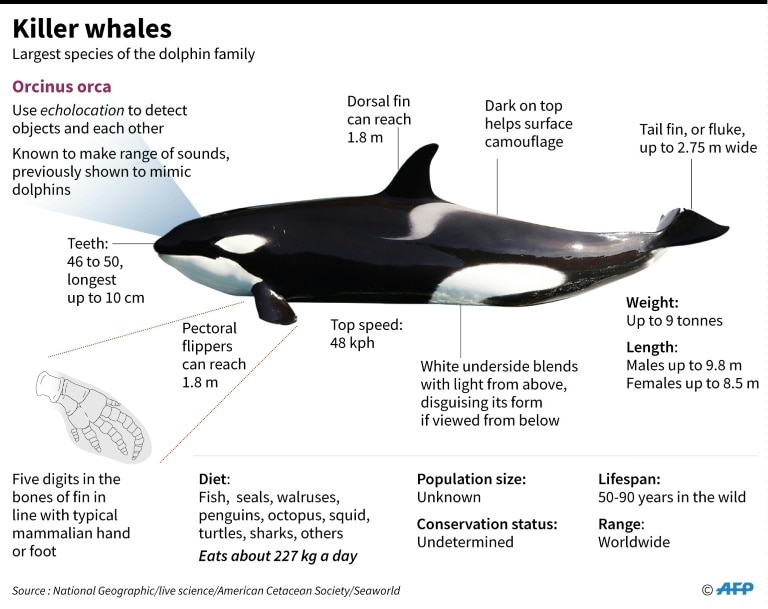
A newly published study has uncovered never-before-documented social behavior among killer whales (orcas) that shines a fresh light on the extraordinary intelligence and complex social lives of these ocean apex predators. The research, released Thursday and published in the peer-reviewed journal Frontiers in Ethology, details two separate incidents in 2024 and 2025 where a pod of orcas was observed ramming a already-dead sunfish with enough force to tear it apart into small pieces off the coast of the Gulf of California.
Beneath The Waves, a U.S.-based non-profit marine conservation organization, captured dramatic underwater video of the interaction. The footage shows one orca holding the sunfish’s tail steady while a second member of the pod charges at the large, rotund fish at full speed. The impact splits the mola mola into multiple fragments.
Researchers have put forward two leading explanations for this unusual behavior. Kathryn Ayres, one of the study’s lead researchers, noted that tearing the large fish into smaller chunks could be a practical step to prepare it for sharing across the pod, especially with younger calves and juvenile orcas that cannot handle large prey. But the behavior may also serve a second, more playful purpose: a long history of observation has confirmed that orcas regularly engage in non-hunting interaction with prey purely for recreation.
Mark Peter Simmonds, science director at the marine conservation organization OceanCare, drew a parallel between this orca behavior and shared human dining traditions. “It’s like formal human meals where socializing as well as nutrition are in play,” he explained to AFP. “Perhaps it is similar to when the host at a formal gathering carves up a roast for guests.”
This new documentation adds to a growing body of evidence highlighting the sophisticated cognitive and social abilities of killer whales, widely recognized as one of the most intelligent marine species on Earth. Orcas have long been observed using coordinated, complex hunting tactics: one well-documented strategy called “wave washing” sees pods work together to create large waves that knock seals off floating ice sheets, making the prey far easier to capture. They have also been recorded engaging in unexplained playful behaviors, such as wearing dead salmon as hats, and even using tools: 2024 research documented that a critically endangered orca population in the Salish Sea intentionally breaks off pieces of seaweed to use for grooming and social rubbing among group members.
Rebecca Wellard, a marine scientist at Curtin University in Western Australia who was not part of the new research, told AFP that this observation further underscores how complex these animals are. “It just really shows us how intelligent orcas are,” she said. “I hope that this gives people more respect for these complex creatures that are such effective apex predators in their marine environment.”
Sunfish, also called mola mola, are known for their unusual flattened, round body shape and can grow to weigh up to 2,000 kilograms. The study notes that the explosive fragmentation observed in these incidents is extremely uncommon for the species, given their dense, heavy bodies. Wellard explained that the sheer force required to tear a sunfish apart in this way confirms the coordinated power of the orcas’ behavior: “They’re a heavy, bony fish, so it must be some severe ramming.”