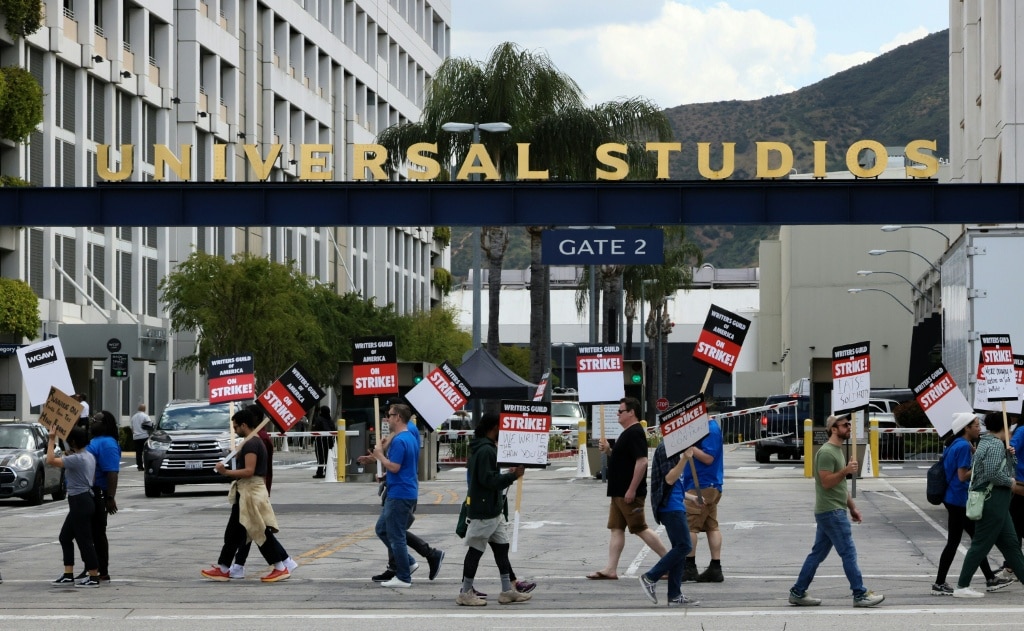
For years, Hollywood viewed artificial intelligence with deep suspicion, but a quiet shift is underway across the global film and television industry. What began as a source of widespread anxiety, triggering major labor unrest just two years ago, has evolved into growing collaboration between major studios, streaming platforms, and AI startups – with industry leaders uniformly emphasizing that human-led creative work will remain at the heart of filmmaking. As recently as 2025, Shadowbox Studios COO Mike Mosallam acknowledged to entertainment outlet Variety that the industry is still coming to terms with AI’s expanding role. The initial reaction to generative AI in Hollywood was defensive, rooted in widespread uncertainty about the technology’s impact. Major studios feared their vast libraries of copyrighted intellectual property would be exploited without permission, while actors raised alarms that AI could reduce human performers to mere source data for digital replications. These concerns became a core negotiating issue that drove the 2023 Hollywood actors’ strike, one of the longest work stoppages in the industry’s recent history. Early adopters who experimented with early AI tools also encountered clear technical limitations: from digital characters with misformed six-fingered hands to disjointed, unnatural mouth movements that pulled audiences out of stories. The tide began to turn dramatically in early March of this year, when streaming giant Netflix announced its acquisition of little-known AI startup InterPositive for an impressive $587 million. The small firm, founded just three years prior in 2022 by industry veteran Ben Affleck (who boasts credits as a producer, director, and actor), has built an AI platform specifically designed to streamline and support film and television production workflows. The wave of industry investment continued into early June, when major studio Lionsgate took a strategic stake in Runway, one of the most prominent developers of AI-generated video technology. The pair have since partnered to develop original creative projects that leverage Runway’s tools. Just days after Lionsgate’s announcement, tech giant Google made a similar complementary move, investing in acclaimed independent production studio A24 to support AI integration in its slate of projects. Recent industry projects, from national ad campaigns to independent short films, demonstrate that AI video technology has crossed a key quality threshold – even when generating human characters for on-screen stories. As Runway stated in a public update back in May, “In many cases, if the story is strong enough, the technology is now good enough to become invisible.” Runway Chief Creative Officer Jamie Umpherson explained that as the technology has advanced at a pace “unimaginable a couple of years ago,” industry professionals have rapidly improved their ability to use AI tools effectively. “There’s more familiarity than there was even a year ago,” he noted, adding that this growing comfort frees up creative teams to dedicate more time and energy to refining core story and visual style rather than grappling with logistical production hurdles. Netflix Co-CEO Ted Sarandos echoed this sentiment during the company’s mid-July earnings presentation, highlighting that AI is already delivering tangible production benefits. “We’re making higher quality output more quickly and efficiently than we could have using traditional methods,” he said. Sarandos confirmed that generative AI workflows have already been deployed across roughly 300 Netflix original titles, with most use cases concentrated in post-production. “We’re leveraging GenAI for really complicated shots and sequences that would be far more time-consuming or costly to create through traditional methods,” he added. To date, Netflix has focused AI integration primarily on the peripheral stages of production, from visualizing creative concepts during pre-production to handling color grading after principal photography wraps – a hybrid approach that leaves core creative work in human hands. Independent director and producer Jon Erwin, a leading adopter of new AI production methods, shares the view that the core of cinematic craft will remain untouched by automation. “Actors drive all the performances, and we use these tools to amplify the sets and the scope of the shows,” Erwin explained. “But we preserve the core of the filmmaking process, which is the relationship between the actor, the director and the camera. These tools do not replace that.” Back in April, Erwin’s production company Wonder Project launched a joint venture named Innovative Dreams with Luma AI, a Runway competitor specializing in AI-generated visual content. Together, the partners developed a revolutionary new production process that eliminates the need for green screens and motion capture suits entirely, allowing actors to perform naturally on a minimal set before AI generates a hyper-realistic surrounding digital environment. Erwin dubs the approach “hybrid” or “nonlinear” filmmaking. The technology is fast enough that the AI-generated backdrop can be processed and added to a scene just minutes after filming wraps, giving directors an instant preview of the final shot and allowing them to reshoot immediately if adjustments are needed, rather than waiting until post-production to catch flaws. The first full-length feature film created with this method, *Young Washington* starring William Franklyn-Miller alongside Oscar winner Ben Kingsley and two Golden Globe winners, has already earned more than $40 million at the global box office – double its entire production budget. While the new AI-augmented production ecosystem still relies on skilled technicians, actors, and camera crews, the question of how many traditional roles will remain in demand as AI adoption grows remains unresolved. High-profile actor Matt Damon has publicly voiced concern about the long-term impact of cost-cutting driven by AI, noting that big-budget location shoots like Christopher Nolan’s upcoming *The Odyssey*, which filmed across three continents, may become a thing of the past. “I don’t think people are going to be given the resources to shoot movies that way for much longer,” Damon warned. To date, Hollywood’s biggest traditional studio powerhouses – including Paramount, Universal, Sony, Walt Disney, and Warner Bros. – have not announced major public investments or partnerships in AI production technology, staying officially on the sidelines of the current AI shift. But Tanya Porquez, CEO of Generated Group, which recently launched a searchable database of AI-generated video content for the industry, predicts that this public hesitation will not last. “Studios will have to get on board. Not because they necessarily want to, but I think it’s just the wave,” Porquez said. The industry’s shift from AI anxiety to gradual integration is well underway, with early results already proving the technology’s ability to cut costs, speed up production, and expand creative scope – even as open questions remain about its long-term impact on jobs and traditional filmmaking practices.