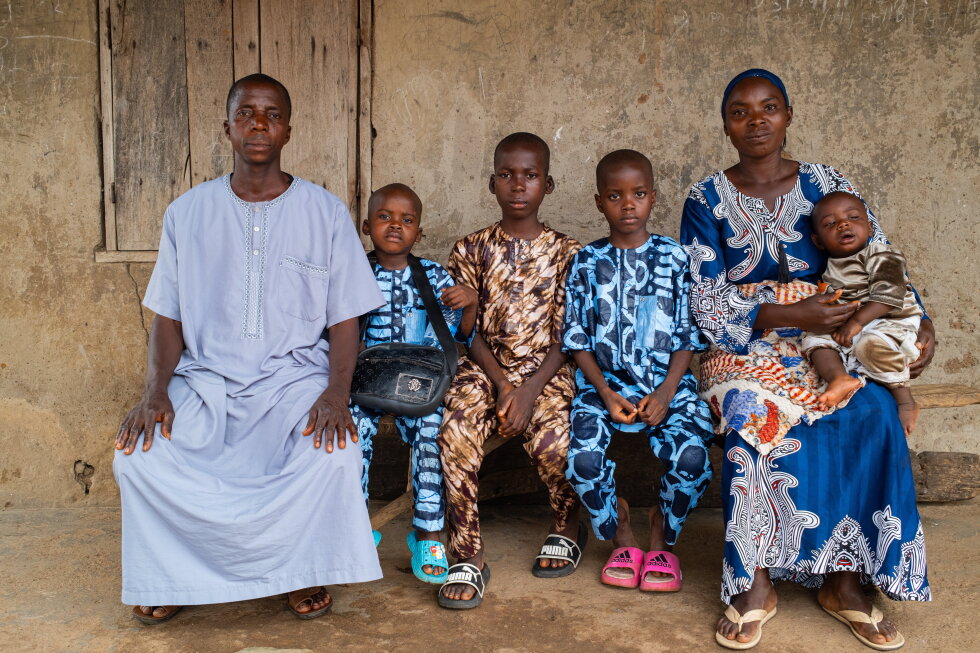
In the quiet agrarian community of Oriire, southwestern Nigeria’s Oyo state, a day of joyous feasting and interfaith prayer unfolded Friday as dozens of schoolchildren snatched from their classrooms by al-Qaida-linked militants returned to the embrace of their families. For Aliyu Saheed, a local farmer whose three young sons – the youngest just 5 years old – were among the captives, the news of their July 10 rescue marked the most euphoric moment of his life, ending two months of sleepless nights haunted by fear he would never see his boys again.
The mass abduction carried out on May 15 marked a worrying new chapter for Nigeria, Africa’s most populous nation. For years, large-scale school kidnappings by armed jihadist groups were concentrated in the conflict-battered northeast and northwest. But this attack, which targeted children as young as 3 in a region previously untouched by such violence, confirms what security analysts have warned about for months: armed factions are expanding southward, pushing beyond their traditional strongholds to seize new territory and control key natural resources.
When the gunmen stormed three local schools, they abducted 39 children and three teachers, marching their captives into a sprawling nearby forest reserve that connects northward to Kwara State, a region already grappling with persistent militant abduction activity that often targets students for large ransom payments. The attack left one teacher dead during the abduction, with two more losing their lives while in captivity, local media reports confirm. Nigerian President Bola Tinubu has identified the perpetrators as Ansaru militants, a breakaway faction of the notorious Boko Haram group that has reemerged and grown more active across the country in recent years.
Survivors of the two-month captivity have shared harrowing accounts of abuse and deprivation at the hands of their captors. Nine-year-old Shuaib, Saheed’s eldest son, recalled that the group was held in open ground without any shelter, left exposed to sweltering sun and heavy rain, fed only a meager diet of boiled rice and palm oil. “I could not say anything for fear of getting beaten,” Shuaib told the Associated Press. “They flogged us with a cane all over the body, and they hit me in the back with the butt of their gun.” Alamu Folawe, head of one of the targeted schools, added that the youngest children suffered the worst violence, with their mouths stuffed with cloth to muffle their cries and avoid drawing attention to the militants’ hideout.
While the rescue operation – a joint effort by Nigeria’s military, intelligence services and police forces – resulted in eight kidnappers arrested and multiple other militants killed, many of the freed children carry lasting physical scars and deep psychological trauma. Eight-year-old Kehinde Kaosarat, one of the last children released from hospital, has not left her mother’s side since returning home, and multiple families report that their children now refuse to consider going back to school. For Saheed, this fear is shared: “Sending them back to the school does not sound meaningful to me right now,” he said. The trauma comes at a time when Nigeria already has one of the highest out-of-school child populations in the world, a crisis that deepens with every attack on educational institutions.
The abduction has drawn urgent new attention to Nigeria’s under-patrolled forest reserves, which have increasingly become strategic corridors and hiding spots for expanding armed groups. “The thing to learn is that the forested areas of the country must be much better surveilled because that is where those armed groups operate and keep their victims,” explained Joachim MacEbong, senior analyst at global risk consultancy Control Risks.
The militant expansion into the southwest has piled mounting pressure on President Tinubu, who was elected in 2023 on a campaign promise to end Nigeria’s persistent security crisis. While the U.S. military provides limited logistical and intelligence support to Nigerian forces focused on the northern insurgency, the country’s overstretched security apparatus remains largely absent from remote southern communities bordering forest zones. Though Tinubu announced that the Ansaru informant network was dismantled during the rescue, analysts note that the root drivers of insecurity – including systemic corruption and weak governance – remain unaddressed.
James Barnett, an Africa security research fellow at the U.S.-based Hudson Institute, pointed out that Ansaru has spent years quietly building networks in southwestern Nigeria, and a high-profile attack like this could encourage further militant activity in the region. Even as the community came together Friday to celebrate the children’s safe return – with Christian and Muslim leaders joining in prayers of gratitude – many residents remain on edge. Hundreds fled the area after the abduction, and while some have begun to trickle back, farmers whose lands sit close to the forest reserve still hesitate to resume their daily work.
“The rescue of the Oriire abductees is wonderful news and should inspire some confidence in Nigeria’s ability to better manage these threats,” Barnett said. “But it is not the end of insecurity in the southwest or Nigeria as a whole.”