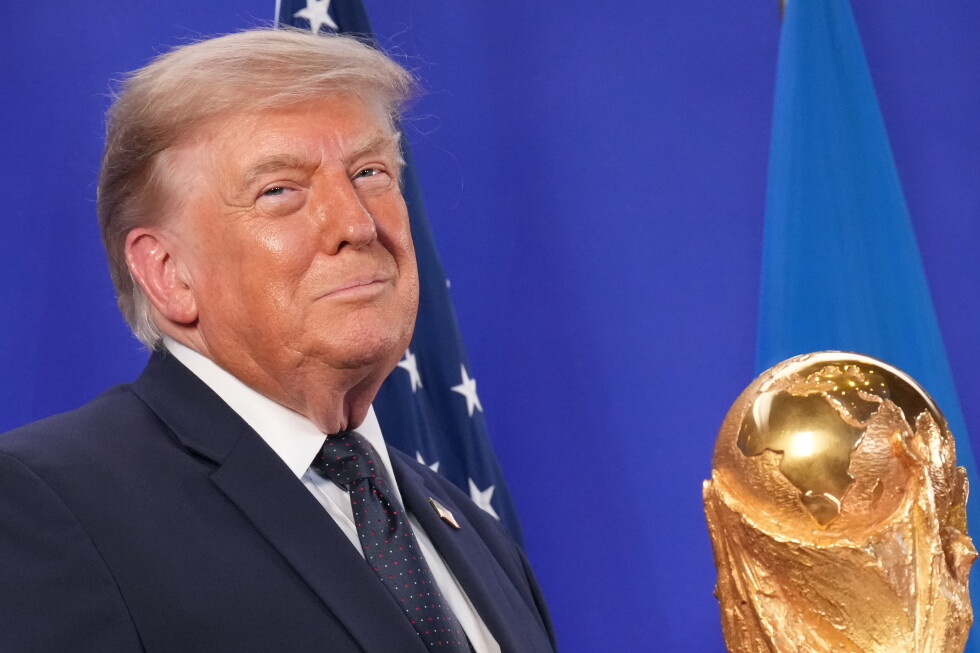
As tens of millions of soccer fans around the globe prepare to watch the 2026 FIFA World Cup final between Argentina and Spain this Sunday, all eyes will also be on U.S. President Donald Trump, who is set to step onto the pitch to present the iconic tournament trophy to the winning side. For the sitting president, however, the real victory of this month-long event is not on the line between the two competing nations — he argues it has already been claimed by the United States.
Speaking Friday at a FIFA-hosted reception held at his Manhattan Trump Tower property, Trump emphasized that the 2026 tournament has cemented the U.S. status as a global soccer powerhouse. “It turned out we were a soccer country, and I think it’s going to remain,” he told attendees. “This has really brought the world together.”
Sunday’s final marks the end of more than 18 months of high-stakes logistical and political navigation for the White House, which has overseen preparations for the largest World Cup in history alongside co-hosts Canada and Mexico. The planning process was fraught with challenges from the start: the Trump administration’s hardline immigration policies barred entry to fans from several countries that participated in World Cup qualifying, drawing sharp criticism from human rights organizations. Fans across the globe also pushed back against exorbitant official ticket prices. For months, Trump openly floated the idea of relocating matches from cities that refused to cooperate with federal immigration enforcement, and just weeks before the tournament kicked off, local officials clashed with FIFA over inflated transit costs, further escalating pre-tournament tensions.
Even as teams arrived for their opening matches, the administration remained under intense global scrutiny over controversial visa decisions. Most notably, a highly decorated Somali referee was denied entry to the country ahead of the tournament. Tensions rose further after the Trump administration launched a military conflict with Iran, which forced the entire Iranian national team to base itself across the U.S. border in Tijuana, Mexico, after most of its support staff and fans were barred from entering the U.S.
But in the end, the narrative of the tournament shifted dramatically away from political friction. Social media platforms have been flooded with viral content showing fans from every corner of the world embracing American food and cultural traditions, from craft beer to the ubiquitous ranch dressing. Many of the most widely circulated pre-tournament fears, including rumors that federal immigration authorities would conduct targeted raids near match venues, never came to fruition.
Andrew Giuliani, executive director of the White House FIFA Task Force, told the Associated Press that the tournament has exceeded expectations. “One of the things that we talked about beforehand was, if we’re talking about what happened on the pitch, then we’ve done our job,” Giuliani explained. “But I think it’s even better than that. We’re not just talking about only the incredible, athletic feats on the pitch, but we’re talking about all these incredible, incredible cultural moments.”
The tournament has not been without its share of political controversy, however. Earlier this month, Trump sparked outcry after placing a phone call to FIFA President Gianni Infantino to request a review of a controversial red card issued to U.S. star forward Folarin Balogun during a group stage match against Bosnia and Herzegovina. The original ruling would have sidelined Balogun for the team’s subsequent match against Belgium. Infantino, who has already faced widespread backlash for his close ties to Trump, ultimately reversed the call. At Friday’s reception, Trump praised Infantino for the decision, saying “you made another great decision, if you think about it” — even with the U.S. falling to Belgium 4-1 in the match.
Giuliani defended the administration’s intervention, saying the White House had a “duty” to raise concerns about officiating, which had come under scrutiny after the red card was issued following a slow-motion video review. He noted that the Trump administration had allocated billions in federal funding to ensure the World Cup was “not just a safe and secure event, not just where we welcomed the world, but an event that was filled with integrity.”
The administration faced particularly high pressure to deliver a successful tournament, as the U.S. is already scheduled to host the 2028 Summer Olympics in Los Angeles and the 2034 Winter Olympics in Salt Lake City. The country is also widely expected to be awarded hosting rights for the 2031 FIFA Women’s World Cup. Giuliani made clear in his interview that the administration’s stance on transgender participation in women’s sports would shape that bid, noting that securing hosting duties requires “ensuring that, in fact, women and only women will play in that 2031 Women’s World Cup.”
Democratic Sen. Andy Kim of New Jersey, whose home state is hosting Sunday’s final and describes himself as a lifelong World Cup superfan, acknowledged that minor logistical hiccups — most notably around transit to match venues — popped up over the course of the tournament. Still, he said the overall positive energy of the event has far outweighed any setbacks. “Overall, just the joy that people have, the excitement that they have, has dramatically outweighed” any downsides, Kim said, adding he has enjoyed watching matches over the past month with his two young sons.
Bilateral tensions have also simmered between the U.S. and its co-hosts throughout the tournament. Shortly after returning to the White House, Trump implemented steep new tariffs on both Canada and Mexico and declined to renew the tri-national trade agreement between the three countries, launching a period of tense new negotiations. Just this Friday, Trump threatened additional tariffs on Canada over wildfire smoke that has worsened air quality in parts of the U.S., including northern New Jersey, where Sunday’s final will take place. He even joked during the reception that the U.S. should host the World Cup again soon, adding “this time, we’ll leave Mexico and Canada out.”
Despite the friction, both Mexican President Claudia Sheinbaum and Canadian Prime Minister Mark Carney have accepted Trump’s invitation to attend Sunday’s final, a powerful sign that global soccer diplomacy can cut through geopolitical gridlock. “I received an invitation from President Trump to attend the World Cup final on Sunday, and I decided to go because it’s a direct invitation from the President of the United States,” Sheinbaum confirmed to reporters. “Prime Minister Carney will also be there.”
While Trump will fulfill the traditional duty of the host nation’s head of state by handing the trophy to the winning captain, he has not publicly revealed which side he is rooting for. That said, his administration’s geopolitical stances have made his preferences clear: Spain has long been a point of friction for Trump, due to its failure to meet NATO defense spending targets and its refusal to allow the U.S. to launch strikes against Iran from Spanish military bases. Conversely, Argentine President Javier Milei is a staunch ally of the Trump administration, with Trump even threatening to cut U.S. aid to Argentina if Milei’s coalition did not win recent legislative elections. Spanish Prime Minister Pedro Sanchez will attend Sunday’s match in person, while Milei will stay home in Argentina, citing soccer superstition around watching national team matches in person.