Just 30 days after the United States and Iran signed a preliminary memorandum of understanding aimed at de-escalating their open military conflict, the two long-time adversaries have returned to large-scale hostilities, launching a wave of reciprocal drone and missile strikes across the Middle East that marks the sharpest escalation since fighting first erupted in late February.
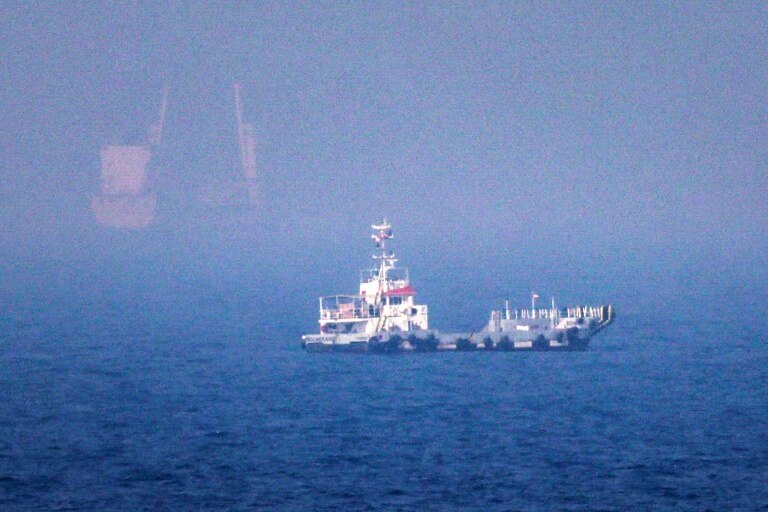
The renewed clashes are concentrated around the strategic Strait of Hormuz, the world’s most critical chokepoint for global oil and natural gas trade, ending the brief lull in violence that followed last month’s tentative ceasefire. Iran has opened a wide front of retaliatory strikes targeting what it says are American military assets across six Middle Eastern nations, following accusations that U.S. forces launched pre-emptive attacks on Iranian civilian and energy infrastructure.
Iranian state media reports that at least eight Iranian civilians were killed and 20 more wounded in U.S. strikes that hit a civilian airport, a major railway station, and two key bridges inside Iranian territory. Tehran also confirmed that U.S. attacks on energy generation facilities have severely strained the country’s national power grid, prompting the Iranian energy ministry to issue an urgent appeal for citizens to cut back on electricity consumption and turn off air conditioning during peak demand hours, even as regional summer temperatures climb to extreme highs. As of Saturday, Iran’s health ministry has confirmed 38 civilian deaths and more than 400 injuries across the country since fighting resumed six days ago.
There was no immediate on-the-record response to Iran’s accusations from official U.S. government sources. However, the strikes mark an apparent expansion of U.S. military operations to target Iranian national infrastructure, a step that former U.S. President Donald Trump publicly threatened during earlier rounds of tensions.
The current full-scale conflict between the two powers first ignited on February 28, when a joint U.S.-Israeli strike on Iranian targets killed multiple Iranians and sparked immediate retaliation from Tehran. In response to the opening attack, Iran effectively closed the Strait of Hormuz to international commercial shipping and launched its own strikes targeting Israeli and American interests across the Persian Gulf.
Major General Majid Mousavi, commander of the aerospace division of Iran’s Islamic Revolutionary Guard Corps, reaffirmed Tehran’s commitment to continuing retaliation in a public statement Friday. “Effective and targeted strikes from across Iran against the enemy will continue until the U.S. ends its operation against Iran’s coastal facilities in the south and around the strait,” Mousavi said.
Friday’s wave of Iranian retaliatory strikes stretched across the Middle East, leaving damage and casualties in multiple allied nations that host U.S. military forces. In Kuwait, Iran’s strikes damaged a joint power and water desalination plant, prompting Kuwait’s electricity ministry to call for immediate energy rationing. The Kuwaiti military confirmed that several of its service members were wounded when Iranian drones targeted multiple national military bases and encampments.
Iran’s Revolutionary Guards said strikes targeting U.S. radar systems and military aircraft in Qatar were launched to “punish the aggressor” for earlier U.S. attacks. Qatari officials confirmed their air defense systems intercepted an incoming missile attack, though falling debris from the interception caused residential damage in coastal areas. Abu Baker, a Sudanese expatriate living in Qatar, described the shock of the attack to reporters: “I was about to go to sleep when I heard the air alerts, hoping the interception would be out at sea. Then it hit and it shook my house. I am worried that this war will drag on… but thank God we’re in a country that protects us.”
Tehran also announced strikes on two U.S. radar sites in Oman and the long-contested Al-Tanf military base in eastern Syria. A senior Syrian military source denied any attack had taken place on Syrian territory, while U.S. military officials confirmed they had fully withdrawn all personnel from Al-Tanf earlier this year. Jordan’s military announced it shot down three incoming Iranian missiles that entered its airspace, while U.S.-led coalition forces shot down multiple Iranian drones over the city of Erbil in Iraq’s Kurdistan Region.
Strikes on Erbil also killed nine members of an exiled Iranian Kurdish armed opposition group, the group announced Friday, blaming the attack directly on Iranian forces. The presidency of Iraq’s Kurdistan Region issued a formal condemnation, calling the attack “a serious escalation and a blatant violation of Iraq’s sovereignty.” In Bahrain, Iranian state media confirmed strikes targeted U.S. helicopters and fixed-wing aircraft at a major U.S. airbase on the island, prompting Bahrain’s civil defense authorities to urge all citizens to seek immediate emergency shelter.
Six consecutive days of reciprocal fire around the Strait of Hormuz has fully rekindled the conflict that the preliminary ceasefire was meant to end. Iran has long claimed full territorial sovereignty over the waterway, which remained open to unimpeded global commercial shipping before the outbreak of war.
International mediators have moved quickly to call for an immediate end to hostilities, with the foreign ministers of China and Pakistan issuing a joint statement urging both Washington and Tehran to return to the negotiating table to de-escalate. As part of its expanded military operations, the U.S. has reimposed a full naval blockade on Iranian commercial ports, and attacks on commercial shipping transiting the region have continued. The UK Maritime Trade Operations agency reported early Friday that an unidentified commercial tanker was struck by an unclaimed projectile off the coast of Oman overnight Thursday.
Hamidreza Azizi, a visiting fellow at the German Institute for International and Security Affairs, noted that the latest round of fighting signals a shift in U.S. military objectives. “In the latest round of fighting, Washington’s apparent objective is more specific: to weaken and ultimately remove Iran’s control over the Strait of Hormuz,” Azizi explained.