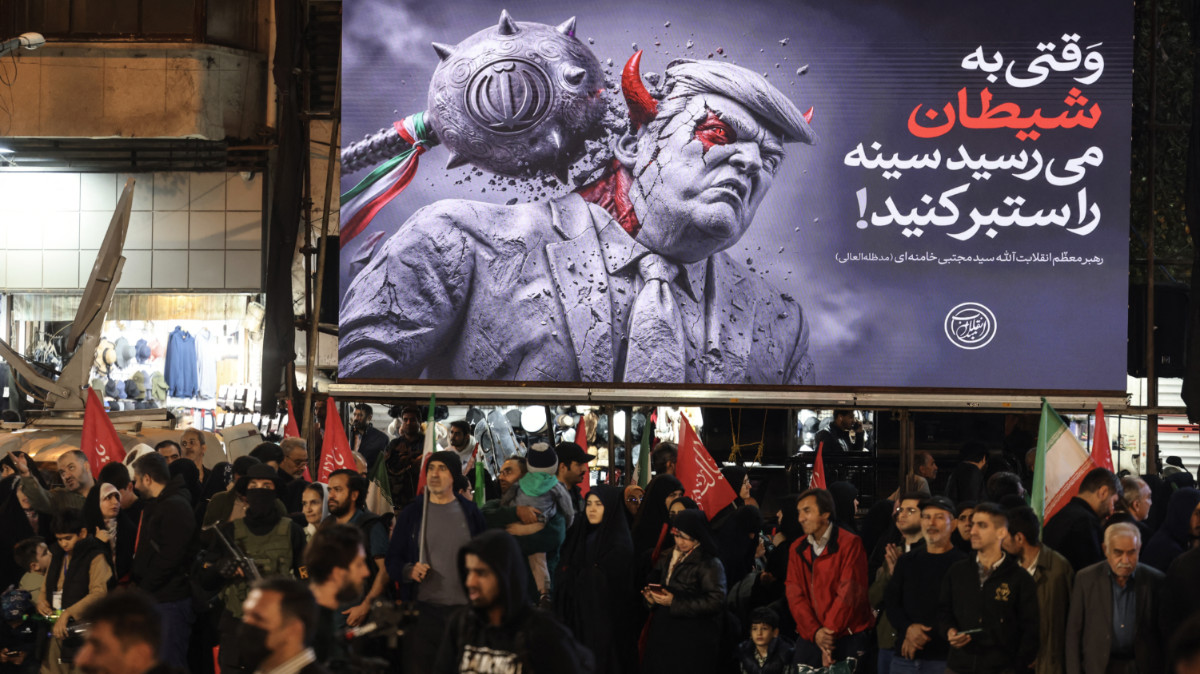
Following a decisive, landslide midterm election triumph for Democratic candidates across the U.S. on Tuesday, a pressing, high-stakes foreign policy question has emerged at the center of Washington’s geopolitical discourse: now that the midterm electoral cycle has concluded, will sitting U.S. President Donald Trump be more or less inclined to restart large-scale military hostilities against Iran? In the lead-up to the midterm polls, Washington appeared to be teetering on the precipice of launching a sweeping new military offensive against Tehran. Diplomatic staff family members stationed across the Middle East were evacuated from the region, a massive influx of additional U.S. military hardware and personnel deployed to regional bases, and Arab state officials issued carefully worded public warnings of an impending catastrophic new regional conflict. Despite widespread predictions from seasoned diplomats and geopolitical analysts that a major strike would coincide with election day, the anticipated offensive never came to pass. In the aftermath of the Republican Party’s crushing electoral defeat at Democratic hands, GOP figures have openly pointed to the ongoing Iran conflict, as well as the Trump administration’s close diplomatic and military alignment with Israel, as core contributing factors to their devastating losses. Speaking to reporters on Wednesday, President Trump acknowledged that the widespread public frustration tied to the Iran war and the corresponding spike in global fuel prices was “largely true” as a driver of his party’s historic underperformance. Vice President JD Vance went even further, stating bluntly on Wednesday that “the reason we lost is the war. The president himself said so last night,” and explicitly laying additional blame on the administration’s close ties to Israel for the party’s electoral thrashing. Notably, Donald Trump Jr., the president’s eldest son, publicly signaled his full endorsement of Vance’s assessment via a post on social media platform X; multiple White House insiders have described the younger Trump as a staunch anti-interventionist who has consistently opposed the U.S. military campaign against Iran. Market reactions on Wednesday reflected a sharp shift in widespread public and investor expectations, as global oil prices plummeted 9% in a single trading session. Merissa Khurma, founder and CEO of Amena Strategies and a non-resident fellow at Rice University’s Baker Institute for Public Policy, explained in an interview with Middle East Eye that the midterm election results could create conditions where Trump’s own inner circle and the newly seated Congress work in tandem to block the president from resuming expanded military action against Iran. “This all depends on how elected members in the House and Senate work together to ensure a change of course with Iran and what Trump is told by his advisors,” Khurma noted. Yet a range of political observers caution that multiple factors could undermine any efforts to constrain Trump’s military ambitions. The president has repeatedly touted his broad veto authority over congressional legislation, and while he told Politico during Tuesday’s election night coverage that he did not want to “sit around there for two years vetoing everything,” the 80-year-old billionaire — who is legally barred from running for a third presidential term — may feel entirely unshackled from electoral pressures that previously tempered his policy choices. While the U.S. Constitution explicitly grants Congress the sole authority to formally declare war, no sitting U.S. president has sought formal congressional authorization for a major new military deployment since George W. Bush secured legislative approval in 2001 and 2002 for campaigns in Afghanistan and Iraq. Even so, analysts note that the unprecedented scale of the Democrats’ midterm victory could create meaningful constraints on Trump’s agenda: the party will hold 54 seats in the U.S. Senate and 237 seats in the House of Representatives, a robust working majority that grants them sweeping subpoena power and full authority to launch oversight investigations into administration actions. “It is hard to predict what Trump will do, but it matters how Democrats work with Republicans willing to cooperate on stopping further escalation,” Khurma added. Senate Democratic leader Chuck Schumer placed ending the U.S. military campaign against Iran at the very top of his party’s legislative agenda on Wednesday, telling reporters, “We are going to end the war. We have some Republicans already who have joined us in ending the war, and the Founding Fathers had the power of the purse as one of the ways of deterring a president who does war without the consent of the American people.” For all the tough legislative rhetoric and the sharp drop in global oil prices signaling widespread expectations of de-escalation, the massive ongoing U.S. military footprint in the Middle East suggests that the risk of further military escalation remains very real. The U.S. currently has two full aircraft carrier strike groups and an amphibious assault ship deployed in the Arabian Sea, with a third aircraft carrier group en route to the region to join the assembled force. Across the region, Iranian leadership has openly celebrated the Republican Party’s electoral defeat as a dual strategic and political win for Tehran. “The Iranian nation handed Trump a strategic defeat on the battlefield and in the Hormuz — and a POLITICAL DEFEAT in Washington,” Mohsen Rezaei, secretary of Iran’s Supreme National Security Council, wrote in a public post on X. Even as Trump acknowledged the Iran war was a key driver of his party’s midterm losses, he offered no regrets about launching the initial military campaign against Iran earlier this year. “I can tell you that as far as that war is concerned, I would have done nothing different,” he stated publicly. Some veteran foreign policy experts warn that a frustrated, post-midterm Trump facing no remaining electoral constraints could choose to move forward with expanded strikes against Iran. “If anything, Trump is now freed up for another round of strikes,” Alan Eyre, a former senior U.S. State Department Iran specialist currently affiliated with the Middle East Institute, told Middle East Eye. “The new Congress won’t be seated until January, and even then it is questionable how much real ability they will have to constrain the president, so I don’t think it changes much.”
‘Freed up or congressionally constrained’: Is Trump more or less likely to resume war on Iran?