A month after a pair of powerful back-to-back earthquakes tore through coastal Venezuela, thousands of displaced survivors are grappling with a worsening public health emergency, driven by catastrophic shortages of clean drinking water and basic sanitation infrastructure. The disaster, which struck on June 24, left a staggering toll: Venezuelan government figures confirm 3,685 people killed, 190 buildings completely destroyed, and another 856 structures left damaged beyond safe habitation. In the hardest-hit coastal state of La Guaira, many survivors have been forced to take shelter in makeshift camps or out in the open, with no access to the basic services that protect public health.
For decades, many communities across Venezuela have struggled with inconsistent water access from the state-run utility, with some neighborhoods receiving potable service just once every one to two months even before the quakes. The earthquakes have compounded this pre-existing crisis by shattering the large blue plastic home storage tanks that most families rely on to reserve water between service deliveries. Juliani Herrera, a 20-year-old survivor who sustained multiple cuts during the tremors when she fell from her motorcycle amid the violent shaking, explained that nearly all neighborhood household tanks cracked or burst when the ground shifted. “Now, we have to wait to see if a tanker comes and fills buckets,” she said, after collecting a donation package at a beach-side temporary shelter.
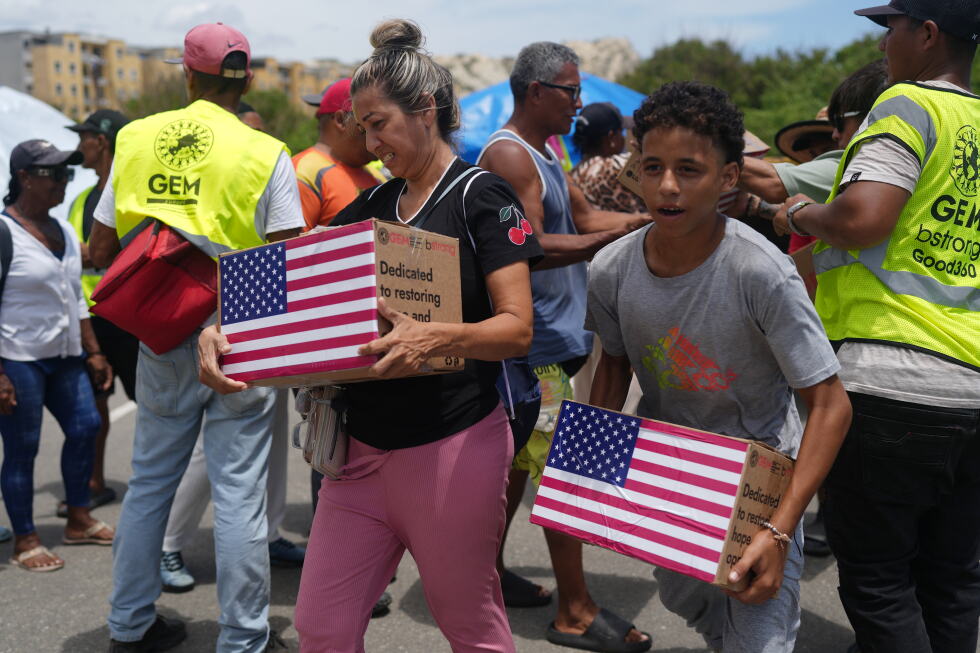
In Maiquetía, the coastal city that hosts Venezuela’s primary international airport, dozens of residents lined up Wednesday to receive aid boxes marked with the United States flag, stocked with emergency food, bottled water, and basic hygiene kits that include soap, a toothbrush, and cleansing towelettes. Herrera was among those who received one of these boxes, which she carried several blocks back to her shelter with iodine-stained scratches still visible across her chin, arm, and hands.
With no access to formal sanitation facilities, many families in La Guaira have been forced to use the region’s popular Caribbean beaches for bathing and open defecation. Feces now litter stretches of the shoreline that once drew crowds of tourists and local visitors. Other survivors stretch their limited remaining water supplies to cover cooking, cleaning, and personal hygiene, choosing between basic needs daily.
The Norwegian Refugee Council’s regional advocacy director for Latin America, Beatriz Ochoa, has warned that the crowded, unsanitary living conditions create severe risks of communicable disease outbreaks, exacerbated by the region’s sweltering tropical temperatures, ongoing seasonal rains, and a near-total lack of privacy for survivors. Ochoa noted that affected communities have already demonstrated remarkable resilience, organizing spontaneous systems to maintain basic cleanliness in shared shelter spaces, including improvised toilets and informal waste collection. “Their determination is remarkable, but families should not have to shoulder this burden alone,” she said, calling for urgent scaled-up intervention to improve conditions and prevent a secondary public health disaster.