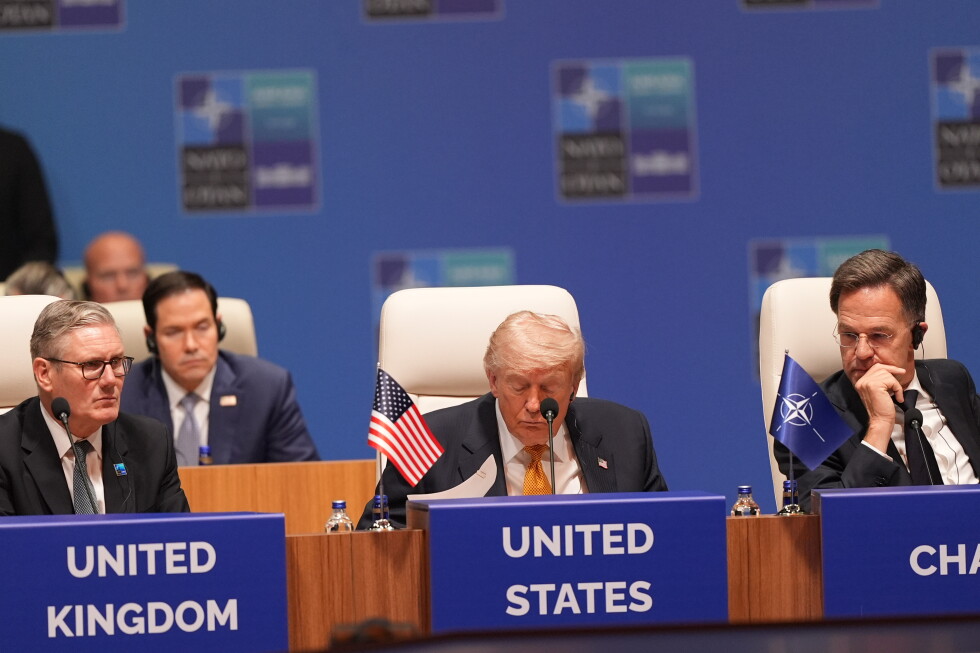
ANKARA, Turkey — The high-stakes NATO summit held in the Turkish capital on Wednesday appeared poised for chaos before U.S. President Donald Trump and allied heads of state even convened formal discussions. Despite lingering tensions fueled by renewed criticism of U.S. allies from Trump that cast public doubt on his commitment to the transatlantic alliance, alliance leaders emerged with a unified reaffirmation of their core mutual defense promise.
In post-summit remarks to reporters, Trump pushed back against narratives of division, saying, “There was a lot of love in that room. A lot of unity. We’ve had a tremendous time and I think a great success.” In the official summit declaration, leaders framed their commitment to NATO’s foundational Article 5 — which codifies the principle that an attack on one member constitutes an attack on all — as “ironclad.”
This public show of unity came after a awkward interlude: NATO Secretary-General Mark Rutte claimed allies “warmly welcomed President Trump’s leadership,” a statement that jarred with Trump’s recent public demand that the U.S. take control of Greenland, an autonomous territory of NATO member Denmark. Still, Rutte framed the gathering as a clear success for the alliance, stating simply, “The message from this summit is simple. NATO delivers.”
Among the most unexpected developments to emerge from the gathering was the fallout from Trump’s recent decision to approve retaliatory military strikes against Iran, authorized shortly after he left a NATO leaders’ dinner. The unusual timing of the order, announced mid-summit, highlighted a longstanding grievance Trump has held against the alliance: he has repeatedly complained that NATO allies have failed to contribute to efforts to keep the strategic Strait of Hormuz open to international shipping.
Intriguingly, Rutte declined to rule out a future NATO role in any broader conflict involving Iran. “Obviously Iran is outside NATO territory,” Rutte said, adding: “If helpful, NATO is always willing to play a role. But first now, let’s see what happens over the coming days and weeks.” The open door to NATO involvement aligns with Trump’s priorities, though it has stirred unease among many member states. NATO has billed itself as a defensive alliance focused exclusively on transatlantic security, and its last out-of-area mission in Afghanistan ended in chaotic withdrawal, leaving allies deeply reluctant to be drawn into new extra-regional conflicts.
One of the most consequential announcements for the ongoing war in Ukraine came directly from Trump, who revealed the U.S. will grant Ukraine a manufacturing license to produce Patriot air defense systems domestically to counter Russian missile and drone strikes. This long-sought concession marks a major breakthrough for Ukraine, which has entered the fifth year of its war against Russian invasion and has urgently needed expanded access to the advanced air defense technology.
“We’ll give them the right to make Patriots. We’ll show them how to do it,” Trump said during a bilateral meeting with Ukrainian President Volodymyr Zelenskyy. “I think they can produce them pretty quickly.” Patriots are notoriously expensive, in extremely high global demand, and have long production timelines; Zelenskyy has lobbied for expanded access to the systems for years, and more recently pushed for domestic production rights to speed up delivery.
For summit host Turkey, the gathering brought major potential policy shifts. Trump announced the U.S. is prepared to lift longstanding sanctions on Turkey, clearing the path for the possible return of F-35 stealth jet sales to Ankara. The announcement came despite formal objections from Israel. Trump noted he had “haven’t totally made up my mind” on a final decision, but Turkish President Recep Tayyip Erdogan — who has built a close personal rapport with Trump — gave a public thumbs-up after the announcement was translated for him. Turkey was removed from the F-35 program in 2019 after it purchased Russian S-400 air defense systems, a move that violated alliance security guidelines.
Beyond the Patriot license announcement, the summit brought a notable shift in Trump’s public tone toward Ukraine. Dropping his usual harsh criticism of Zelenskyy, Trump praised the Ukrainian leader’s efforts to advance potential negotiations to end the war. “We’ve actually developed a good relationship. It’s hard to believe,” Trump said, adding that Zelenskyy has “done an amazing job” and “been very effective” in leading Ukraine through the conflict.
Alliance leaders also approved a massive 70 billion euro ($80 billion) multi-year military support package for Ukraine, spanning from this year through 2027. The package is structured as 30 billion euros per year from a European Union loan program, paired with 40 billion euros in direct contributions from NATO allies. Notably, the Trump administration has effectively halted all new U.S. military spending for Ukraine, so the U.S. will not contribute to the new package. NATO diplomats confirmed that most of the 40 billion euro allocation for 2026 has already been secured from allies.
Rutte, the new NATO Secretary-General, launched an aggressive outreach effort to accommodate Trump’s longstanding demand that allies increase their own defense spending. He highlighted that European allies and Canada have increased their combined defense spending by nearly $300 billion over the past two years, a shift he directly tied to Trump’s pressure. At a high-profile defense industry event marked by upbeat production and dramatic branding, Rutte celebrated “tens of billions” of dollars in new weapons and military equipment contracts sealed during the summit. “I would argue that without you in this chair, this would not have happened,” Rutte told Trump in a private meeting ahead of the formal summit. “Grab the win. It’s there.”
In the final summit declaration, leaders announced the start of a sweeping transformation of the world’s largest military alliance, centering on the goal of “building the future: a stronger Europe in a stronger NATO.”
One lingering unresolved question emerged around the location and timing of NATO’s next scheduled summit. Albania had been widely expected to host the 2027 gathering, but the final declaration only stated “We look forward to our next meeting,” omitting the standard formal confirmation of the host and date. While Albanian Prime Minister Edi Rama is personally popular among allied leaders, some members have cooled on hosting the summit in the Balkan nation due to its low levels of defense spending. Other allies have reportedly pushed back to avoid scheduling a high-profile divisive summit during what could be another election cycle with Trump as U.S. president. Rutte acknowledged that Albania remains the planned venue, but added “of course we still have to decide on an exact time.”
Associated Press reporters Seung Min Kim in Ankara, Michelle L. Price, and Collin Binkley in Washington contributed reporting to this article.