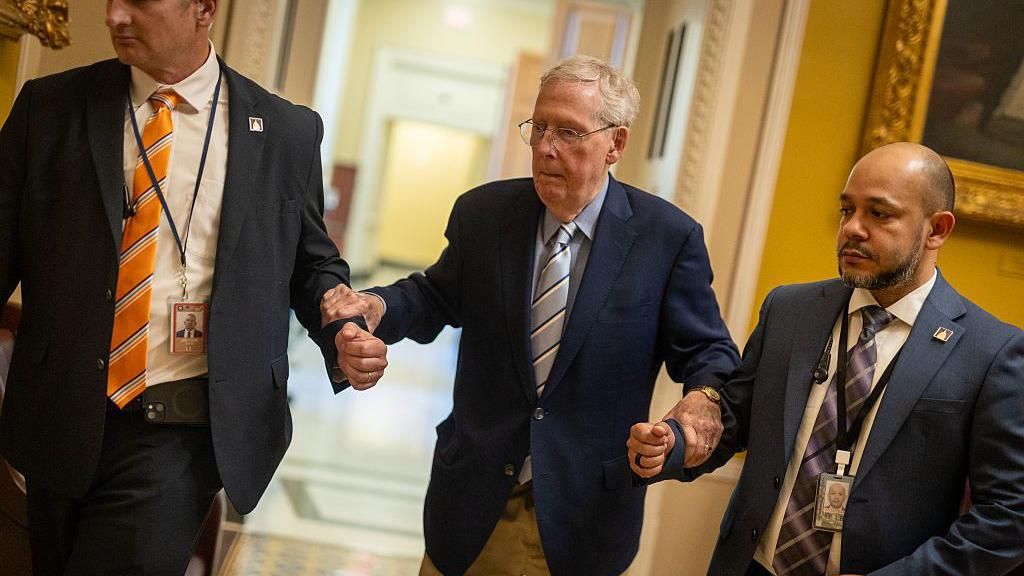
Speculation and concern have intensified around the health status of 82-year-old Senate Republican leader Mitch McConnell, who has now spent more than three weeks hospitalized for an undisclosed medical issue. McConnell was first admitted to a medical facility for treatment on June 14, per confirmation from his official staff team, but his aides have declined to release any specific details regarding the cause of his admission or the specific treatments he is undergoing.
On July 2, McConnell’s team issued a brief update stating that the longest-serving Senate party leader in U.S. history was “receiving excellent care” and was “continuing to improve.” No further official updates on his condition have been shared with the public since that statement.
Unsubstantiated claims made last week by conservative influencer Laura Loomer, a close ally of former President Donald Trump, upended public discussion of McConnell’s health. Loomer alleged without any evidence that McConnell was in a “vegetative state,” later doubling down to claim he was “brain dead and kept alive by machines” and that a coordinated cover-up of his true condition was underway. She also launched criticism at McConnell’s wife, former U.S. Transportation Secretary Elaine Chao, for a pre-planned trip to China that is ongoing during his hospitalization.
Multiple senior Republican senators moved quickly to push back on Loomer’s claims, confirming that they had held substantive phone conversations with McConnell this week. Senate Majority Leader John Thune’s spokesman confirmed that Thune and McConnell held a “lengthy and substantive conversation that covered a variety of topics including national security.” Wyoming Senator John Barrasso’s spokeswoman added that the pair spoke for 20 minutes, noting that McConnell was “fully engaged and is eager to get back to the Senate.”
A spokesperson for Chao also responded to the criticism of her trip, confirming the travel itinerary had been arranged long before McConnell’s hospitalization and that the current state of the senator’s health did not require an immediate emergency return to the United States.
In his official statement on July 2, McConnell’s office noted that the senator appreciates the widespread public support he has received during his recovery, and that he continues to collaborate with his staff on both Kentucky constituent matters and Senate business while the chamber is in recess.
Multiple U.S. media outlets have previously reported details from 911 calls placed from McConnell’s residence that referenced an unconscious patient suffering cardiac arrest, who received cardiopulmonary resuscitation before transport to hospital. The 911 recording does not explicitly name McConnell as the patient.
This extended hospitalization is the latest in a series of public health scares for McConnell, who has served in the U.S. Senate for more than 40 years. As a child, he survived polio, a condition he later noted left him with persistent mobility challenges that make climbing stairs difficult. In 2023, he suffered a concussion after a fall at a Washington D.C. hotel that kept him away from Senate business for weeks, and later that year he stunned onlookers when he froze abruptly mid-speech during a public press conference. In 2024 he was injured in another fall outside a Senate lunch event, and earlier this year he was briefly hospitalized for treatment of the flu.
Over his decades-long tenure leading Senate Republicans, McConnell built a reputation as a shrewd political strategist known for using Senate procedure and partisan organizing to block Democratic policy priorities. One of his most consequential political actions came in 2016, when he blocked a vote on former President Barack Obama’s nomination to the U.S. Supreme Court, allowing the newly elected President Trump to appoint a conservative justice to the vacant seat the following year. While he aligned closely with Trump’s policy agenda during the former president’s first term, he has become an increasingly vocal critic of Trump in recent years.
McConnell previously announced that he will not run for re-election when his current Senate term expires in January 2027. Under Kentucky state law, if McConnell were to leave office early before his term ends, a special election would be held to select a temporary successor to fill his seat.