In a stunning last-minute disruption to a rare display of bipartisan cooperation, former U.S. President Donald Trump has announced the cancellation of a planned signing ceremony for what experts call the most sweeping federal housing policy reform in the 21st century, tying his approval of the cost-cutting bill to the passage of a strict new voter ID law he has prioritized.
The legislation, formally titled the 21st Century ROAD to Housing Act, earned approval from both chambers of Congress after weeks of cross-party negotiations, a rare outcome in an era of deeply polarized Washington politics. The overwhelming bipartisan support underscores just how urgent the nation’s ongoing housing affordability crisis has become for voters across every ideological spectrum.
In a social media post made public just hours before he was set to sign the bill into law, Trump stated: “Today’s Housing News Conference and Signing is hereby cancelled until such time as we pass the desperately needed SAVE AMERICA ACT, which I consider to be a National Emergency.” Under longstanding U.S. legislative rules, the bill will automatically become law within 10 days if Trump does not issue a formal veto and Congress remains in session.
The bipartisan bill is crafted to address two root causes of America’s housing crisis: skyrocketing housing costs and a persistent national shortage of available units, packing more than 40 distinct provisions that target everything from bureaucratic bottlenecks to institutional investor buying sprees that have squeezed supply. Policy analysts and housing advocates have widely framed the package as the most comprehensive congressional action on housing in decades.
Polling from the Bipartisan Policy Center, conducted earlier this spring, confirms that housing affordability is a top voter priority: 89% of respondents across all political affiliations want Congress to take immediate action to bring down housing costs. David Gonzalez Rice, a policy advisor at the National Low Income Housing Coalition (NLIHC), praised congressional negotiators for their work, noting “Legislators and their staff really did their homework here to try to put together a package that was going to try to address a lot of concerns at once.”
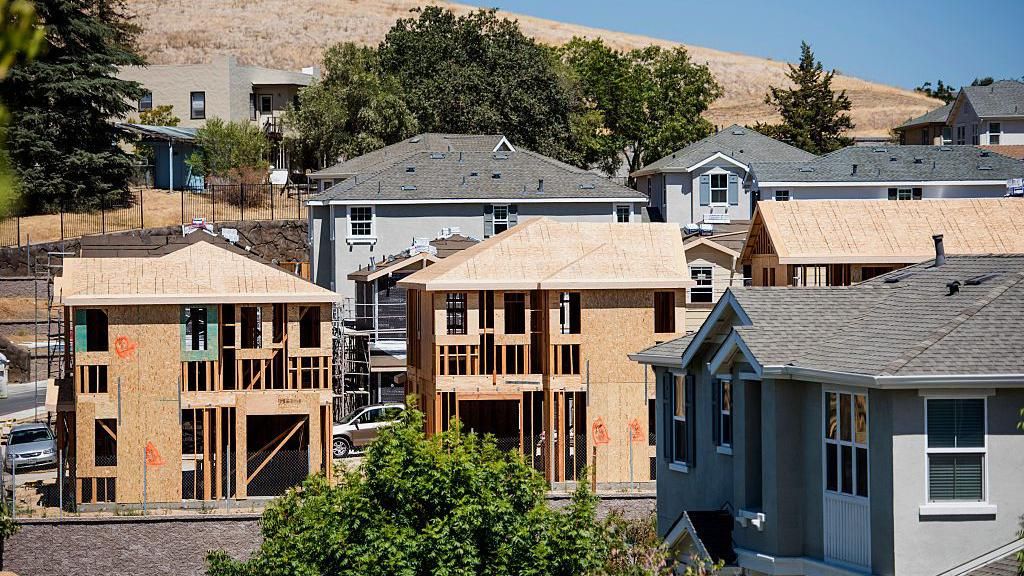
Core provisions of the bill include streamlined regulatory processes to speed up new home construction and new federal limits on how many single-family homes large institutional investors can purchase nationwide. Industry estimates from Realtor.com put the current national housing shortage at more than 4 million units, a gap that has been the primary driver of rising home and rental prices for years. “Everyone can understand the idea that the more supply you build, the more it’s going to exert downward pressure on prices in your community,” explained Jared Grigas, Legislative Director at the National Association of Counties (NACO). Grigas added that the bill empowers local governments to expand supply rather than imposing top-down mandates, cutting through bureaucratic red tape to speed up projects.
With November’s midterm elections rapidly approaching, lawmakers from both major parties have already attempted to claim credit for the rare bipartisan policy win. Francis Torres, housing and infrastructure director at the Bipartisan Policy Center, called the bill’s passage a landmark in itself. “It’s an achievement in terms of bipartisan policymaking in Washington, which is itself a recognition of how important this issue of housing affordability has become for the American public,” Torres said. He added that there is now broad consensus across the political divide that a chronic undersupply of housing is the core driver of affordability challenges across the country.
Data from the Federal Reserve Bank of St Louis underscores the severity of the crisis: the median U.S. home price has climbed to roughly $403,000, up from just $223,000 in 2010. Analysis from real estate firm Redfin finds that a household needs an annual income of approximately $117,000 to afford a median-priced U.S. home — a figure that is nearly $30,000 higher than the median U.S. household income, per U.S. Census Bureau data. Compounding the strain, high inflation and elevated mortgage interest rates have pushed homeownership entirely out of reach for millions of working- and middle-class Americans.
Congressional Republicans, many of whom are locked in competitive re-election battles as they fight to retain control of both chambers, have centered their messaging on the bill’s provisions to speed up home construction and lower costs, framing the bill as a step forward for the “American dream of homeownership.” South Carolina Senator Tim Scott, a co-sponsor of the legislation, explained the bill’s incentive framework on the Senate floor: “If you don’t build more housing, you should lose those incentives, and they should go to the places where you’re building more housing.” Under the bill, local governments that approve more new housing units gain access to additional federal funding.
For their part, Democratic co-sponsors including Massachusetts Senator Elizabeth Warren have highlighted the bill’s restrictions on institutional investor purchases of single-family homes, a practice that has driven up prices and reduced supply for individual buyers. “Rent’s too high, homes are too expensive and for too long the federal government (has been) totally asleep at the switch, and we changed that today,” Warren said after the Senate approved the bill.
Beyond the high-profile provisions that have drawn the most attention, experts note that smaller measures included in the bill will deliver tangible support to often-overlooked communities. One provision expedites funding for housing reconstruction in areas hit by natural disasters, while another preserves access to affordable housing in rural parts of the country.
Torres of the Bipartisan Policy Center emphasized that the bill represents a meaningful, incremental step toward solving the nation’s decades-long housing crisis, rather than an immediate fix. “It’s an accumulation of ideas, each of which moves the needle a little bit, but together they make up something meaningful,” he said. “This bill is not going to be the thing that will change your rent cost in the summer of 2026 necessarily, but it is a crucial first step at the federal level to facilitate some important actions to add housing supply.”