In the South African township of Secunda, 19-year-old Olwam Plaatjie carries a personal motivation for embracing a revolutionary new tool in the global fight against HIV. Growing up surrounded by the havoc the virus wreaked on her family and neighbors—watching loved ones lose weight, battle repeated illness, and rely on daily antiretroviral pills to survive—she made the decision to start on pre-exposure prophylaxis three years ago, eager to avoid the same fate.
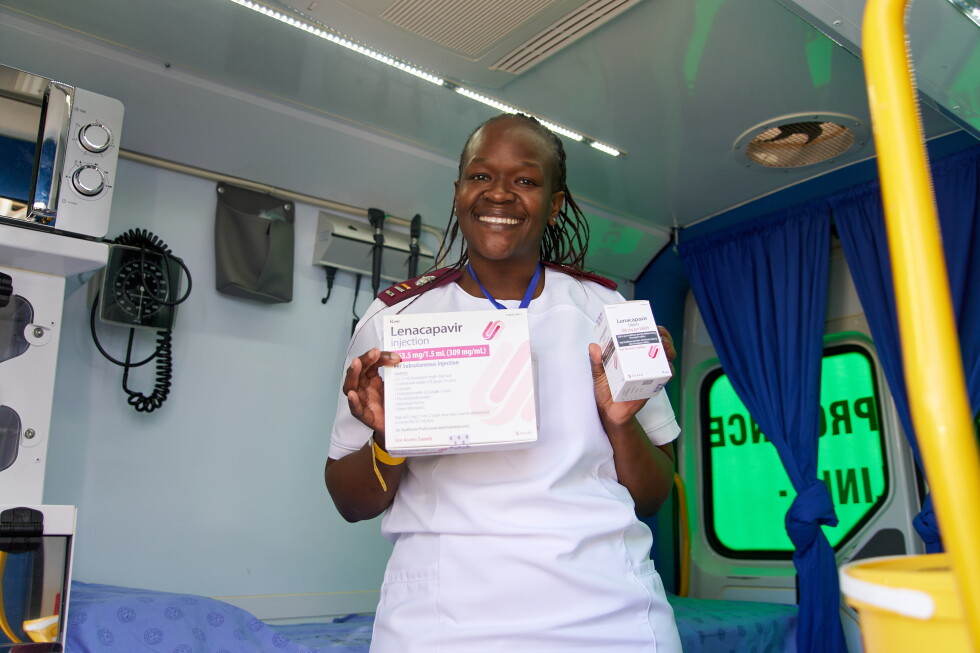
Today, Plaatjie is among the thousands of South Africans who participated in clinical trials for lenacapavir, a twice-yearly injectable HIV prevention medication that solves one of the biggest drawbacks of standard daily oral prevention pills: consistent adherence. Even after experiencing mild side effects including night sweats, she has continued her participation, and this month, her country made global health history as one of the first nations in the world to roll out the new drug broadly.
South Africa bears the world’s heaviest HIV burden, with more than 8 million people currently living with the virus and between 140,000 and 170,000 new infections recorded every year. At the official launch of the national rollout, President Cyril Ramaphosa told a stadium crowd that lenacapavir marks a long-awaited turning point for the country’s decades-long HIV public health response.
Developed by U.S. pharmaceutical firm Gilead Sciences, lenacapavir’s efficacy was validated through large-scale clinical trials conducted across South Africa and Uganda. A landmark study based in Johannesburg found that the six-monthly injection delivers 100% protection against HIV, a result senior clinician Dr. Nkosi Ndlovu of the Wits RHI research institute called “groundbreaking.”
Right now, the South African government has secured enough doses to treat 456,000 people for one full year, supported by a $29 million grant from the Global Fund. After this initial phase, Health Minister Aaron Motsoaledi confirmed the country plans to transition to independent domestic funding for the program, with continued backing from international donors. Ramaphosa has set an ambitious target to reach 3 million at-risk South Africans with the drug over the next three years, though he has not released detailed funding or implementation plans to meet that goal.
Despite the historic milestone, public health advocates and civil society organizations argue the current rollout is far too small to move the needle on national infection rates. Groups estimate South Africa needs at least 2 million doses annually to generate a meaningful reduction in new HIV cases. Advocates also point out that South Africa’s central role in developing the drug—from hosting trials to enrolling thousands of community participants and generating the critical efficacy data—should guarantee the country broader, faster access than it has received so far.
“Our communities participated in the research, our clinics hosted the trials and our scientists helped produce the data,” explained Tian Johnson, health strategist for Johannesburg-based advocacy group African Alliance. “Yet we are still waiting for Gilead to determine how much of the product we receive, when it arrives and how quickly access can expand.”
On the manufacturing front, progress is underway to expand access and lower costs for low- and middle-income nations. Gilead has already committed to granting a voluntary manufacturing license to a South African drugmaker, following six similar licenses issued to firms in other countries last year. Once a national committee selects the local manufacturer, lenacapavir will be produced domestically as a low-cost generic, priced at just $40 per person annually—a dramatic drop from the original list price of $28,000 per year.
For the initial rollout phase, South Africa is prioritizing distribution to six provinces with the country’s highest HIV prevalence, with the first batch of 37,920 doses already sent to 360 local health facilities. Doses are being directed first to the groups at highest risk of infection: people who inject drugs, sex workers, transgender people, adolescent women aged 15 to 24, and pregnant or nursing people.
Reaching these vulnerable key populations presents unique challenges, however. Years ago, sweeping cuts to U.S. global health aid under the Trump administration forced the closure of 12 specialized clinics that were the primary safe, confidential care sites for many at-risk groups. These groups often avoid standard public clinics due to stigma, long wait times, and negative interactions with staff, leaving many at risk of being left out of the new program.
“Key populations, sex workers, people who use drugs, they don’t normally use public clinics,” noted Bellinda Thibela, international policy and advocacy coordinator for the Health Global Access Project. “So it means that we’re going to lose them unless the government acts fast and ensures that they put the resources to reach those people.”
Minister Motsoaledi confirmed that patients from the closed U.S.-supported clinics have been transferred to existing public health facilities, and the government is currently working to train staff and create private, stigma-free spaces for vulnerable patients. Even so, he acknowledged that the unique safe environment the specialized clinics provided has not yet been fully replaced.
“What we have lost is that confidentiality, where they were going to these clinics that are very special to them, where they feel very safe,” Motsoaledi said. “So we are trying to train our doctors to take over.”
Leila Mansoor, a senior scientist at the University of KwaZulu-Natal’s Center for the AIDS Program of Research in South Africa, said equitable large-scale access to lenacapavir could reshape the country’s HIV epidemic. “If South Africa can deliver it equitably and at scale, it could make a meaningful contribution to reducing new HIV infections,” she said.