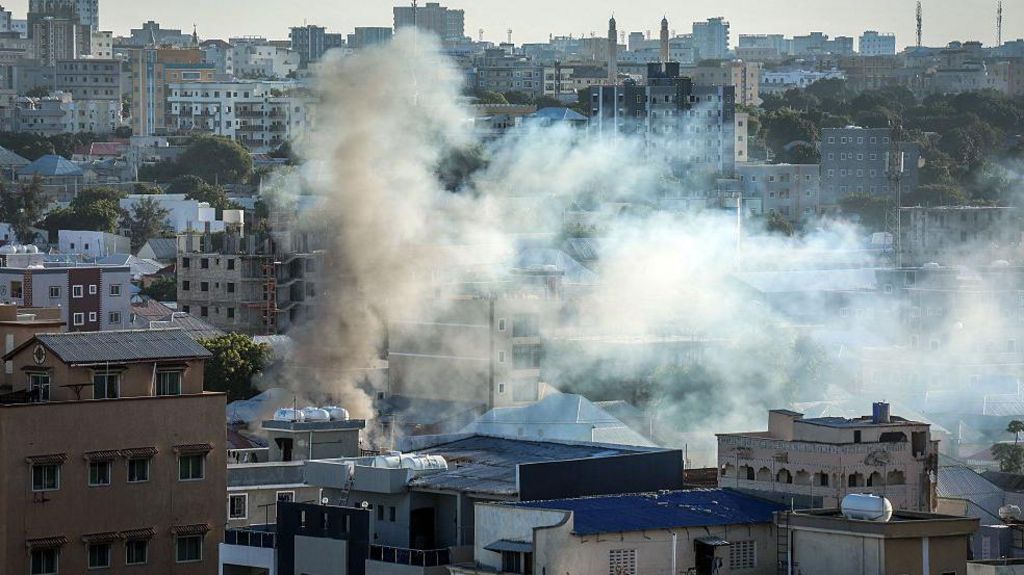
A deepening political crisis over delayed presidential elections has plunged Somalia’s capital Mogadishu into open armed conflict, with heavy exchanges of gunfire between government forces and opposition fighters continuing through overnight hours after violence first broke out Wednesday evening.
The root of the standoff dates back to May 15, when President Hassan Sheikh Mohamud’s constitutionally mandated term in office reached its scheduled end. Instead of stepping down to make way for a new administration, the federal government extended Mohamud’s tenure by an additional 12 months—a move the country’s opposition bloc has decried as a clear violation of Somalia’s constitution, prompting organizers to call for mass nationwide protests to be held Thursday.
Residents across multiple residential neighborhoods in Mogadishu confirmed persistent gunfire echoed through the capital throughout the night, with no immediate ceasefire emerging by early Thursday. In an official statement, Somali police said the military and security deployment was framed as a large-scale security operation targeting heavily armed opposition militias that the government says launched coordinated mortar attacks on multiple populated areas.
While negotiators from the federal government and opposition factions held talks after the expiration of Mohamud’s term, the two sides failed to bridge their core disagreements, setting the stage for the current escalation of tensions. Notably, Mohamud had positioned himself as a reformer working to transition Somalia to full democratic elections, moving away from the long-standing system where clan elders selected members of parliament, who in turn appointed the country’s president. Somalia has not held a direct one-person, one-vote national election since 1969, and the country has struggled with instability and armed conflict for more than three decades.
The opposition has ramped up accusations against the government following the outbreak of violence. Former Prime Minister Hassan Ali Khaire claimed government forces targeted him and other opposition leaders as they prepared for Thursday’s planned peaceful demonstrations. Taking to the social platform X to share the allegation, Khaire placed full blame for any potential casualties or property damage on the outgoing president, calling the incident a severe violation of Somali citizens’ constitutional rights and a deliberate effort to outlaw peaceful public assembly.
As of Thursday morning, official figures for casualties from the overnight fighting have not been released, and President Mohamud has not issued any public comment on the clashes. Former Somali President Sharif Sheikh Ahmed, a key opposition figure, reiterated in a statement on X that the violence would not derail the planned protest movement, saying that opposition leaders and supporters would not be intimidated into stepping back from their demands.
The international community has already reacted to the escalating crisis, with the U.S. Embassy based in Mogadishu issuing a statement condemning the violence as reckless. The embassy emphasized that all political leaders across all factions hold a shared responsibility to protect Somalia’s hard-won stability and resolve their outstanding political disagreements through diplomatic, peaceful negotiations rather than armed conflict.