In a major announcement for the U.S. Department of Justice’s leadership, former president and current U.S. President Donald Trump has revealed plans to formally nominate Acting Attorney General Todd Blanche to hold the role permanently, capping a rapid climb for one of Trump’s closest and most trusted legal allies.
If the U.S. Senate votes to confirm Blanche’s appointment, the president’s one-time personal lawyer will step into the nation’s top law enforcement position on a permanent basis, leading the entire DOJ as the administration’s chief federal prosecutor.
Blanche first stepped into the acting attorney general role in early April, immediately after Trump removed former Attorney General Pam Bondi from the post. A long-time loyal ally of the president, Blanche has spent years defending Trump across multiple high-stakes legal cases. Most notably, he led Trump’s defense during his federal prosecution over allegations he improperly retained classified national security documents following the end of his first presidential term, and also represented Trump amid proceedings tied to allegations of attempts to overturn the 2020 presidential election results. Both of those cases were ultimately dismissed after Trump won the 2024 presidential election, in line with longstanding DOJ policy that prohibits prosecuting sitting sitting presidents.
Details of the upcoming nomination were first shared publicly in a video posted late Wednesday by Dan Scavino, Deputy White House Chief of Staff. In the recording, Trump confirmed he would submit the nomination to the Senate “tomorrow” and predicted that the confirmation process would move “very quickly.” Just days earlier, Trump voiced public praise for Blanche during an appearance on the Pod Force One podcast, calling Blanche a skilled legal professional and noting that “Todd’s doing a very good job at DOJ.”
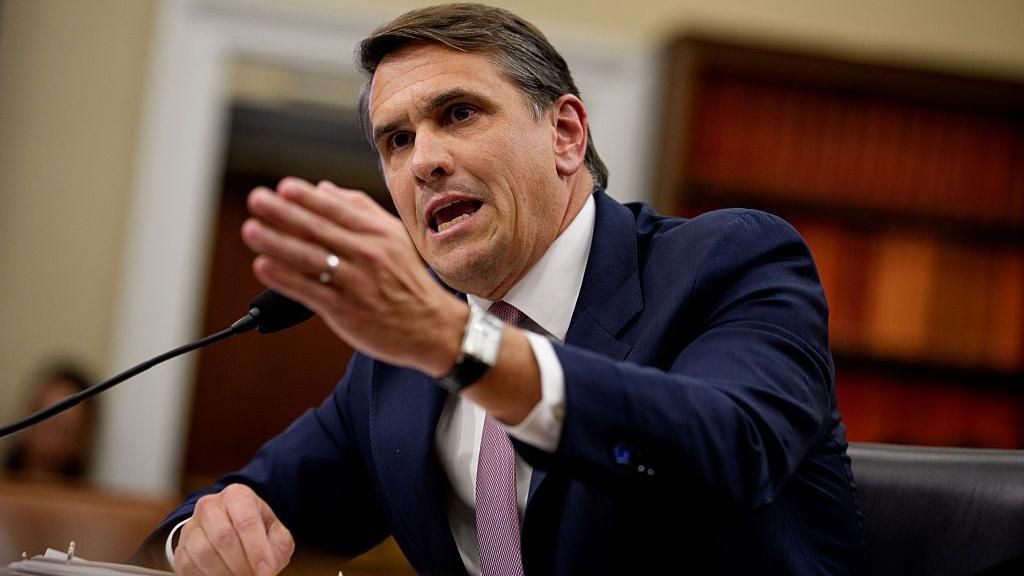
In recent weeks, Blanche has found himself at the center of a major policy controversy at the DOJ, after the department pushed to create a new $1.8 billion (equivalent to £1.3 billion) “anti-weaponisation fund” designed to compensate individuals who claim they were harmed by overreach from federal government agencies. The proposal faced bipartisan pushback, with multiple Republican lawmakers joining opposition Democrats to oppose the plan. Blanche suffered a major setback when a federal judge ordered the plan paused to allow ongoing legal challenges to proceed. Appearing before Congress for a hearing Tuesday, Blanche confirmed the proposal had been abandoned entirely, stating clearly: “We’re not moving forward with the fund, period.”
A 51-year-old Colorado native, Blanche earned his undergraduate degree from American University in Washington, D.C., before graduating with a law degree from Brooklyn Law School in 2003. He spent the majority of his early legal career as a federal prosecutor in the Southern District of New York, before moving into private practice at two prominent national law firms, Wilmer Cutler Pickering Hale and Dorr, and Cadwalader, Wickersham & Taft.
Before taking over as acting attorney general, Blanche served as deputy attorney general, where he worked alongside Bondi on the DOJ’s release of previously sealed documents connected to late convicted sex offender Jeffrey Epstein. In July of this year, Blanche conducted a personal interview with Ghislaine Maxwell, Epstein’s long-time associate who is currently serving a 20-year federal prison sentence for her role in Epstein’s crimes. Beyond his law enforcement roles, Blanche has also previously served as acting Librarian of Congress.
Following his appointment as acting attorney general, Blanche pushed back against media reports that claimed Bondi’s removal was tied to her handling of the Epstein document release. Since leaving the DOJ, Bondi has announced she will join the White House’s new AI advisory panel, the Presidential Council of Advisors on Science and Technology.
The upcoming Senate confirmation process for Blanche is expected to draw intense scrutiny from lawmakers, given his long history of personal and political loyalty to Trump, as well as his recent handling of the controversial anti-weaponisation fund proposal.