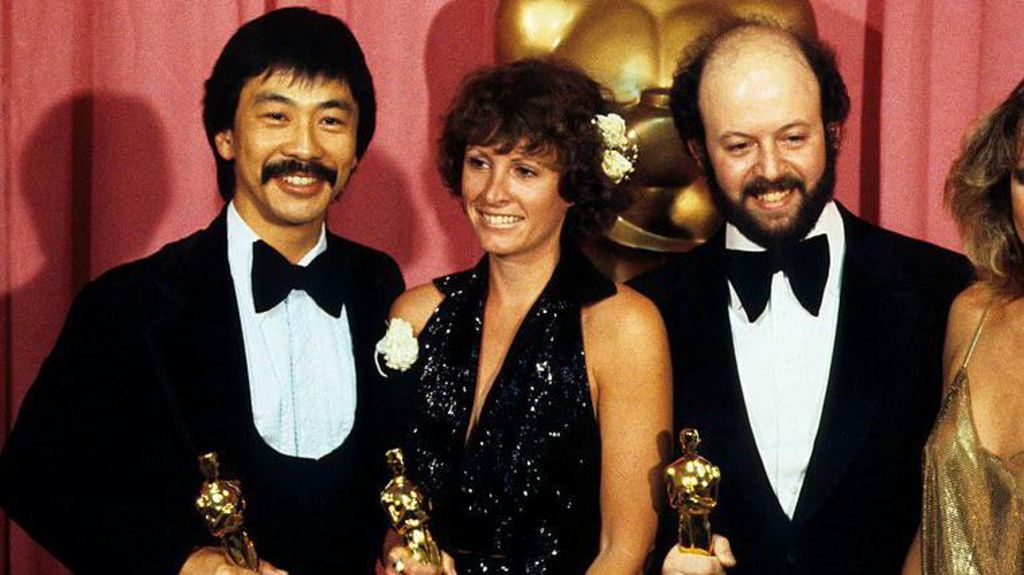
The film community is mourning the passing of legendary Hollywood editor Marcia Lucas, the Academy Award-winning creative mind behind the original *Star Wars* saga, who died at the age of 80. Lucas, whose career reshaped the art of film editing and blazed a trail for women in the industry, passed away Wednesday at her Rancho Mirage, California home, surrounded by family, following a battle with metastatic cancer.
Born Marcia Griffin in 1945 in Modesto, California, Lucas launched her entertainment career as a film librarian before rising to become one of the most respected editors in 1970s Hollywood. She married *Star Wars* creator George Lucas in 1969, and went on to contribute to many of his early landmark projects, including *THX 1138* and *American Graffiti* — the latter earning her first Academy Award nomination for editing. Beyond her work with George Lucas, she also collaborated extensively with acclaimed director Martin Scorsese on a run of iconic 1970s features, among them *Alice Doesn’t Live Here Anymore*, *Taxi Driver*, and *New York, New York*.
Lucas’ most celebrated contribution came with 1977’s *Star Wars* (later retitled *A New Hope*), where she shared the Oscar for Best Film Editing with co-editors Richard Chew and Paul Hirsch. While her work largely happened behind the camera, her impact on the early *Star Wars* franchise is widely regarded as foundational to its success. George Lucas himself publicly credited her with structuring the massive, complex Death Star final battle sequence, a sequence that wove narrative plot into an aerial dogfight in a way that had never been attempted before. “Nobody really has ever tried to interweave an actual plot story into a dogfight, and we were trying to do that,” George Lucas told *Rolling Stone* shortly after the film’s 1977 release, noting Marcia brought the 40,000 feet of raw pilot footage into a cohesive, thrilling sequence. Beyond that iconic battle, she infused the original trilogy with sharp narrative clarity and unexpected emotional depth that turned the space saga into a global cultural phenomenon.
Lucas returned to the franchise for two more installments, 1980’s *The Empire Strikes Back* and 1983’s *Return of the Jedi*. In her personal life, she and George Lucas adopted daughter Amanda in 1981, before their 14-year marriage ended in divorce in 1983. She later married Tom Rodrigues, a production manager at Skywalker Ranch, and the couple had a second daughter, Amy.
In a statement released Friday to U.S. media, Lucas’ family remembered her as both a revolutionary artist and a beloved presence. “A true trailblazer for women in film and one of the most influential editors in cinematic history; she helped redefine what film editing could be,” the statement read. “Her influence on film is indelible, but those who knew her best will remember the way she made life feel more vivid, more beautiful, more fun and more full of love. Her work was known for its emotional intelligence, rhythm and humanity — a rare ability to find the truth of a scene and bring heart, momentum and clarity to the screen.”
Lucas herself once summed up her approach to her craft in a comment shared by Lucasfilm: “I have an innate ability to take good material and make it better, and to take bad material and make it fair.”
Tributes have poured in from across the film and *Star Wars* communities following news of her death. Lucasfilm said in a statement Saturday that it was “deeply saddened” to learn of her passing, adding that it “joins the global filmmaking community in mourning the loss of Marcia Lucas.” Mark Hamill, the actor who originated the role of Luke Skywalker in the original saga, also shared a remembrance, writing that he and his wife Marilou were “deeply saddened by the loss of our lifelong friend. Not just a gifted, innovative artist, she also happened to be a genuinely nice person. Smart, funny and just plain fun to be around. Thankfully, her memory lives on and we will never stop missing her.”