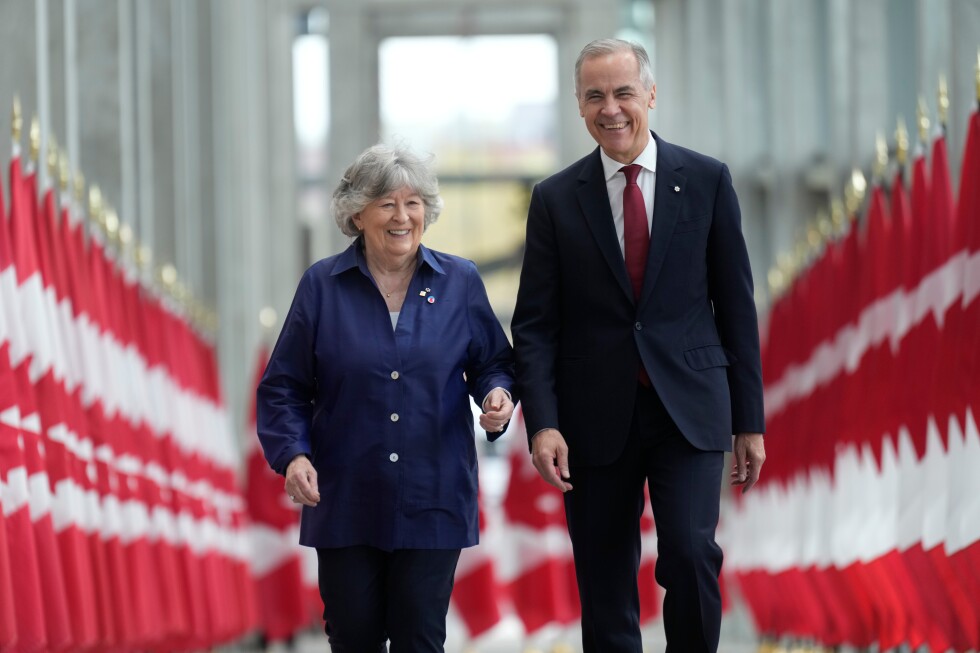
OTTAWA, Ontario – In a formal announcement made on Tuesday, Canadian Prime Minister Mark Carney has revealed that retired Supreme Court Justice Louise Arbour will take office as Canada’s next Governor General, the official representative of King Charles III in the North American Commonwealth nation.
As a constitutional monarchy rooted in its history as a former British colony, Canada retains the British monarch as its ceremonial head of state, and the Governor General fulfills this role on the Crown’s behalf. Carney confirmed that King Charles approved Arbour’s appointment following his formal recommendation, noting that he plans to hold extensive private discussions with the incoming appointee on key domestic and global issues impacting Canada.
While the position of Governor General carries formal constitutional responsibilities, it largely remains a ceremonial and symbolic role within Canada’s parliamentary system. In a notable break from recent appointments, Carney selected a Francophone for the post.
When pressed on whether she identifies as a monarchist, Arbour responded in French that she does not have a clear definition of the label, but made clear her full backing for Canada’s existing governance structure. “I will serve as the representative of the Crown in a constitutional arrangement that has served Canada extremely well throughout our history, even more so in recent decades,” Arbour stated. “I think this system will continue to provide continuity to our institutions and form of governance.”
Arbour, 79, will step into the role in July, when outgoing Governor General Mary Simon – Canada’s first Indigenous person to hold the position – completes her five-year term.
Carney praised the incoming Governor General as a globally respected legal scholar, judge, and leading advocate for human rights and international justice. Arbour has an extensive judicial resume, having served as a judge on the Supreme Court of Ontario, the Court of Appeal for Ontario, and ultimately the Supreme Court of Canada earlier in her career.
In 1996, the United Nations appointed Arbour as Chief Prosecutor of the International Criminal Tribunals for the former Yugoslavia and Rwanda. In that landmark role, she led prosecutorial efforts that secured the first conviction for genocide globally since the adoption of the 1948 Genocide Convention, and secured the first ever war crimes indictment for a sitting head of state. She later went on to serve as the United Nations Special Representative for International Migration from 2017 to 2018.
Canada’s constitutional relationship with Britain dates back to the 19th century. After the United States secured independence from British rule, Canada remained a British colony until 1867, when it gained confederation as a self-governing dominion. It has retained its constitutional monarchy structure and British-style parliamentary system ever since, as a core member of the modern Commonwealth of Nations.