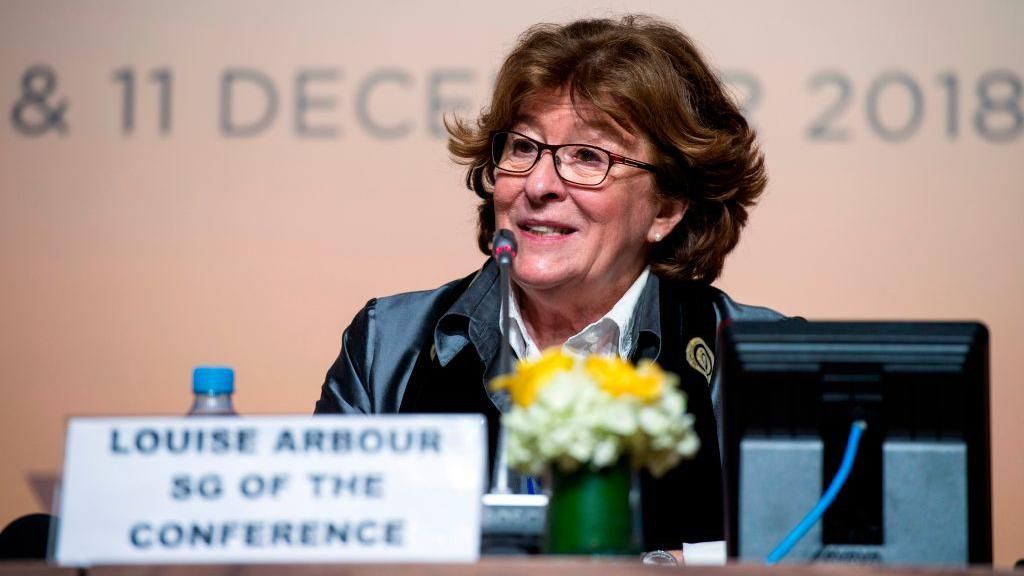
OTTAWA – In a move that addresses longstanding political pressure around bilingual representation for Canada’s vice-regal office, Prime Minister Mark Carney has announced the appointment of 79-year-old Louise Arbour, a decorated Canadian jurist and former United Nations High Commissioner for Human Rights, as the country’s next Governor General.
Arbour will succeed outgoing Governor General Mary Simon, who made history five years ago as the first Indigenous person ever appointed to the role, which serves as the official domestic representative of the Canadian Crown, currently King Charles III, acting as Canada’s de facto head of state on the monarch’s behalf. By convention, Governors General typically serve fixed five-year terms.
Carney’s appointment comes after months of political and public criticism targeting Simon over her limited proficiency in French, one of Canada’s two official national languages. Arbour, a Montreal-born Quebec native, is fully bilingual – a key qualification the prime minister faced growing demands to prioritize for the role.
Speaking to reporters on Tuesday, Carney lauded Arbour as a Canadian whose decades-long career has been defined by “sound judgement, deep learning and an unwavering commitment to the rule of law.” A trailblazer in both national and international justice, Arbour brings an unprecedented resume to Rideau Hall: she previously sat as a justice on the Supreme Court of Canada, the country’s highest appellate court, and served as chief prosecutor for the International Criminal Tribunals for the former Yugoslavia and Rwanda – a role Carney called her most consequential work as a legal scholar.
During her tenure leading the international tribunals, Arbour secured multiple historic milestones in global human rights law. She oversaw the first-ever indictment of a sitting head of state, former Yugoslavian President Slobodan Milošević, and successfully prosecuted sexual assault as a crime against humanity, setting a lasting global precedent for gender-based violence accountability. She also secured the first conviction for genocide after the adoption of the 1948 Genocide Convention, stemming from atrocities committed during the Rwandan genocide.
Following her work at the international tribunals, Arbour served four years as United Nations High Commissioner for Human Rights from 2004 to 2008. “She has held nearly every office a Canadian jurist can hold, and several that no Canadian has held before,” Carney noted of her career. In 2007, Arbour was awarded the Order of Canada, the country’s highest civilian honor, in recognition of her transformative contributions to justice both at home and across the globe.
In her first public remarks following the announcement, Arbour affirmed her support for Canada’s constitutional monarchy, stating the institution has “served the country extremely well” and provided critical continuity through decades of Canadian social and political change.
For her part, outgoing Governor General Mary Simon, an Inuk leader born in northern Quebec, leaves office after a historic term that broke centuries of barriers for Indigenous representation in Canada’s highest offices. Prior to her appointment as Governor General, Simon served as Canada’s ambassador to Denmark and president of Inuit Tapiriit Kanatami, Canada’s national Inuit advocacy organization. While fluent in English and Inuktitut, Simon did not speak French, a shortcoming she has attributed to being denied access to French language education during her time at a federally run day school in Quebec.
Criticism of Simon’s French proficiency followed her through much of her term, peaking in 2024 after she delivered most remarks in English during an official visit to Quebec. In a subsequent public statement, Simon acknowledged “the importance of French to French-speaking Canadians as a critical part of their cultures and identities.” Carney also paid tribute to Simon on Tuesday, calling her an “exemplary” Governor General who “carried forward a lifetime of advocacy for Inuit rights, for Indigenous self-determination, and for the preservation of our Indigenous languages, cultures and identities.”
Arbour’s appointment fills the last of the major vice-regal vacancies created by the end of Simon’s five-year term. She is the first Quebec-born jurist to hold the role since Julie Payette, an astronaut and engineer who served from 2017 to 2021. Before Simon, the last Governor General from outside Quebec was David Johnston, an Ontario-born former law professor and former principal and vice-chancellor of Montreal’s McGill University, who served an extended seven-year term from 2010 to 2017.