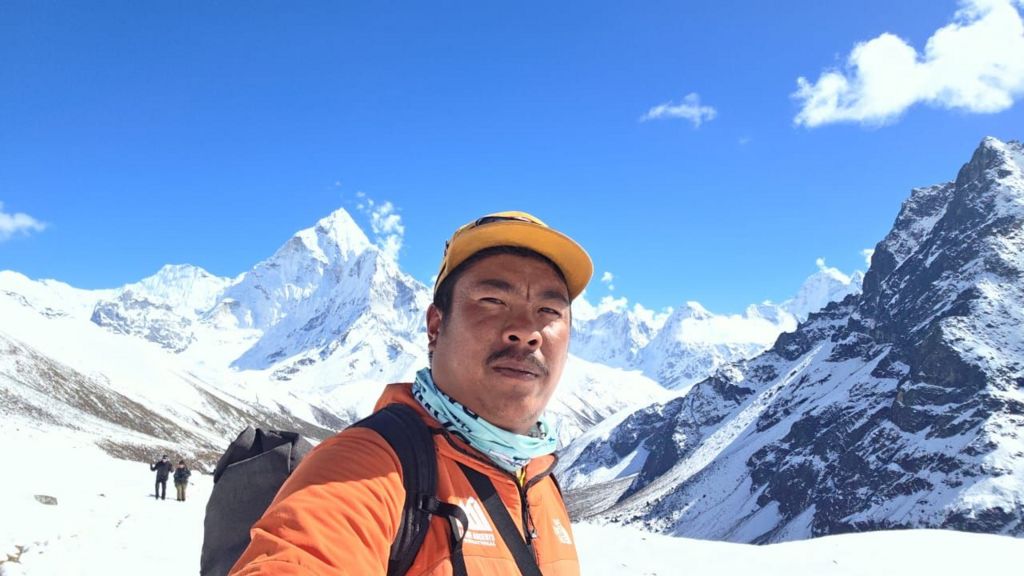
Nestled more than 5,000 meters above sea level in the shadow of Mount Everest, Imja Glacial Lake has long been recognized as one of the Himalayas’ most high-risk flood threats, swollen by accelerating glacial melt driven by human-caused global warming. A decade ago, a $3.5 million United Nations-backed risk reduction project drained 3.5 meters of water from the lake and installed a state-of-the-art early flood warning system designed to alert thousands of at-risk locals and visitors of an impending outburst. Today, that life-saving infrastructure has fallen into catastrophic disrepair, Nepalese government officials have confirmed to the BBC, leaving communities in the Everest region completely unprotected against a potential catastrophic disaster.
Local Sherpa communities were the first to sound the alarm, reporting that no routine inspections or maintenance work have been carried out on the system since the 2016 draining project was completed. On-site observations confirm siren towers, built to blare audible warnings across remote mountain valleys, have been left to rust in the harsh high-altitude climate. Some units have even had their batteries stolen, leaving them completely inoperable. Compounding this critical failure, the satellite-linked infrastructure designed to transmit real-time water level data from the lake to forecasters in Kathmandu, which would trigger automated mobile phone alerts to at-risk communities, has been unreliable for years, according to officials from Nepal’s Department of Hydrology and Meteorology (DHM).
Scientists have repeatedly warned that glacial melt across the Hindu Kush Himalaya region is accelerating at an alarming rate, with ice loss doubling since 2000, according to a recent assessment from the Kathmandu-based International Centre for Integrated Mountain Development. Rising temperatures do not only expand glacial lakes like Imja to dangerous volumes; they also weaken mountain slopes, triggering more frequent rockfalls and glacial collapses that can instantly spark a catastrophic outburst flood. If Imja were to burst, the resulting wall of water would sweep away everything in its path, including downstream villages, popular trekking routes, bridges, and tourist infrastructure. Over the past 50 years, the Everest region has already recorded at least five separate glacial lake outburst floods, a trend experts project will grow worse as global temperatures continue to rise.
For local communities, the failure of the early warning system has become a daily source of existential fear. Jangbu Sherpa, a resident of Chhukung, the first village that would be destroyed in an Imja outburst, says local leaders were promised annual inspections from DHM officials when the project was launched, but no official has visited the site in years. “We travel all the way to Kathmandu every year to beg DHM to repair and maintain the system, but nothing ever comes of our requests,” he said. Ang Nuru Sherpa, chairman of the Chaurikharka buffer zone adjacent to Sagarmatha National Park, echoed that frustration, pointing out that the local siren tower is already rusted, leaning, and at risk of collapsing at any moment. “Going by the state of the infrastructure, we don’t expect any warning at all even if the lake bursts tomorrow,” he said.
The risk extends far beyond the six local villages that sit in Imja’s flood path. Tshering Sherpa, chief executive of the local NGO Sagarmatha Pollution Control Committee, noted that spring brings more than 60,000 tourists, trekkers, and mountain climbers to the Everest region every year, all of whom are completely unaware of the unmonitored threat hanging over the area.
DHM officials have acknowledged the risk, but blame chronic underfunding for the system’s collapse. Senior DHM meteorologist Niraj Pradhananga told the BBC that the central Nepalese government has failed to allocate any budget for maintenance, and a proposal to fund upkeep through contributions from downstream hydropower companies has never been implemented. “As things stand right now, we can’t even confirm if the sirens still work,” Pradhananga said, confirming reports that batteries have been stolen from units in downstream villages including Dingboche.
Archana Shrestha, the DHM’s acting director general, added that all available resources and staffing were recently redirected to upgrade the early warning system for another high-risk glacial lake, leaving Imja completely neglected. “That work consumed all of our time and resources, but now we will turn our attention to Imja,” she said. The department is also revising its internal rules to ensure remote high-altitude sites like Imja get the dedicated staffing, budget, and resources required for regular maintenance, Shrestha added.
The broken data transmission system has added another layer of failure. Even if the sirens were functional, the DHM has not received consistent real-time water level data from Imja’s hydro-met station, making it impossible to issue timely mobile alerts. Pradhananga said the department has raised the issue repeatedly with the satellite company and its local service provider, but the issue remains unresolved: the satellite company denies any fault on its end, blaming the local provider, which has not responded to the DHM’s inquiries and has not yet commented to the BBC on the issue.
In a striking twist, the United Nations Development Programme has recently secured $36 million in grant funding to replicate the Imja risk reduction project at four other high-risk glacial lake sites across Nepal. UNDP Nepal communication head Monica Upadhyay said the failures at Imja have shaped the new projects, which will prioritize long-term sustainability from the start through clearer institutional governance, dedicated dedicated long-term financing, and targeted public-private partnerships to support ongoing maintenance.
For Sherpa communities living in Imja’s shadow, that future planning offers little comfort. “This whole project has just been an eyewash,” said Nawang Thome Sherpa, head of the local government in Phakding, one of the vulnerable downstream villages. “They spent millions of dollars in the name of protecting us from disaster, but we still wake up every day living in fear of losing our lives and our homes.”