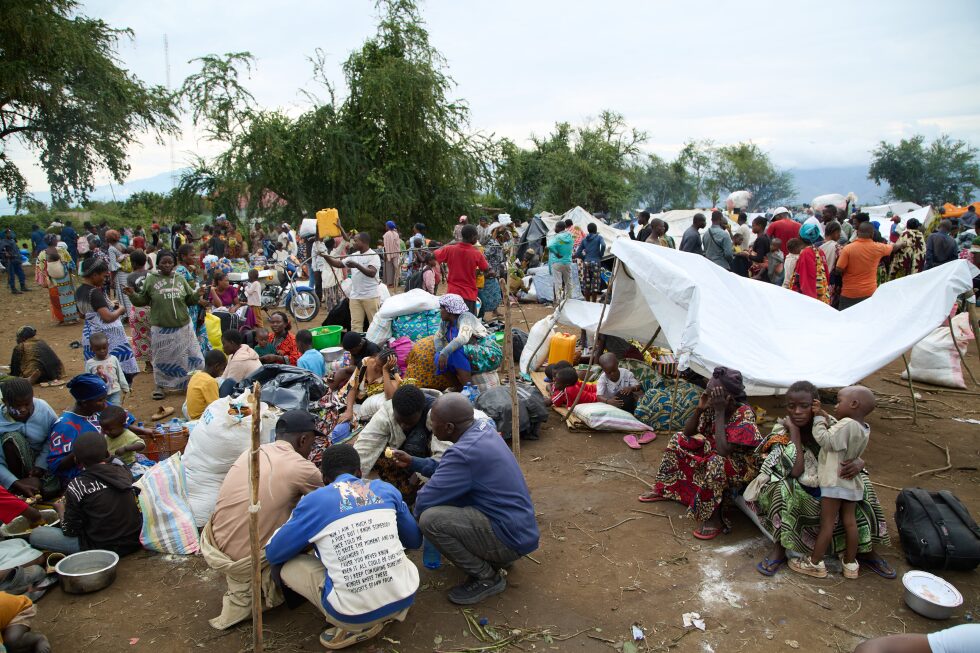
Fresh stability has emerged along the Burundi-Democratic Republic of Congo border, as thousands of displaced Congolese civilians are heading back to their homes in eastern Congo after Rwandan-backed M23 rebels withdrew from the strategic town of Uvira.
On Thursday, another contingent of 470 returnees crossed the reopened border, wrapping up a journey that began four months prior when they fled escalating violence across Uvira and its surrounding areas. These latest arrivals back to Congo first took shelter in Burundi’s Busuma refugee camp, located in Buhumuza province, and are part of a larger wave of repatriation that has seen at least 33,000 Congolese return to their home country since the start of March, per United Nations figures.
The M23 rebellion, which rapidly seized large swathes of North and South Kivu provinces along the Rwanda-Congo border last year, pulled its forces out of the more southerly Uvira last month following mounting diplomatic pressure from the international community. The border crossing closure that Burundi enacted when rebels advanced on Uvira has now been lifted, clearing the way for organized voluntary repatriation led by the UN High Commissioner for Refugees (UNHCR).
UNHCR officials confirmed that the repatriation operation will run for multiple consecutive weeks, with at least two scheduled bus convoys facilitating returns every week. The operation is strictly limited to civilians returning to areas confirmed to be safe; no organized returns are being arranged for regions still facing active insecurity. Brigitte Mukanga-Eno, UNHCR’s representative in Burundi, explained that the restoration of local government control in Uvira triggered the first wave of voluntary returns in March, which in turn built confidence for more displaced people to make the journey home.
For many returnees, the end of displacement brings overwhelming relief after months of hardship in overcrowded refugee camps. “I am happy, very joyful,” shared Hassan Masemo, one of the 470 civilians who crossed Thursday. He added that he was deeply grateful to Burundian authorities for “reopening the border for us.” The Busuma camp, which was rapidly established in December 2025 to house the sudden influx of displaced Congolese, has long struggled with critical shortages of food and basic supplies, making a quick return home a top priority for most residents.
Currently, Burundi still hosts more than 200,000 registered Congolese refugees, 66,000 of whom reside in the Busuma camp alone. It remains unclear how many more will choose to return in the coming weeks as security conditions continue to stabilize in eastern Congo.
Eastern Congo’s mineral-rich territories have been plagued by persistent instability for decades, with government forces locked in conflict with more than 100 separate armed groups operating across the region. M23 is widely recognized as the most powerful of these armed factions. While neither Rwanda nor M23 has publicly confirmed that Rwandan military personnel fight alongside the rebellion, UN expert investigations have uncovered substantial evidence of Rwandan military backing. For its part, Rwanda frames its involvement as a defensive measure to protect its national borders from Hutu rebel groups that carried out the 1994 Rwandan genocide.
On the diplomatic front, former U.S. President Donald Trump has emerged as a key international mediator pushing for lasting peace in the region. Washington’s diplomatic push aims to bring both Congo and Rwanda to commit to a permanent ceasefire, while analysts note the process could also open new opportunities for U.S. companies to access Congo’s extensive mineral reserves, a critical supply chain input for technologies ranging from commercial aircraft to consumer smartphones across the globe.