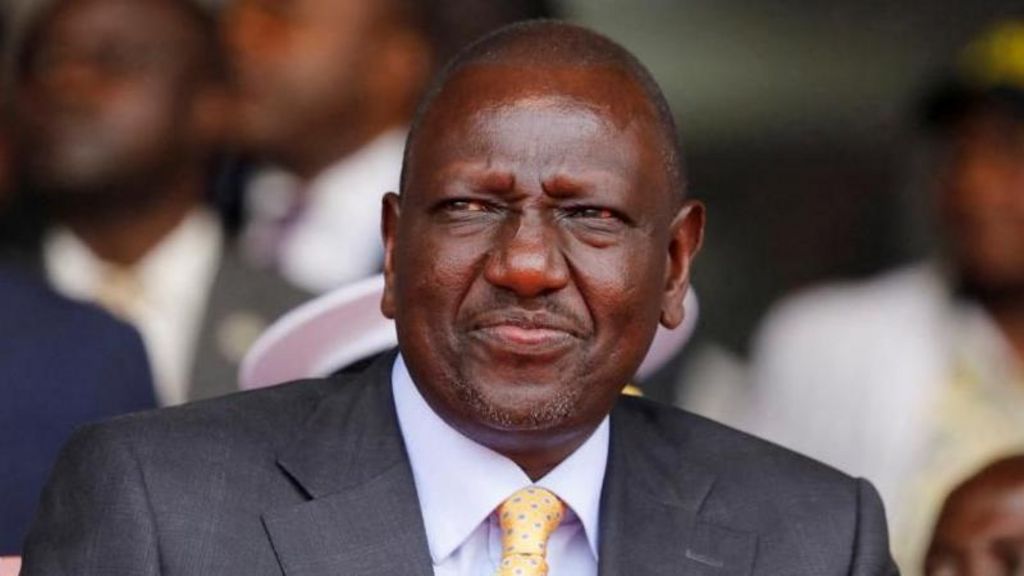
A controversial comment from Kenyan President William Ruto has ignited fierce cross-border debate across African social media, after he claimed Kenyans speak some of the world’s best English while suggesting Nigerian-accented English is incomprehensible without a translator.
Ruto made the remarks during a public address to members of the Kenyan diaspora in Italy on Monday. He opened the discussion on national language proficiency by boasting of the quality of Kenya’s education system and the high standard of English spoken by Kenyans. “Our education is good. Our English is good. We speak some of the best English in the world,” Ruto told the crowd, which responded with laughter. He added, “If you listen to a Nigerian speaking, you don’t know what they are saying. You need a translator even when they are speaking English.” Ruto also went on to note that Kenya has strong human capital that only requires additional training to reach its full potential.
The comment quickly spread across social media platforms, drawing sharp condemnation from Nigerians, other Africans, and global observers alike. Critics have accused Ruto of demeaning a neighboring African nation and parroting colonial-era biases about language standards. Well-known Zimbabwean journalist Hopewell Chin’ono pushed back against the framing that English proficiency correlates to national worth, writing online: “English is a colonial language, not a measure of intelligence, capability, or national progress.”
Former Nigerian senator Shehu Sani also criticized Ruto’s jab, pointing out Nigeria’s rich literary legacy that includes globally acclaimed voices such as Nobel Prize in Literature winner Wole Soyinka, foundational author Chinua Achebe, and bestselling writer Chimamanda Ngozi Adichie. “Ruto is mocking the English of the country with a Nobel Prize for literature winner. The Nation of Achebe and Chimamanda,” Sani wrote on platform X.
Many online commentators also urged Ruto to redirect his focus to domestic challenges within Kenya, including the country’s ongoing cost of living crisis and high unemployment rates, framing the controversial comment as an unnecessary distraction from pressing public issues.
Linguistically, both Kenya and Nigeria inherited English as an official language from their history as former British colonies, but each nation has developed distinct, culturally rooted spoken varieties shaped by local indigenous languages. Nigeria is home to more than 500 distinct indigenous languages that have shaped the unique cadence, intonation, and accent of Nigerian English. In Kenya, the mix of Bantu, Nilotic, and Cushitic language families has similarly given rise to a distinct local English accent.
A small contingent of Kenyan online users have defended Ruto’s comments, arguing that critics misinterpreted his intent and missed the intended humor of the offhand remark. As of Wednesday, Ruto’s administration has not issued an official statement or apology addressing the backlash.
The social media firestorm comes amid a recent pattern of tense, high-profile online exchanges between Kenyan and Nigerian public figures and citizens. Earlier this month, Nigerian President Bola Tinubu drew backlash from Kenyan online users after claiming Nigerians were “better off than those in Kenya and other African countries” despite rising domestic fuel prices in Nigeria. Many online observers have interpreted Ruto’s recent comment as a tit-for-tat response to Tinubu’s earlier statement, though Ruto never explicitly referenced Tinubu’s remark during his address. Cross-border online spats between the two nations are common, with previous clashes centered on economic comparisons, pop culture, sports, and increasingly, political rhetoric.