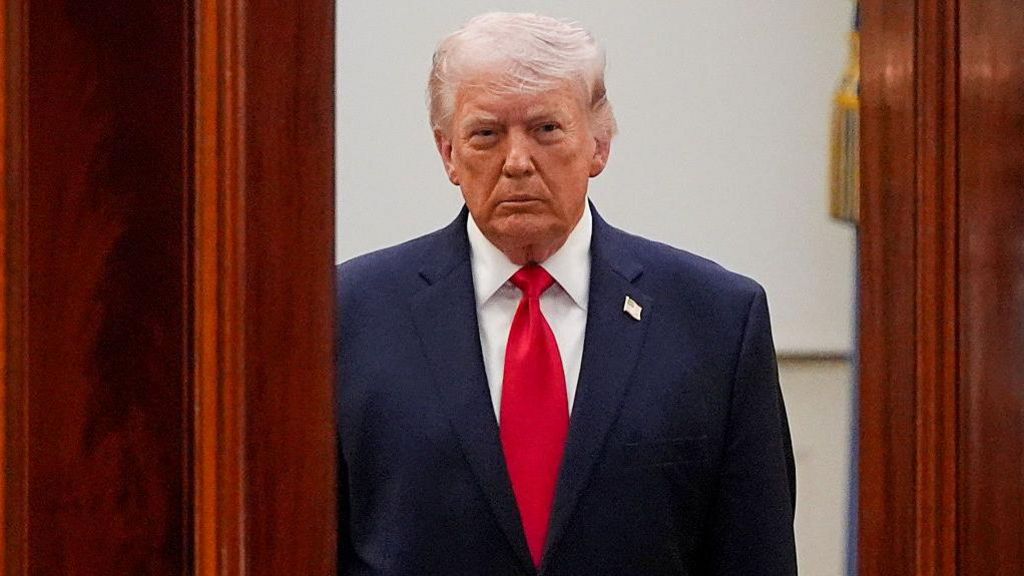
A joint analysis conducted by the BBC has uncovered a striking, consistent pattern of abnormal, large-scale trading activity across multiple financial and prediction markets that consistently precedes major market-moving policy announcements from U.S. President Donald Trump during his second term, raising urgent alarms among analysts about potential illegal insider trading that could benefit connected insiders at the expense of ordinary investors.
Market observers have tracked repeated instances of sudden, massive spikes in trading volume just minutes or hours before Trump’s public statements or posts are released, across everything from crude oil futures to broad stock index funds and blockchain-based prediction markets for geopolitical events. The BBC’s cross-referencing of trade timestamp data and public announcement schedules confirms that these sudden trading surges never fail to line up with the direction of market shifts that follow Trump’s revelations.
One of the most high-profile examples occurred during the U.S.-Iran war. After nine days of conflict, Trump told CBS News that the war was “pretty much very complete,” a statement that sent global oil prices plummeting 25% within a minute of the news being made public via a reporter’s X post at 19:16 GMT. However, market data shows a massive wave of bets on falling oil prices entered the market a full 47 minutes earlier, at 18:29 GMT, netting the early traders millions in profit.
A second oil market incident unfolded just two days after Trump threatened to “obliterate” Iran’s power infrastructure. When the president unexpectedly posted on Truth Social that Washington had held “VERY GOOD AND PRODUCTIVE CONVERSATIONS” with Tehran aimed at a full cessation of hostilities, U.S. benchmark oil prices dropped 11% immediately after the post. Again, abnormal volumes of bearish oil bets hit the market 14 minutes before Trump’s post went live, an activity one senior oil analyst described as “unquestionably abnormal.”
Outside of Middle East energy markets, the same pattern emerged in U.S. stock trading following Trump’s 2025 tariff announcement. After enacting sweeping tariffs on nearly all U.S. trading partners that triggered a global market selloff, Trump announced a 90-day pause on the levies for all nations except China. The S&P 500 notched a 9.5% one-day gain, one of the largest in post-WWII history. Data shows that just after 18:00 BST, trading volumes for an S&P 500-tracking fund jumped from a steady hundreds of contracts per minute to more than 10,000, with one group of traders placing more than $2 million in bullish bets even after seven straight days of market losses. Those early trades generated an estimated $20 million in profit. The pattern prompted senior Senate Democrats to send a formal letter to the U.S. Securities and Exchange Commission (SEC) calling for a full investigation into whether administration insiders or allies were profiting at the expense of the general public. Both the SEC and White House declined to comment on the allegations when contacted by the BBC.
The rise of unregulated blockchain-powered prediction markets, which allow users to bet on geopolitical and policy outcomes, has added a new layer of scrutiny. Notably, Donald Trump Jr. holds an investment stake in major prediction platform Polymarket, serves on its advisory board, and also acts as a strategic advisor to a second leading platform, Kalshi. The BBC has reached out to Trump Jr. for comment, with no response received as of publication.
In one high-stakes prediction market case, an anonymous account named Burdensome-Mix registered on Polymarket in December 2025, and accumulated a total $32,500 bet that Venezuelan President Nicolás Maduro would be removed from office by the end of January 2026. Just one day after the final bet was placed, Maduro was seized by U.S. special forces and ousted, netting the anonymous account a $436,000 payout. Shortly after the win, the account changed its username and has not placed any additional trades. A separate incident in February 2026 saw six newly created Polymarket accounts collectively earn $1.2 million after correctly betting that a U.S. strike on Iran would occur by the end of that month, with five of the six accounts ceasing all activity immediately after cashing out. One remaining account later earned an additional $163,000 for correctly betting on an April 7 U.S.-Iran ceasefire, which was announced on exactly that date.
In response to growing scrutiny, both Polymarket and Kalshi introduced new anti-insider trading rules in March 2026. Polymarket said in a statement to the BBC that it upholds the highest standards of market integrity and proactively collaborates with regulators and law enforcement. Prediction markets fall under the jurisdiction of the U.S. Commodity Futures Trading Commission (CFTC), which did not respond to requests for comment, though its chair recently reaffirmed the agency has “zero tolerance” for fraud and insider trading. The White House also confirmed it sent an internal email last month warning staff against using non-public information to place bets on prediction markets, while spokesperson Davis Ingle called any unproven claims of administration misconduct “baseless and irresponsible reporting.”
While illegal insider trading has been on the books for most U.S. market participants since the 1933 Securities Act, and was extended to cover federal government officials in 2012, no official has ever been prosecuted under the 2012 expansion. Financial regulation expert Paul Oudin, a professor at ESSEC Business School, notes that enforcement of these rules remains extremely challenging in practice. “Financial regulators cannot bring a prosecution unless they can definitively identify the source of the leaked information,” Oudin explained. “You can have massive, obvious trading that proves someone had advance knowledge of what Donald Trump was going to announce, but there is still a very strong chance no one will ever face charges.” To date, no U.S. financial regulator has publicly acknowledged or opened formal proceedings around any of these alleged insider trading incidents.