Five months after Hong Kong’s deadliest residential fire in decades tore through the Tai Po suburban district’s Wang Fuk Court apartment complex, killing 168 people and displacing thousands, the first wave of surviving residents is preparing to step back into what is left of their fire-scorched homes starting Monday.
For 78-year-old Keung Mak, the impending visit to the first-floor apartment he shared with his wife Kit Chan for more than 40 years, where they raised their children, brings nothing but heavy grief. Images shared by his social worker already laid bare the full scope of the destruction: the apartment’s ceiling burned through to expose exposed steel rebar, floors heaped with shattered charred tiles, and portions of the structure compromised enough to require temporary reinforcement to avoid collapse. Mak says he never imagined his home of four decades would be reduced to such ruin, and he expects almost none of the family’s cherished personal items to survive. Fishing rods gifted to him by his son, 50-year-old wedding photos, and decades of handwritten letters from their child – all items irreplaceable for their sentimental value – are almost certainly gone, Chan, 74, says. “Not even a single piece of paper will be left,” she added. Under current access rules, only two people can enter the severely damaged unit, so only Mak and their son will visit Monday – a restriction Chan hopes officials will relax to let her see her former home one last time.
The re-entry process, which will allow residents to retrieve any salvageable belongings, is expected to stretch into early May, with strict limits on group size and time spent inside: most households get up to three hours, with up to four people allowed in, while only one person can enter the most unstable units. The visit will be a uniquely grueling test for elderly residents, who made up more than a third of the 4,600 people who lived in the complex before the blaze. With all elevators knocked out of service by the fire, hundreds of seniors aged 65 and older – more than 1,400 in total have registered to return, according to public broadcaster Radio Television Hong Kong – have even undertaken targeted fitness training to prepare to climb stairs up to the 31st story of the damaged towers. Blackened, soot-stained building exteriors still stand as a constant, stark reminder of the November tragedy, and few residents hold out hope of recovering any meaningful mementos from their destroyed units.
Nearly five months on, residents are still waiting for official conclusions from the ongoing public inquiry into the fire’s cause, while they themselves have been scattered across Hong Kong, most housed in temporary government accommodation as they weigh resettlement options. Early findings from the independent inquiry have already revealed damning details: an attorney for the committee confirmed that nearly all fire safety systems in the seven affected buildings failed on the day of the blaze due to preventable human error. Authorities have also confirmed three men were arrested in March on suspicion of looting abandoned units in the weeks after the fire, leaving many residents wary of what they will find when they return.
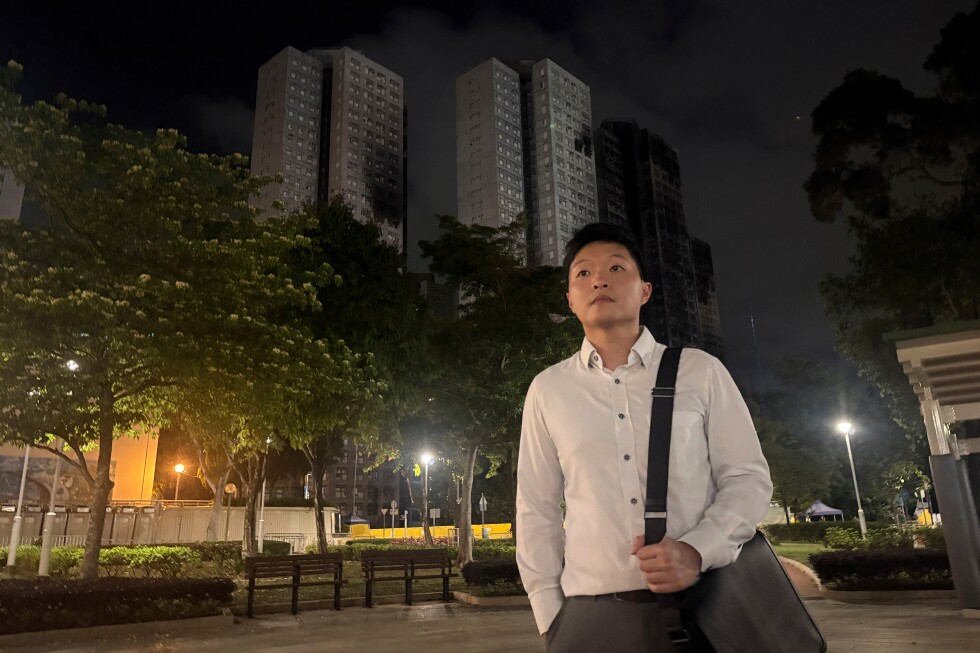
For many survivors, the re-entry brings tangled, conflicting emotions. Thirty-nine-year-old Cyrus Ng, whose parents lived in a 10th-floor unit at Wang Fuk Court for more than a decade before he moved out, says he struggled with insomnia, anger and grief in the immediate aftermath of the disaster. While he has found a measure of emotional stability in the months since, he has not come to terms with the tragedy, and remains firm in his demand for full accountability. “We know there are suspicious issues behind this,” Ng said. “I hope we can really find the truth.” Ng’s parents’ unit escaped the worst of the fire damage, so he is both anxious about the emotional toll the visit will take on his elderly parents, and hopeful they will be able to retrieve critical documents, old photos and clothing that hold deep personal meaning. He also shares the widespread concern over potential theft, and plans to document the unit’s condition with photos during his visit to push back against the government’s proposed demolition plan.
Hong Kong officials have already stated that cost-effective repairs to the seven fire-damaged buildings are unfeasible, and have proposed demolishing the structures and buying back homeownership rights from displaced residents, a plan based on survey data collected from residents. But many survivors have pushed back on the proposal, pointing to inquiry data showing only half of the 1,700 units in the seven buildings suffered any level of damage. Ng believes that at least some of the less damaged structures could be repaired to allow residents to return if they wish, even as his own parents consider accepting the government’s offer of replacement housing elsewhere.
Even residents of the only complex building that escaped the fire face unresolvable trauma, and hold mixed views on the government’s plan. Stephanie Leung, who lives in the unscathed block, says her family cannot imagine staying in the apartment permanently. Every time they look out at the seven blackened towers where former neighbors and schoolmates lost their lives, the nightmare of the fire comes rushing back. “Whenever I go back, I want to cry,” she said. Leung hopes the government will extend the buyback and demolition option to her block as well, while allowing residents who wish to stay to remain. For all residents, Monday’s first visits back to the ruins are not just a chance to recover belongings – they are another painful step forward in a long, uncertain journey toward recovery that remains far from over.