Eight weeks into open conflict between the United States, Israel and Iran, fragile hopes for diplomatic de-escalation have emerged alongside fresh threats of renewed violence, as Washington prepares to send a negotiation team to Islamabad for new talks with Iranian officials just days before a bilateral ceasefire is set to expire. The planned meeting, announced by former U.S. President Donald Trump on social media, comes as tensions remain locked over the strategic Strait of Hormuz, where Iran has blocked all commercial transits in response to a ongoing U.S. naval blockade of Iranian ports, a standoff that threatens to roil global energy markets and drag the entire Middle East back into full-scale war.
The pathway to negotiations was laid out over the weekend, when Pakistani mediators confirmed that advance U.S. security teams have already arrived in the Pakistani capital to finalize arrangements for the second round of face-to-face talks. Iran’s top leadership confirmed Saturday that it had received new U.S. proposals via Pakistani military envoys and remained open to diplomatic dialogue, even as it held firm to its position that the strait will remain closed to all commercial traffic for as long as the U.S. blockade cuts off Iran’s own access to global shipping.
“It is impossible for others to pass through the Strait of Hormuz while we cannot,” Iranian Parliament Speaker and chief nuclear negotiator Mohammed Bagher Qalibaf stated in remarks broadcast on Iranian state television Saturday evening. In line with that position, Iran reversed an earlier announcement that it would reopen the waterway following the start of a 10-day truce between Israel and Iran-backed Hezbollah in Lebanon, after Trump reaffirmed that the U.S. blockade would remain in full effect until a comprehensive final deal is reached with Tehran.
After a brief resumption of transit attempts Saturday, two India-flagged merchant vessels came under fire while attempting to cross the strait, forcing both to turn back and leaving the waterway at a complete standstill, just as it was before the ceasefire took hold. The UK Maritime Trade Operations, which monitors Gulf commercial shipping, confirmed that Revolutionary Guard gunboats fired on an oil tanker, and a projectile struck a nearby container vessel, damaging cargo. India’s foreign ministry responded by summoning Iran’s ambassador to New Delhi to protest the attack, which came only days after Iran had allowed multiple India-bound ships to pass through the strait.
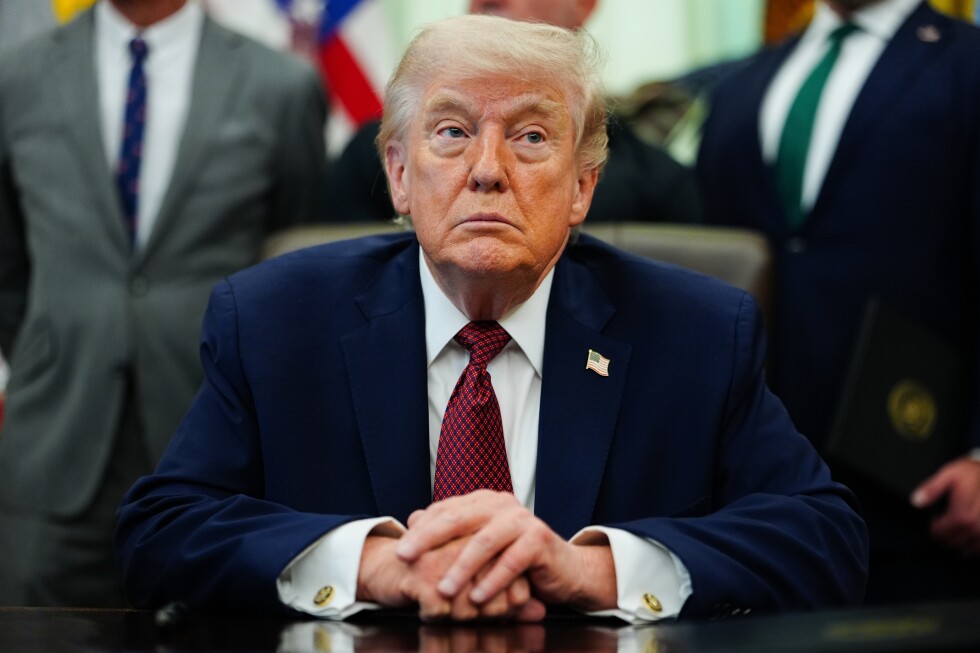
In his announcement of the upcoming talks, Trump doubled down on pressure against Tehran, accusing Iran of violating the existing ceasefire with the attacks on commercial shipping and issuing an extreme threat to Iran’s civilian infrastructure if Tehran rejects the U.S.’s final proposal. “If they don’t [take the deal], the United States is going to knock out every single Power Plant, and every single Bridge, in Iran,” Trump wrote. He did not name which U.S. officials would travel to Islamabad for the talks, and the White House and the office of Vice President JD Vance, who led the first round of U.S.-Iran negotiations, have not responded to requests for comment as of Sunday morning.
Iranian officials have pushed back against U.S. pressure, framing the American blockade as a reckless violation of the existing ceasefire that puts the entire diplomatic process at risk. “Americans are risking the international community, risking the global economy through these, I can say, miscalculations,” Iranian Deputy Foreign Minister Saeed Khatibzadeh told the Associated Press, adding that the U.S. is “risking the whole ceasefire package.”
Iran’s Supreme National Security Council, which has operated as the country’s top de facto decision-making body throughout the conflict, reiterated Saturday that Iran will maintain full control over all transits through the strait until the U.S. blockade is lifted and the war is formally ended. The council also rejected a core U.S. proposal that would require Tehran to hand over its existing stockpile of 440 kilograms of enriched uranium, with Khatibzadeh calling the demand “a nonstarter” while noting that Iran remains open to addressing international concerns over its nuclear program through diplomacy.
Qalibaf emphasized Saturday that Iran remains committed to the diplomatic process despite the wide gap between the two sides’ positions and deep-seated distrust of U.S. intentions. “There will be no retreat in the field of diplomacy,” he said, adding that Iran continues to seek a peaceful resolution to the conflict.
The conflict between the U.S., Israel and Iran began on February 28, when military operations were launched amid ongoing negotiations over Iran’s nuclear program. For Tehran, the closure of the Strait of Hormuz — through which roughly 20% of the world’s daily oil trade passes — has emerged as its most powerful leverage point, capable of disrupting the global economy and raising political pressure on the U.S. administration. For Washington, the naval blockade serves to cut off Iran’s key export revenue, squeezing its already fragile economy to force concessions at the negotiating table.
As of the weekend, the ongoing conflict has killed more than 3,000 people in Iran, over 2,290 in Lebanon, 23 in Israel, and more than a dozen across Gulf Arab states. Fifteen Israeli soldiers deployed to Lebanon and 13 U.S. service members stationed across the Middle East have also been killed. Pakistani Foreign Minister Ishaq Dar confirmed Saturday that his government is working aggressively to bridge remaining gaps between the two sides, with mediation efforts already in their final stages ahead of the planned talks.
It remains unclear whether either side has shifted its core positions on the key unresolved issues that derailed the first round of negotiations, including the future of Iran’s nuclear enrichment program, Iran’s support for regional militant proxies, and long-term sovereignty over the Strait of Hormuz. With the existing ceasefire set to expire later this week, the outcome of the Islamabad talks will likely determine whether the region can step back from the brink of full-scale war or slip back into open conflict.