BEIRUT, April 19, 2026 – Days after a 10-day ceasefire between Israel and Hezbollah went into effect, the group’s leader Naim Qassem has issued a firm warning that any Israeli violations of the truce in southern Lebanon will be met with immediate retaliation, while also opening the door to a new era of cooperation with Lebanon’s national government.
The ceasefire, brokered following an announcement by former U.S. President Donald Trump, took effect at 2100 GMT on Thursday, bringing a temporary halt to weeks of open hostilities between the two sides. But within 48 hours of the truce coming into force, reports emerged of multiple actions by the Israel Defense Forces (IDF) that raise questions about Israel’s commitment to the pause in fighting.
In a public statement released Saturday, Qassem stressed that a ceasefire cannot be a one-sided arrangement. “There is no ceasefire from one side only,” he said, noting that Hezbollah’s fighters stand ready to “respond to violations of aggression accordingly.”
Qassem laid out five non-negotiable core conditions for a durable long-term peace, starting with a permanent end to all hostilities across Lebanese territory. He also called for a full withdrawal of Israeli forces from all occupied areas of southern Lebanon, the release of all detainees held by Israel, the safe return of thousands of displaced Lebanese residents who fled their homes amid the recent escalation, and large-scale reconstruction of damaged infrastructure backed by Arab and international partners. Rejecting claims that Hezbollah had been weakened by the conflict, Qassem reaffirmed the group’s commitment to advancing Lebanon’s full liberation and national sovereignty.
On the domestic front, Qassem struck a conciliatory tone, saying Hezbollah is ready to turn “a new page” in its relationship with Lebanon’s official state institutions. He stressed the group’s willingness to work alongside the Lebanese government to reinforce national unity and protect the country’s territorial independence amid ongoing external pressure.
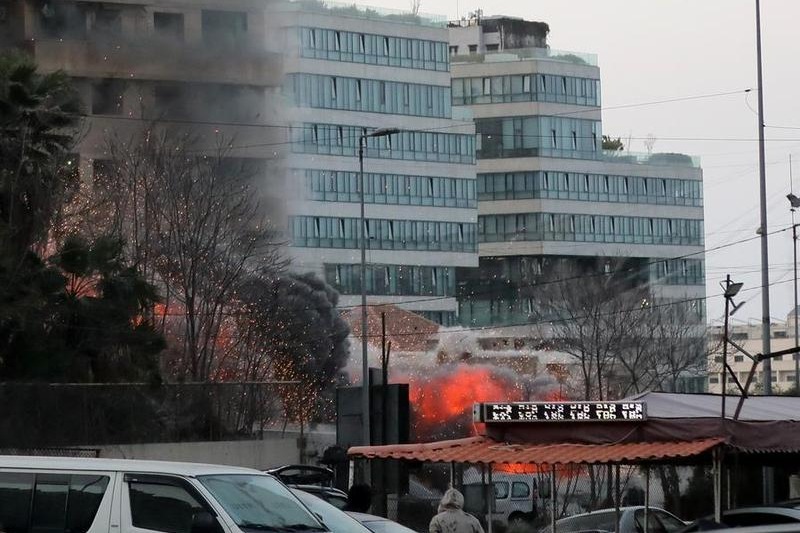
Even as diplomatic efforts to cement the ceasefire move forward, the IDF confirmed Saturday that it had carried out airstrikes on militants it said approached the “Yellow Line,” the de facto border marking the northern edge of an Israeli-declared “security zone” inside southern Lebanon. Beyond the strike, local eyewitnesses and a Lebanese security source confirmed Saturday that Israeli engineering units, protected by a Merkava main battle tank, had begun earthmoving works to build a new permanent military outpost on Rbaa al-Teben hill, roughly 1.5 kilometers inside Lebanese territory from the official demarcation line with Israel. The site, which includes existing olive groves and vineyards owned by local Lebanese farmers, is located southwest of the southern Lebanese border village of Kfarchouba. Works include ground leveling, excavation, and construction of defensive earthen berms, with the new outpost set to be administratively linked to Israel’s existing deployment near Kfarchouba.
The new construction comes amid widespread concerns in Lebanon that Israel is using the 10-day ceasefire to solidify its territorial gains inside southern Lebanon rather than withdrawing, as called for in preliminary truce discussions. The escalation of Israeli infrastructure work along the border has already heightened tensions, with Hezbollah’s warning marking the first formal response to the reported breaches since the ceasefire took effect.