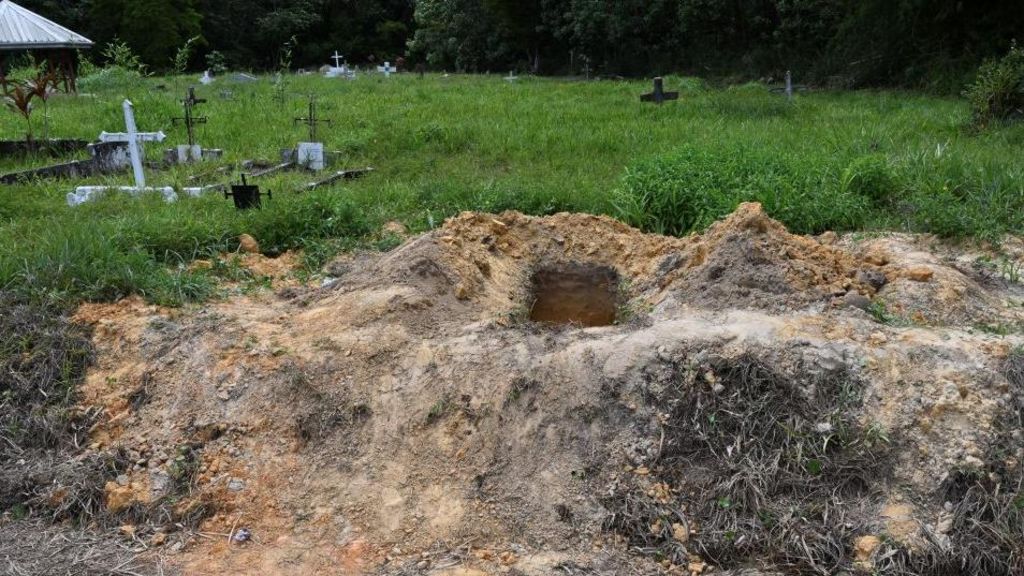
Authorities in Trinidad and Tobago have launched a full criminal investigation after a grim discovery at a rural graveyard: the remains of at least 50 infants and six adults were found dumped in an unmarked site, local police confirmed this week.
The mass grave was uncovered in Cumuto, a small town located roughly 40 kilometers southeast of Port of Spain, the capital of the Caribbean twin-island nation, according to an official statement from the Trinidad and Tobago Police Service (TTPS). Preliminary investigative work has pointed to potential unlawful disposal of unclaimed corpses as a leading line of inquiry, police added.
As of the latest update, investigators have not confirmed whether the discovery is connected to the country’s persistent gang violence crisis, which has left Trinidad and Tobago with one of the highest homicide rates across Latin America and the Caribbean. Of the six adult remains recovered, five bore identification tags, and two of the bodies showed clear evidence of prior post-mortem examinations, police detailed in their statement.
Allister Guevarro, the country’s police commissioner, described the find as deeply disturbing and pledged full accountability for any party found responsible. “Any individual or institution found to have violated that duty will be held fully accountable,” Guevarro said, referencing the legal and ethical obligation to handle human remains with proper dignity and protocol.
The discovery comes amid a prolonged state of emergency that was first enacted on March 2 this year and has since been renewed, granting expanded search and arrest powers to police to address the country’s ongoing security challenges. Since the state of emergency was implemented, the U.S. Department of State has issued multiple updated travel advisories for Trinidad and Tobago, warning U.S. travelers of elevated risks from both widespread crime and potential terrorism activity.
The advisory notes that while violent crime has fallen significantly across the country since 2024, driven by enhanced security operations launched during earlier states of emergency, criminal activity remains a pervasive national challenge that visitors and residents alike must navigate.