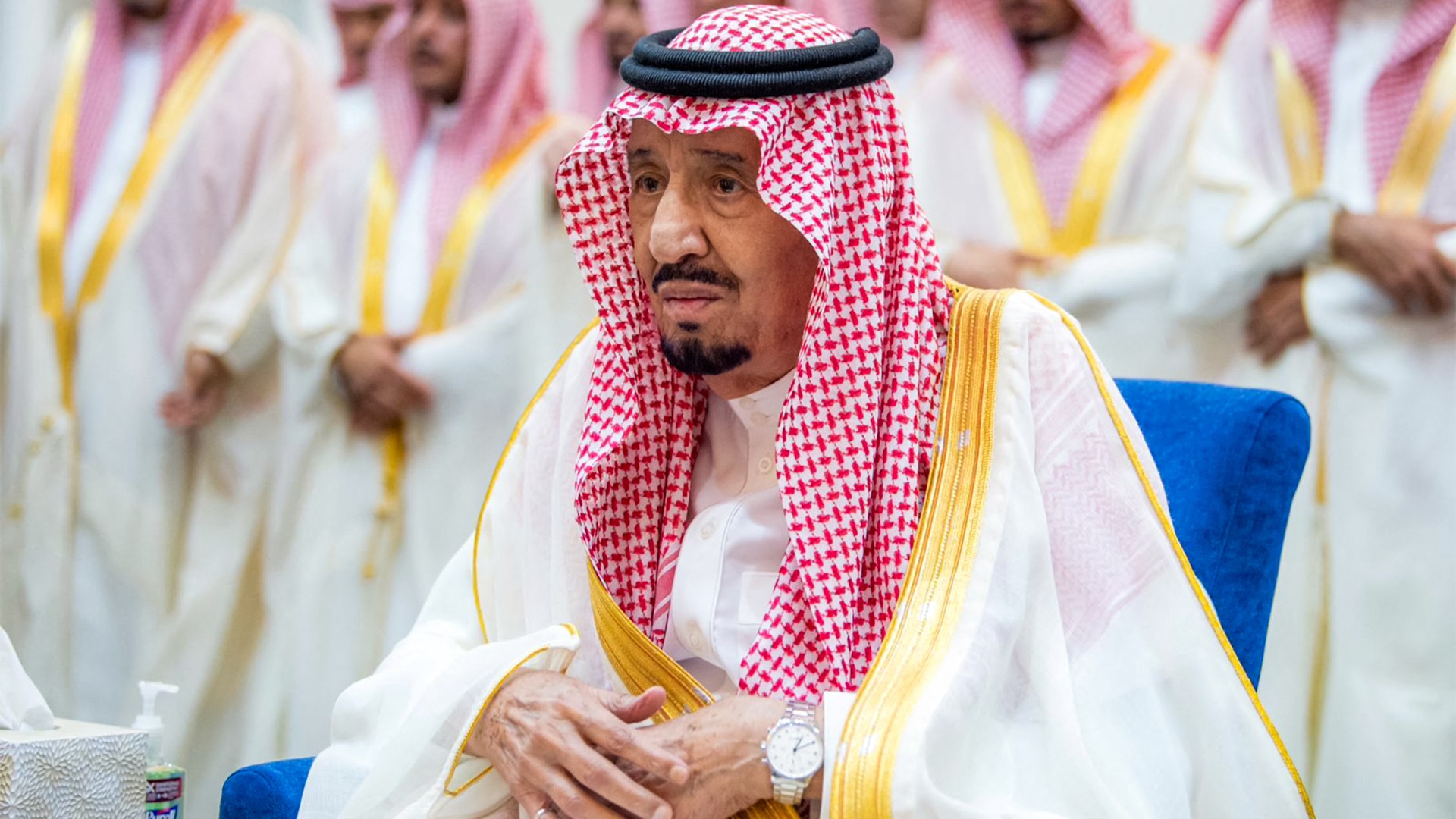
A decade after King Salman rose to power in Saudi Arabia, human rights campaigners have sounded the alarm over a chilling new benchmark: the kingdom has carried out more than 2,000 executions since 2015, a surge that rights groups call a ‘frightening milestone’ that exposes the gap between official promises of reform and on-the-ground human rights abuses.
Data collected by London-based human rights organization Reprieve confirms the 2,000 mark was crossed just last week. When compared to the five-year period before King Salman took the throne, the scale of the increase is stark: between 2010 and 2014, Saudi Arabia averaged just 71 executions per year. Today, that rate has jumped fivefold, with 345 executions recorded in 2023 and at least 356 in 2024.
Rights advocates say the sharp rise in capital punishment is no accident, arguing that de facto ruler Crown Prince Mohammed bin Salman (widely known as MBS) has leveraged the death penalty as a tool of political repression. Jeed Basyouni, head of Reprieve’s Middle East work, told Middle East Eye that the steep spike in executions over the past two years follows a consistent pattern: the Saudi government uses periods of international crisis to cover up widespread human rights violations.
A breakdown of 2024 executions reveals that more than two-thirds – 232 cases – involved people convicted of drug-related offenses. The remainder were charged with terrorism, a charge defined so broadly under Saudi law that many convictions are based on vague, unsubstantiated claims. International law only permits the use of the death penalty for the ‘most serious crimes,’ defined as intentional acts resulting in death, meaning the large volume of drug-related executions likely violates global human rights standards. The kingdom resumed capital punishment for drug offenses in late 2022, ending a three-year moratorium on the practice for these cases.
Two high-profile executions in recent weeks underscore the political nature of many of these death sentences. Last week, two Shia citizens from Saudi Arabia’s restive Eastern Province were put to death after being convicted of terror charges. Just one week earlier, 42-year-old businessman Saud al-Faraj was executed for his role in 2011 Arab Spring anti-government protests that called for greater democracy and reform in the kingdom. Faraj, who was convicted in 2022 of charges including running a terrorist cell and killing police officers, had consistently maintained his innocence, alleging he was tortured into a false confession. Court and prison records show he was forced to attend interrogation sessions while being transported in a wheelchair between prison hospital stays, and he was held in solitary confinement for 21 consecutive months.
Julia Legner, executive director of Saudi-based human rights group Alqst, noted that the 2,000-execution milestone lays bare the kingdom’s steady rollback of human rights over the past 11 years, even as MBS has cultivated a global image as a progressive reformer. ‘Despite the crown prince’s repeated promises to curb the use of the death penalty, the reality has only worsened, both in scale and scope, with ever more red lines being crossed, from the execution of journalists to that of child defendants,’ Legner told Middle East Eye.
In recent months, the kingdom has violated its own public pledges and international law by executing multiple people who were minors when their alleged crimes were committed. International human rights law, including the UN Convention on the Rights of the Child – a treaty Saudi Arabia has ratified – explicitly bans the death penalty for offenses committed by people under the age of 18. Facing global backlash in 2020, Saudi authorities announced a royal order ending judicial discretion to sentence child defendants to death. But Reprieve’s data confirms at least 17 child defendants have been executed since that promise was made.
Foreign nationals are also disproportionately represented among recent executions, adding another layer of abuse to the kingdom’s capital punishment system. Basyouni emphasized that the chasm between MBS’s public rhetoric of reform and modernization and the reality of capital punishment could not be clearer. ‘The distance between MBS’s public narrative of reform and modernisation, and the reality of death sentences meted out to child defendants, vulnerable migrants and political protesters, is wider than ever,’ Basyouni said. ‘Two thousand executions, including at least 17 child defendants, is a frightening milestone, and this number will continue to rise while the world looks away.’