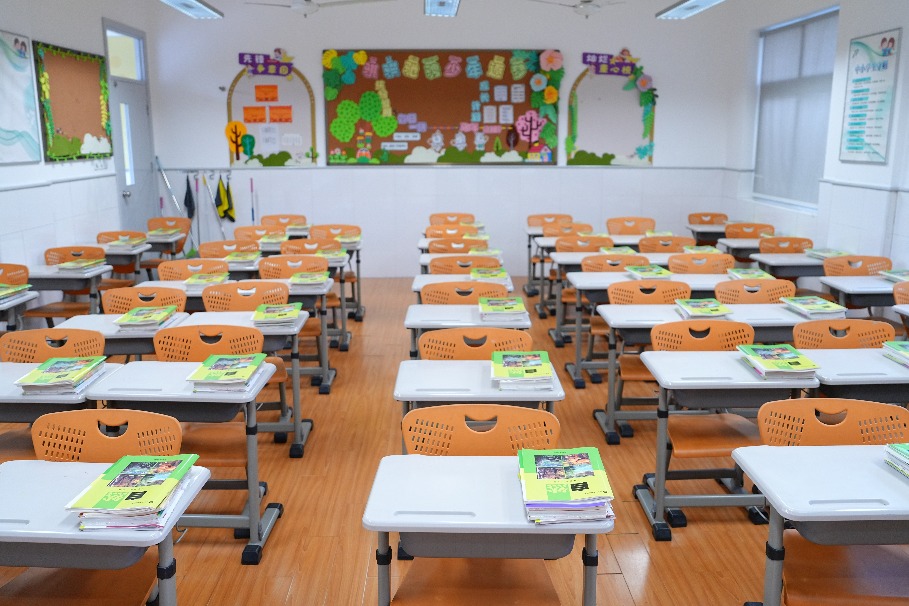
Shanghai is pressing forward with an ambitious education initiative that aims to bring a pervasive reading culture to every educational institution across the city, with a firm deadline of 2027 to achieve full coverage of what officials call “scholarly campuses”. This plan goes far beyond encouraging casual reading: it seeks to fundamentally reorient educational spaces and practices to nurture lifelong reading habits among young learners.
Speaking at a press briefing marking the launch of China’s first National Reading Week on Wednesday, Yang Zhenfeng, deputy director of the Shanghai Municipal Education Commission, outlined the city’s core strategy: upgrade physical reading environments across campuses, expand access to high-quality digital reading resources, and embed consistent reading practice into daily school life. A “scholarly campus”, as defined by the initiative, is an institution that boasts a rich, immersive reading culture, purpose-built dedicated reading spaces, and a consistent calendar of community reading activities, all designed to shape both reading habits and positive personal character in students.
Yang emphasized that intergenerational example is the foundation of successful reading education, noting, “If teachers and parents do not read, children will not learn to value reading.” To turn the vision into action, the commission’s textbook and language management division – the lead agency overseeing adolescent reading development in the city – has partnered with more than 20 municipal departments to build a holistic reading education framework that serves both educators and students.
The initiative’s reading content is curated to reflect both local and national identity, covering three core themes: revolutionary Red culture, regional Jiangnan culture, and Shanghai’s modern urban development. To extend reading engagement beyond classroom walls, organizers have built a connected home-school-community reading network that draws students in through after-school reading clubs and interactive digital reading platforms.
A key feature of the plan is its age-tailored approach, designed to avoid forcing developmentally inappropriate pressure on young learners. For preschool-aged children, the explicit priority is nurturing a natural love of reading, rather than pushing exam-focused reading drills. “Cultivating children’s reading interest and habits is the core of reading education in Shanghai’s preschools,” explained Xu Jiajie, deputy director of the Shanghai Municipal Education Commission’s preschool education department.
Progress on the initiative is already well underway. More than 1,600 primary and secondary schools across the city have completed renovations of their campus reading spaces to make them more welcoming and accessible. Beyond K-12 institutions, the city has also called on local universities, public libraries, and independent brick-and-mortar bookstores to partner with schools and host deep, community-focused reading activities.
In a sign of the initiative’s regional impact, Shanghai will team up with neighboring Jiangsu, Zhejiang, and Anhui provinces on April 19 to launch a joint cross-regional reading campaign centered on Jiangnan culture, expanding the reach of Shanghai’s reading promotion work across the Yangtze River Delta.