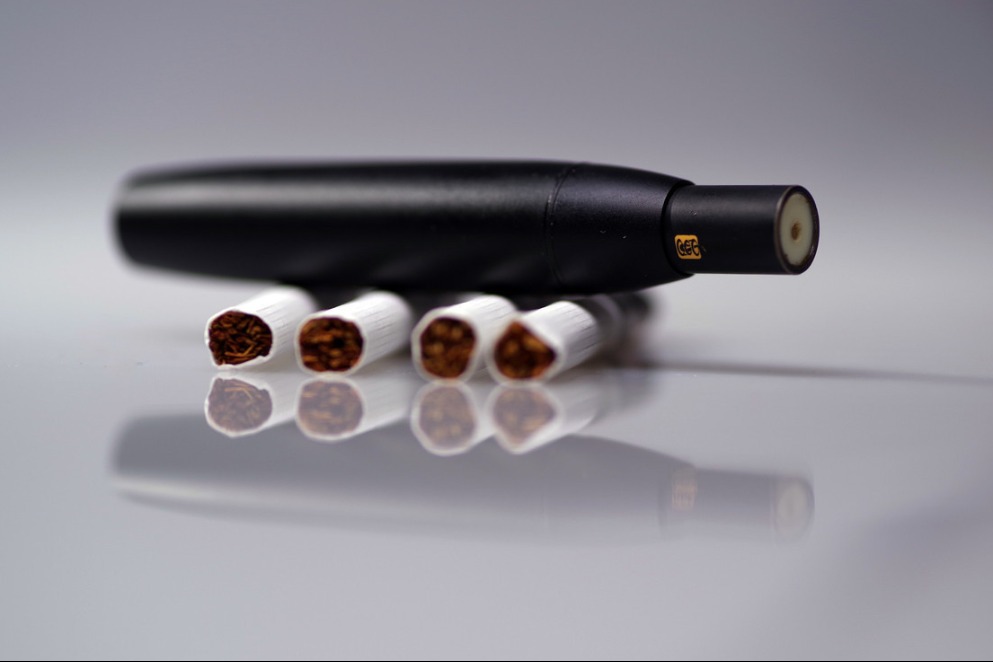
The Hong Kong Special Administrative Region (HKSAR) is set to roll out an expanded ban on e-cigarettes and other alternative smoking products, with restrictions on public possession and use set to take effect on April 30, building on sweeping trade-focused regulations introduced in 2022.
Under the new policy, the HKSAR Department of Health confirms that it will become a criminal offense for any individual, whether local resident or visitor, to possess or consume alternative smoking products — a category that includes e-cigarettes, heated tobacco products, and herbal cigarettes — across all public spaces once the rule enters into force.
Penalties for violations are structured to match the severity of the offense: casual offenders, including tourists who break the rule, face an immediate fixed fine of HK$3,000 (equivalent to roughly $383 USD). For individuals found carrying quantities of prohibited products that exceed legally set thresholds, which suggests potential intent for commercial distribution, consequences rise to a maximum fine of HK$50,000 and up to six months of imprisonment.
This latest measure strengthens the original 2022 ban, which already criminalized the import, promotion, manufacturing, sale, and commercial possession of these alternative smoking products, closing a regulatory gap that previously allowed personal possession in public spaces.
The policy expansion has drawn widespread discussion on social media platforms across the Chinese mainland, with the overwhelming majority of users expressing clear support for the new rule. Many mainland users noted the ban would not discourage them from traveling to Hong Kong, and went a step further to call for mainland Chinese cities to adopt similar strict regulations to reduce public exposure to secondhand smoke and harmful vapor.
Sonia Liu, a Shanghai resident who has traveled to Hong Kong multiple times, said she fully backs the HKSAR government’s tobacco control efforts, noting that stricter rules will improve the experience for non-smoking visitors and ultimately encourage more tourist visits to the city.
“Hopefully, these measures can be strictly enforced, especially by screening tourists who intend to dodge them and imposing appropriate penalties,” Liu said. She also recommended that authorities ramp up public outreach, including posting clear warning signs at border checkpoints and running more widespread awareness campaigns on advertisements and billboards, to prevent visitors from accidentally violating the regulation out of ignorance.
Eva, a Shenzhen resident who makes frequent cross-border trips to Hong Kong, also voiced support for the new rules but suggested that first-time offenders who unknowingly break the ban should be given more lenient treatment rather than facing full penalties immediately.
Local opinions in Hong Kong are largely supportive, though some residents have raised questions about the scope of penalties. A Hong Kong resident surnamed Liu acknowledged that stricter legislation will help create a cleaner, healthier public environment, but questioned whether penalizing individuals simply for carrying unused e-cigarettes is excessively harsh. Another local resident, Jack So, agreed that the ban will cut down non-smokers’ exposure to secondhand vapor and deliver widespread public health benefits, but expressed hope that the regulation will eventually be expanded to cover all tobacco products to create a fully smoke-free city.
Legislator Rebecca Chan Hoiyan framed the expanded ban as a key step to cement Hong Kong’s goal of becoming a smoke-free city, arguing that the initiative will actually boost the city’s appeal to international and domestic tourists by prioritizing public health. Addressing widespread concerns that the new restrictions could harm Hong Kong’s tourism sector, Chan pointed out that the city’s core attractions — its unique blend of Eastern and Western cultures, rich intangible cultural heritage, and diverse leisure offerings — far outweigh any concerns related to tobacco rules.
David Lam Tzit-yuen, the Legislative Council representative for the medical sector, noted that a full, comprehensive ban on alternative smoking products sends an unambiguous public health message that these harmful products are not tolerated in Hong Kong. He described the April 30 expansion as a landmark milestone in the city’s decades-long push to raise a smoke-free new generation free from the health risks of tobacco and alternative smoking products.
Hong Kong has built a multi-pronged, progressive tobacco control strategy dating back to the 1980s. Already, smoking is prohibited in a wide range of public spaces, including all public transport, indoor public venues, and outdoor public areas such as schools, public parks, and cinemas, with existing violations carrying the same fixed HK$3,000 penalty. In addition to strict spatial restrictions, the government also imposes high excise taxes on conventional tobacco products: a standard pack of major-brand cigarettes retails for approximately HK$105, with taxes making up roughly 63 percent of the final retail price to discourage consumption.