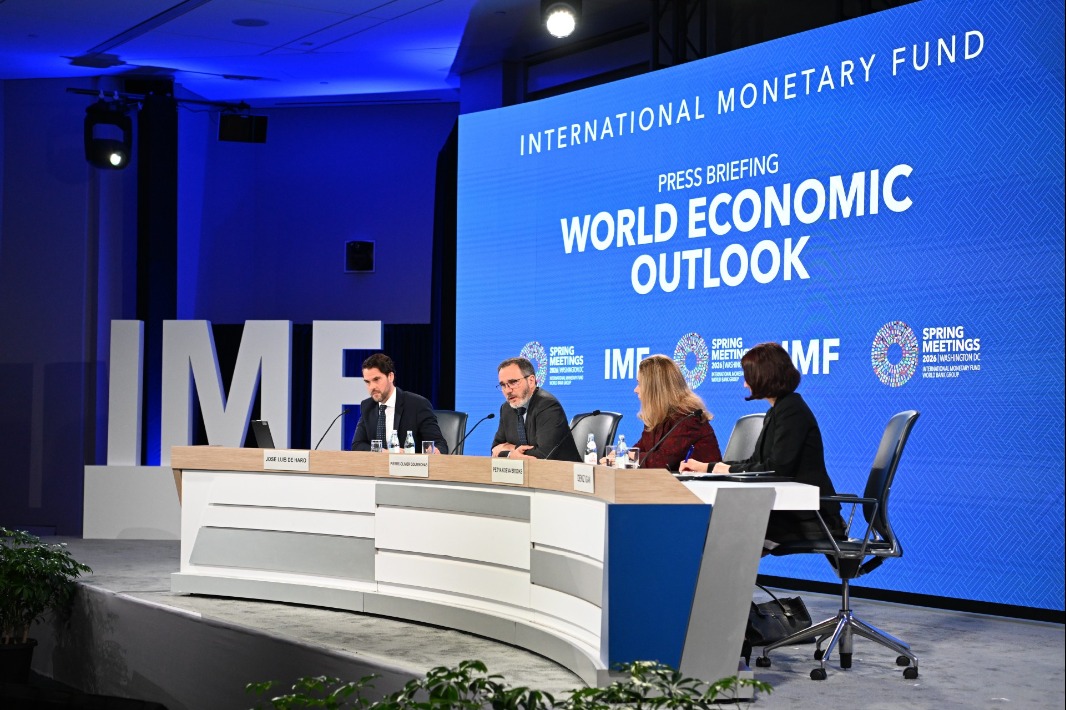
CANBERRA, April 15 — The world has entered a perilous new phase for the global economy, rocked by persistent downside risks tied to the ongoing conflict in the Middle East, Australia’s top finance official has warned, following downbeat new projections from the International Monetary Fund.
Australian Treasurer Jim Chalmers told public broadcaster Australian Broadcasting Corporation (ABC) Radio on Wednesday that the IMF’s latest World Economic Outlook, published Tuesday, is sounding a clear alarm over the far-reaching economic fallout of the regional conflict. The multilateral lender slashed its 2026 global growth forecast to 3.1 percent, down from earlier more optimistic projections, and outlined a severe downside scenario where sustained energy supply disruptions through 2027 could drag global growth all the way down to 2.0 percent.
“This is a really dangerous time for the global economy. The International Monetary Fund is expecting slower growth and higher inflation, and we are too,” Chalmers said, ahead of his trip to Washington D.C. this week to attend the spring meetings of the IMF and World Bank.
Chalmers emphasized that the conflict’s economic spillovers are already being felt by ordinary Australian households, even though the country is not a party to the hostilities. “From an economic point of view, the end of this war can’t come soon enough. Australians didn’t choose the circumstances of that war, but they are paying a very hefty price for it,” he added.
The IMF also revised down its growth projections for Australia’s domestic economy. The lender now expects the Australian economy to expand by just 2.0 percent in 2026, a 0.1 percentage point downgrade from its January forecast, followed by 1.7 percent growth in 2027 — a sharp 0.5 percentage point cut from its earlier projection.
On the inflation front, the IMF projects that Australian consumer price growth will tick back up from 2.9 percent in 2025 to 4.0 percent in 2026, eroding recent progress on taming rising cost of living pressures. It also issued a caution to policymakers, warning that any new government support programs introduced to ease household cost burdens would likely add additional fuel to inflationary pressures across the economy.